


August 30, 2025, 4:12 am | Read time: 3 minutes
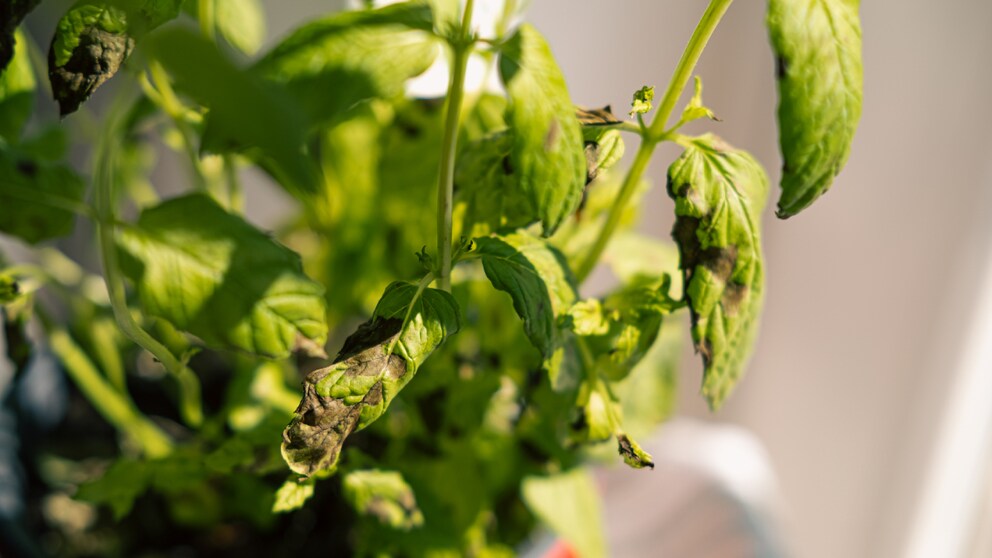
Plants cannot talk, scream, or howl. As silent beings, they indicate in other ways when something is wrong. Black spots on basil are a signal that the plant is not doing well.
Common Causes of Black Spots on Basil
If black spots appear on the leaves of basil, various causes may be behind them. In many cases, it is related to care mistakes.
Cold Damage
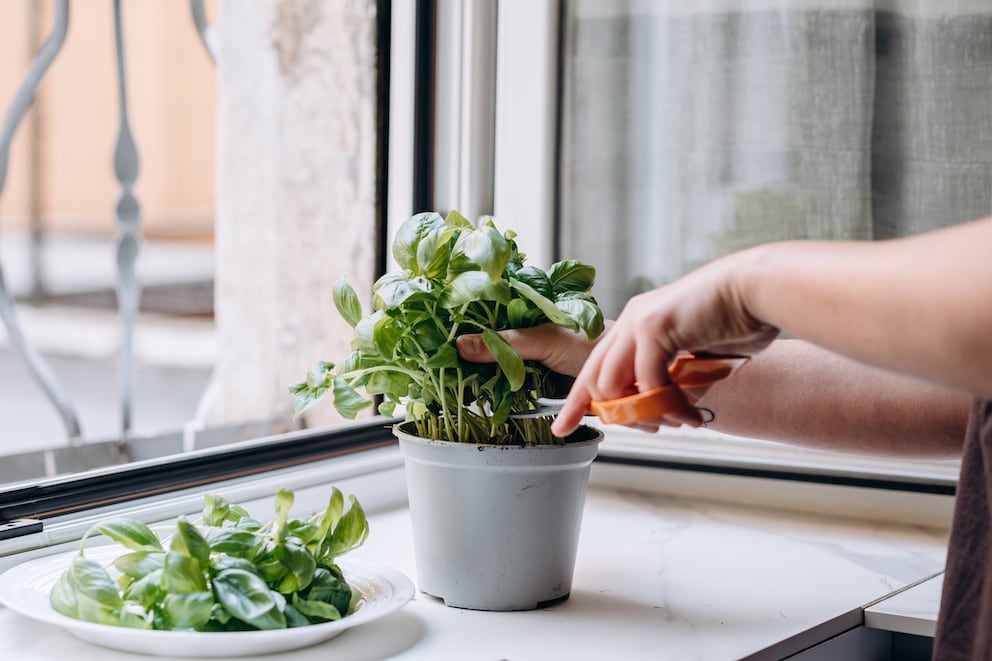
To grow and thrive, basil needs sufficient warmth. During the summer months, the herb can be easily placed on the balcony or in the garden. By fall at the latest, however, it should be moved indoors. Basil is very sensitive to cold and drafts. Temperatures below 12 degrees Celsius can already cause brown or black spots.
Related: This Trick Keeps Supermarket Basil From Wilting Quickly
Fungal Diseases
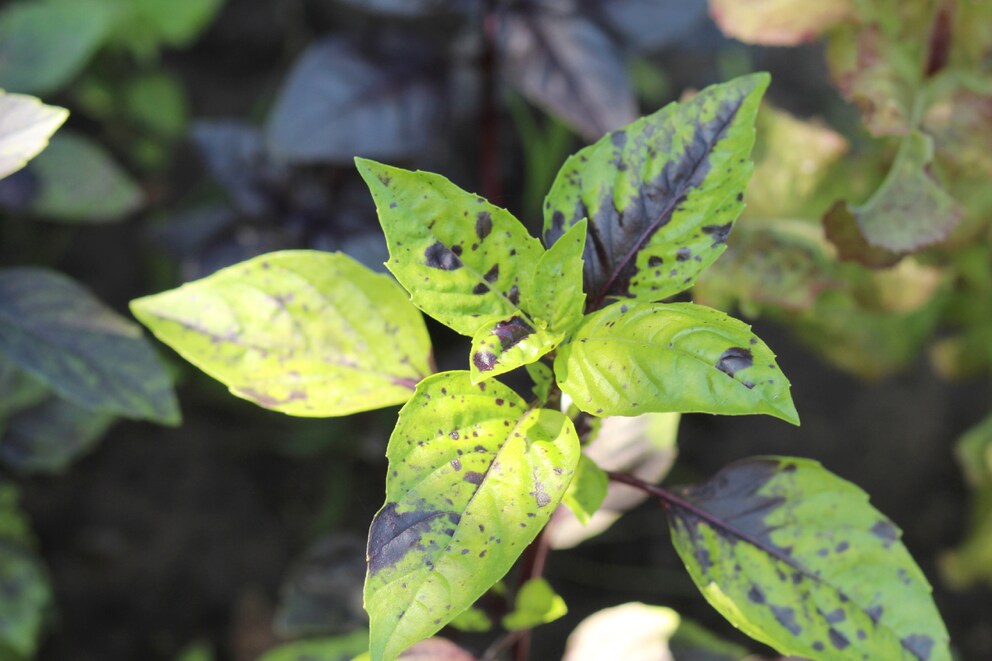
Irregular dark spots, sometimes with a yellowish edge, can indicate a fungal disease. These include downy mildew and leaf spot disease. The likelihood of infection increases if basil is in an unsuitable location with too much humidity. Stress from care mistakes also weakens the plant and makes it more susceptible to infections.
Pests
Aphids, thrips, or leaf miners can cause spot-like discolorations or spots on basil. Again, proper care and a protected, warm, and sunny location are essential. Strong plants can defend themselves better.
Lack of Light
Shade and constantly wet leaves harm basil. These conditions can lead to black spots on the leaves. A sunny location is better. Basil should receive at least five to six hours of sunlight a day.
Overwatering
Every plant needs water, including basil. But too much water can significantly harm the plant. If the soil is too wet, the roots suffocate and begin to rot. Damaged, rotten roots can absorb little or no nutrients. The plants become weaker and more susceptible to fungal diseases.
Age
Dark spots can also be a sign of aging. Over time, the plant breaks down less chlorophyll. Chlorophyll is the green pigment in plants. With less pigment present, dark spots often remain.
4 Mistakes That Cause Yellow Leaves on Geraniums
Brown Spots on Tomatoes? What Disease Could Be Behind It
Tips for Healthy Basil
When caring for basil, consider the following points to prevent dark spots:
- The location should be bright, warm, and sheltered from the wind.
- Basil from the supermarket, in particular, should be repotted. Pots that are too tight harm the plant.
- The soil should be kept moist but not wet. When watering, avoid the leaves and water directly at the roots.
- Black spots appearing? Remove the affected leaves to prevent potential diseases from spreading.
Can You Eat Basil with Black Spots?
Whether you can eat basil with black spots depends on the cause of the damage. Cold damage, bruises, overwatering, and aging are generally harmless. The leaves may look less appetizing, but they are not toxic and therefore not dangerous.
It’s different if fungi and bacteria are the culprits. Small amounts of affected leaves are not toxic but can cause stomach problems. It’s best to avoid eating them. If mold is discovered on the plant, it should be discarded and not processed or eaten.
It’s not always possible to determine the cause of black spots on basil with certainty. When in doubt, it’s better to be cautious. Remove and discard the affected leaves generously.