


August 25, 2025, 8:59 am | Read time: 2 minutes
Porcelain stoneware is one of the most popular materials in construction and interior design. It combines high durability with a wide range of design options. But how is it made exactly, and why is it considered so versatile?
Follow myHOMEBOOK on WhatsApp now
What is Porcelain Stoneware?
Porcelain stoneware is a special type of ceramic known for its extremely dense and hard structure. It belongs to the family of tile and slab materials but differs from traditional ceramic tiles or earthenware in its production and properties. Its closed surface makes it particularly resistant to water, dirt, and wear.
Production
Natural raw materials such as feldspar, quartz, kaolin, and clay are finely ground and thoroughly mixed for production. The mixture is then pressed under very high pressure and fired at extremely high temperatures (around 1200 to 1300 degrees Celsius). This process creates an almost pore-free, homogeneous mass with exceptional hardness.
Depending on the desired surface, porcelain stoneware can be left unglazed, polished, or decorated with various designs. This allows for a wide range of appearances, from natural stone to concrete to wood imitations.

Different Flooring Types Compared

Why Copper Tiles Are Trending in Bathrooms
Applications of Porcelain Stoneware
Due to its special properties, porcelain stoneware is a true all-rounder in construction and residential areas. Indoors, it is primarily used as flooring and wall covering in living rooms, kitchens, and bathrooms, as it is not only visually appealing but also resistant to moisture and mechanical stress.
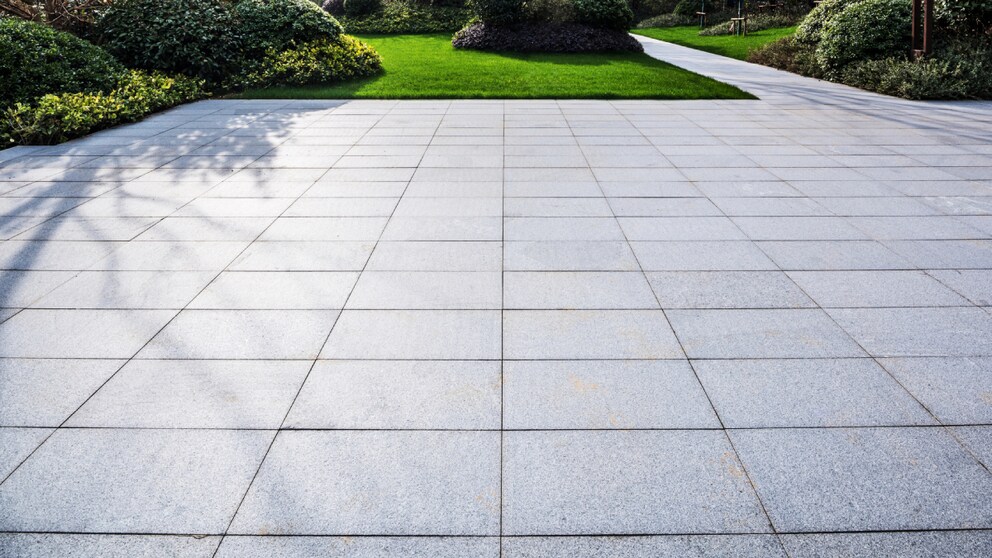
It also excels outdoors: terraces, balconies, and garden paths can be designed with porcelain stoneware to be durable and frost-resistant. Additionally, it finds diverse applications in commercial settings: In hotels, restaurants, or public buildings, it provides long-lasting and easy-to-maintain surfaces that remain aesthetically pleasing even under heavy use. In modern architecture, porcelain stoneware plays an important role, such as in facade cladding, because it is weather-resistant and offers great design freedom.
Differences from Other Materials
Compared to earthenware or traditional ceramics, porcelain stoneware is characterized by lower water absorption and higher fracture resistance. This makes it suitable for areas where other tiles reach their limits. Compared to natural stone, it boasts lower maintenance requirements and more consistent quality, as it is industrially manufactured. At the same time, it offers optical variety, allowing it to imitate almost any desired surface.