


January 13, 2024, 4:42 am | Read time: 4 minutes
The gable roof is not only considered a classic roof shape, but it is also relatively low in terms of effort and cost. However, the many advantages of such a roof are also accompanied by some disadvantages.
The gable roof is by far one of the most popular roof shapes. As an all-rounder, also known as a pitched roof, this type of roof is almost exclusively seen in residential areas. It is particularly widespread in Europe. And for good reason: The shape and construction are relatively simple, with manageable effort and costs. Yet, despite its popularity, the gable roof comes with a few disadvantages alongside its advantages. We take a closer look at this classic among roof shapes.
What is a Gable Roof?
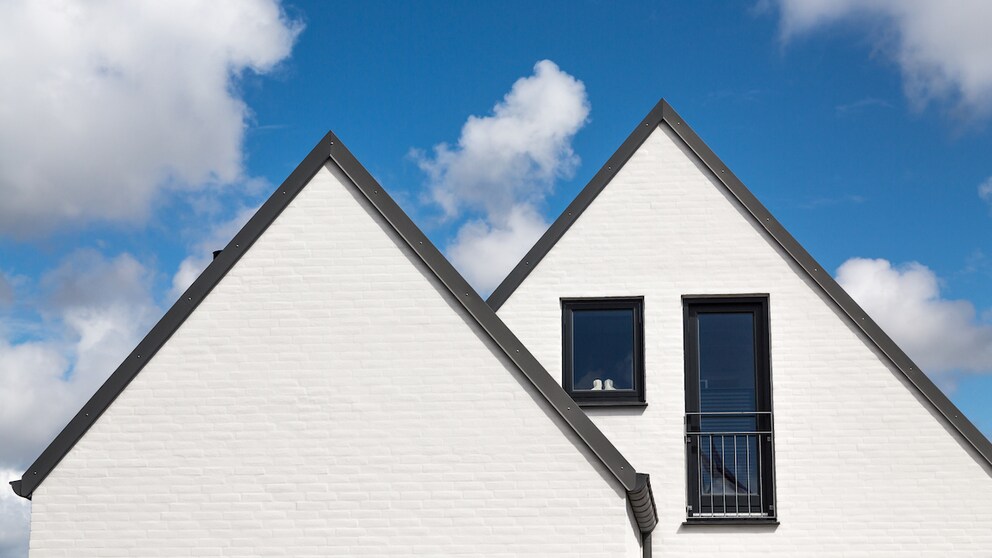
The defining feature of the gable roof is its simple construction, consisting of two gable sides and two opposing roof surfaces. These slope upwards towards each other and end at the highest point of the house, the roof ridge. In most cases, the two side surfaces of the pitched roof have a slope between 35 and 45 degrees. However, the structure does not have to be uniform; the roof surfaces can also be asymmetrical and have different slopes. The roof ridge is then no longer centered. In this case, it is referred to as a Berlin roof. Varying roof slopes can lead to less or more living space under the roof. If the space in the attic is insufficient, gable roofs can easily be supplemented with dormers.
Also interesting: Loose roof tiles? How homeowners should best respond
The Simple Construction of a Pitched Roof
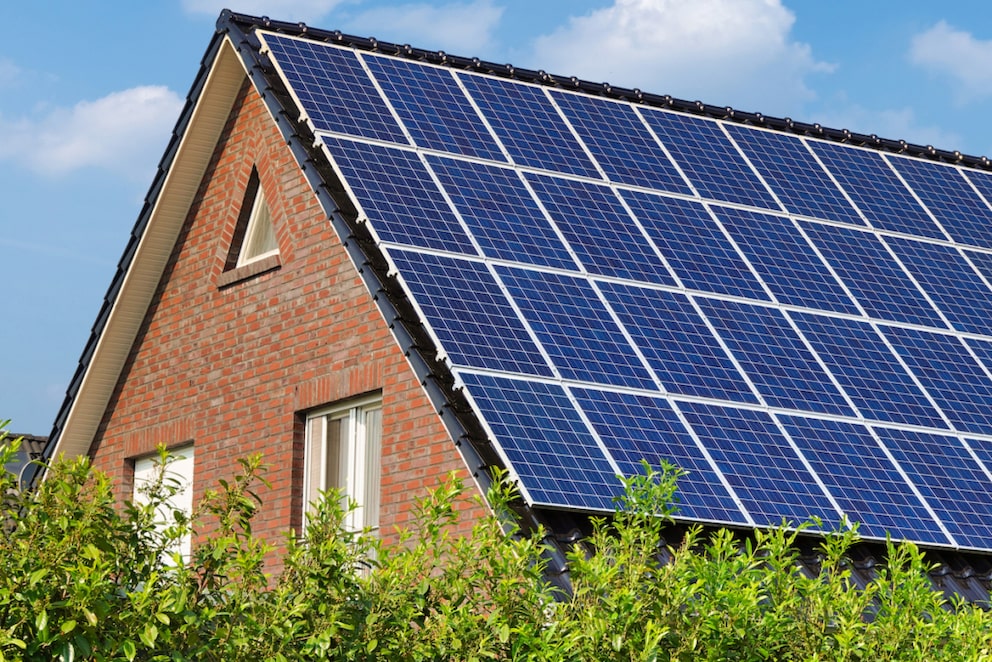
The gable roof is considered one of the simplest roof constructions, as it consists only of two sloping roof surfaces. It is constructed either as a rafter or purlin roof, which provides more flexibility in some parameters, such as the roof’s slope. This planning flexibility allows adaptation to the climatic conditions of certain regions. For example, steep roofs are often found in areas with more wind and rain, where water can quickly drain away. In regions with heavy snowfall, careful calculation is needed to determine the appropriate slope. If the roof slope is too flat, snow combined with water can become a hazard due to its increasing weight. Conversely, if the roof is too steep, snow masses can slide off unhindered, also posing a risk. Therefore, in regions with heavy snowfall, lower roofs are recommended.
Slope of a Gable Roof
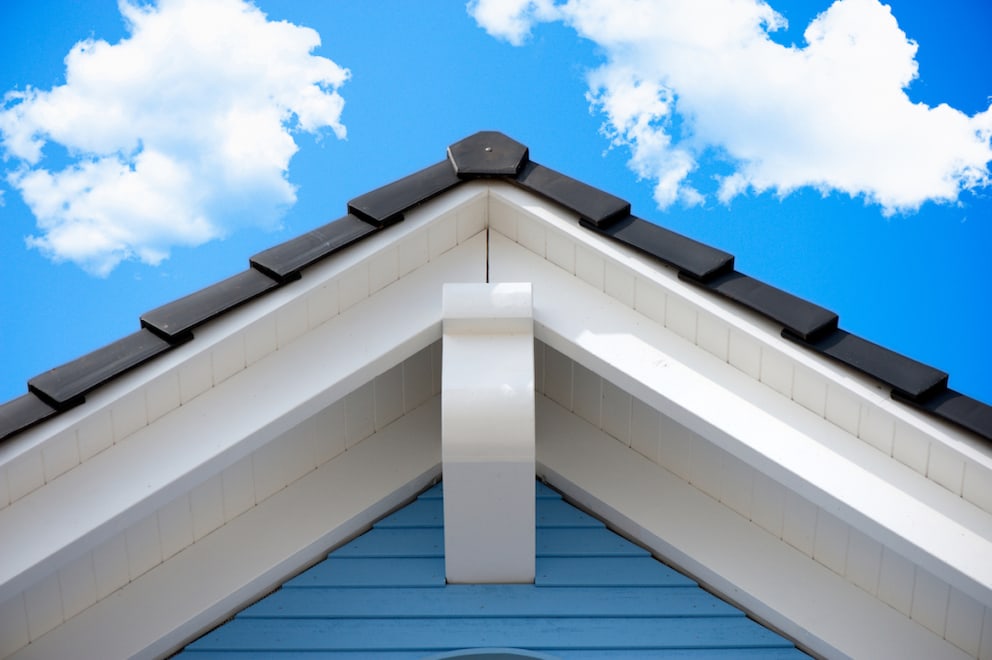
Because symmetrically constructed gable roofs can be built at various slopes, several special forms have developed over the years. The average slope of a pitched roof is around 40 degrees, which by definition makes it a steep roof (slope of >20 degrees). A flat roof, on the other hand, has a slope of less than 30, down to at least 10 degrees. A slope of 45 degrees is referred to as a new German roof; a slope of 62 degrees is called an old German or Gothic roof. Although a gable roof offers a highly flexible framework in terms of slope, not every angle is possible, as the height of the ridge is regulated by local building codes.
6 Tips for Decorating a Living Room with Sloped Ceilings
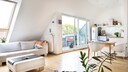
Furnishing Tips for Attic Rooms
The Advantages of a Gable Roof
The gable roof is one of the most popular roof shapes for good reason. The advantages speak for themselves:
- simple construction method
- flexible design options regarding slope, roofing, dormers, etc.
- low labor, material, and cost requirements
- high durability and weather resistance
- usable living space under the roof
- suitable for installing photovoltaic systems
- low maintenance and upkeep requirements
Also interesting: The shed roof and its pros and cons
The Disadvantages of a Gable Roof
Despite all the advantages, home builders should also be aware of some disadvantages that a gable roof brings:
- steep roof surfaces reduce living space in the attic
- without additional roof or gable windows, both of which are significant cost factors, little light enters the living space under the gable roof
- little unique house character, as gable roofs are almost ubiquitous
- roof greening is only possible with very flat gable roofs