


December 19, 2025, 3:48 pm | Read time: 5 minutes
The dining room is more than just a place to eat for many people. Therefore, it’s important to avoid certain mistakes in furnishing to create the most pleasant room atmosphere possible.
Even though the dining room is disappearing more frequently in many homes and apartments for various reasons, it remains important for some and is much more than just a place to eat. It’s a space for discussion, laughter, work, celebration—in short, for living. This makes it all the more important to have furnishings that are both functional and atmospheric. However, planning mistakes often creep into the dining room, making the space feel uncomfortable, impractical, or disharmonious.
1. An Inappropriate Dining Table

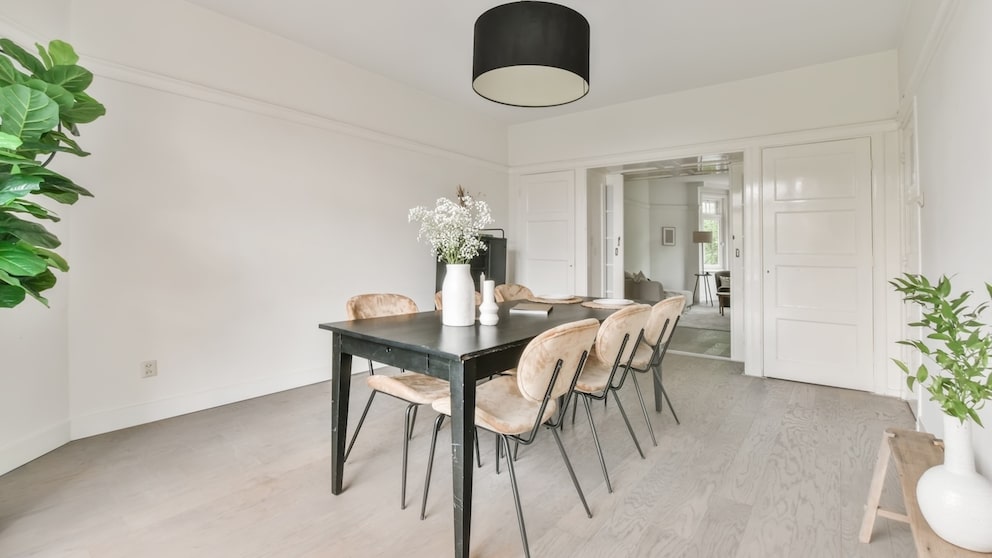
The dining table is the centerpiece of the dining room. One of the most common furnishing mistakes is not adjusting the size of the dining table to the room. A table that’s too large feels overwhelming and restricts movement, while a table that’s too small seems lost in the space and diminishes the dining room’s impact.
It’s important to plan for enough space around the table—ideally at least 90 centimeters—so chairs can be pushed back comfortably. The shape of the table also plays a crucial role. In narrow rooms, rectangular or oval tables are often a better choice than bulky round models.
2. Uncomfortable and Impractical Chairs
No matter how beautiful some designer chairs may be, if they’re uncomfortable, living comfort quickly suffers. A common mistake in furnishing the dining room is choosing chairs solely based on appearance and neglecting ergonomics.
Hard seats, missing backrests, or inappropriate seat heights make long evenings at the table quickly tiring. Different chair models without a cohesive concept can also appear chaotic. Ideally, chairs should be both comfortable and durable, and visually harmonize with the table.
3. Incorrect Lighting
Lighting in the dining room is often underestimated. A single, glaring ceiling light creates little atmosphere and makes the room feel cold. Similarly, lights that hang too high or too low are unsuitable. The light above the dining table should illuminate the table evenly without glare. Ideally, it should be positioned about 60 to 70 centimeters above the tabletop. Dimmable lights or multiple light sources provide flexibility and create the right mood for any occasion.
4. Inadequate Room Acoustics
The impact of acoustics is underestimated in many dining rooms. Large dining tables made of wood or stone, hard floors like tiles or parquet, and smooth, bare walls allow sound to reflect almost unhindered. The result is a disturbing echo that makes conversations seem strenuous and gives the room a cold, uncomfortable atmosphere. Particularly tricky: This furnishing mistake often becomes apparent only in daily use—when the clatter of dishes echoes loudly, or conversations are harder to follow.
However, if acoustics are consciously incorporated into the design, the room’s effect changes immediately. Textiles like rugs under the dining table, heavy or semi-transparent curtains, table runners, or cloth napkins effectively absorb sound. Upholstered chairs also help calm the sound in the room.
Additionally, wall decorations like pictures, shelves, or decorative acoustic panels made of wood, as well as large plants, can break the echo and simultaneously give the dining room a cozy warmth. This creates a space where conversations can be relaxed and where people genuinely enjoy spending time.
5. Decoration Without Measure and Concept
Too much decoration takes away the dining room’s lightness, while too little makes it feel sterile. A common mistake in furnishing the dining room is overloading the dining table with decor, leaving little room for eating. A better approach is a reduced, flexible decoration that can be quickly moved aside or adapted to different occasions. Single accents like a light, a picture, or a vase often have a stronger impact than many small, mismatched accessories.

How to Properly Set Up an Open-Plan Kitchen
How Big Your Dining Table Should Really Be–Most People Misjudge
6. Unsuitable Materials and Delicate Surfaces
High-gloss surfaces, delicate fabrics, or very maintenance-intensive materials are often out of place in the dining room. Here, meals are eaten, spills happen, and celebrations may occur. Everyday wear and tear is therefore almost unavoidable. A common mistake is choosing materials that show every little thing or are difficult to clean. Robust tabletops, easy-care upholstery fabrics, and durable floors provide relaxation in everyday life and long-term enjoyment of the furnishings.
Additionally, dining room furniture is used daily and thus subjected to more wear and tear than furniture in other living areas. Choosing durable materials protects against rapid wear and saves costs in the long run. Particularly practical are surfaces that forgive small scratches or stains. It’s also worth considering the maintenance effort and durability of the flooring.
At the same time, comfort plays a significant role. A dining room that’s easy to maintain is intuitively used more often and invites relaxed meals. Not having to worry about stains or marks allows for carefree hosting and versatile use of the space.
Good Planning Makes the Difference
Most furnishing mistakes in the dining room arise from a lack of planning or an imbalance between design and function. By consciously choosing size, lighting, comfort, and materials, you create a space that not only looks beautiful but also proves itself in everyday life. A successful dining room invites not only eating but also lingering.