


March 10, 2026, 4:59 am | Read time: 4 minutes
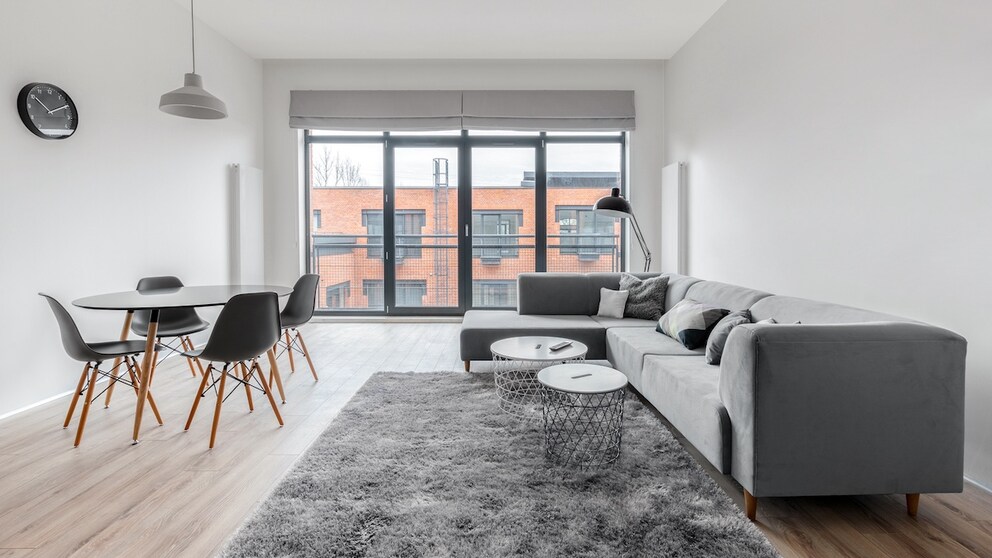
Anyone scrolling through interior blogs on Instagram or browsing Pinterest in recent years has encountered the same images: a color palette between anthracite and greige, clean lines, smooth surfaces. Everything looks styled—and quite cold. But why do many modern apartments feel so much less cozy than the charming old buildings with stucco ceilings and wooden floors?
Open Floor Plan
Few things symbolize modern architecture as much as the open living-dining area. It’s almost considered ideal because it promotes communicative living and brings plenty of light into the spaces thanks to the absence of partition walls. However, the visual openness can become a test of endurance. Sounds spread unfiltered and mix together. The coffee machine rattles in the kitchen, the news plays on the TV in the corner, and dishes clatter at the dining table. This can be challenging over time, especially for sensitive nervous systems. Few textiles, smooth floors, and high ceilings amplify the noise and inadvertently lead to poor acoustics and echoing. The brain unconsciously registers these acoustic signals as uncomfortable. Also uncomfortable: the lack of retreats or relaxation zones—a clear problem of open space design.
Minimalism
Few visible items, closed fronts, and a system that prevents chaos from arising: When Marie Kondo published her first guide, “The Life-Changing Magic of Tidying Up,” in 2011, she sparked an unforeseen trend. Suddenly, minimalism was on everyone’s lips, and people worldwide were decluttering, sorting, and tidying up to achieve visual calm and relieve the nervous system. “Less is more” became the credo of interior design.
Not only did the book and the later Netflix series of the tidying queen (“Tidying Up with Marie Kondo”) become a global success, but numerous interior blogs preaching order and reduction suddenly sprang up on Instagram. In many cases, this meant: hardly any visible decorative items or personal traces; ideal homes should look like showrooms. But what this also meant: the coziness faded, and instead, everything seemed sterile and interchangeable. While fewer stimuli can lower stress levels, it’s no secret that small signs of life bring warmth and a homely environment. Too strict perfectionism, on the other hand, feels cold and rigid.

5 Tips for the Right Bedroom Lighting

These Home Trends Look Beautiful but Cause Daily Hassles
Lighting Design
Light is by far the most important furnishing element. Even though it’s intangible, it has a tremendous impact on atmosphere and mood. And this is precisely where a major issue lies in modern apartments.
In the past, window glass was expensive, so it was used sparingly in old houses and only where necessary to provide each room with some light. Today, architects choose increasingly larger window fronts. Floor-to-ceiling windows have become a hidden luxury. Of course, plenty of daylight is essential for health; it improves mood, supports the circadian rhythm (the internal clock), and boosts energy levels. However, for interior design, too much light from one direction can also be counterproductive.
This misunderstanding continues with artificial light. That’s why the typical mistake in modern apartments is a single central ceiling spotlight. Full-surface lighting signals activity rather than relaxation. A cozy feeling doesn’t arise from maximum visibility but from contrasts. A room needs zones and a layered lighting design. If it’s fully illuminated, depth and vibrancy are lost. Coziness is much more created by different light sources at various heights and indirect lighting, comfort by warm light nuances (around 2,700 Kelvin).
Conclusion
The perfectly staged, clean, and fully illuminated “Instagram room” is usually just a stage, not a cozy nest. It resembles a showroom more than a comfortable home where one can relax. The biggest lesson of recent years: Less is not necessarily more, but the dosage is crucial. Personal items, warm colors, some texture, and natural materials are very welcome because they automatically make the heart beat faster. This not only creates warmth but also invites relaxation.