


June 1, 2026, 3:36 pm | Read time: 5 minutes
In the past, interior design trends lasted for years, sometimes even decades. Today, a single summer can make your living room look like a snapshot from a bygone Instagram era. The bouclé chair that everyone had in their living room two years ago now looks suspiciously like 2023. Organic mirrors? Almost meme material. And just as you’ve learned to pronounce “Quiet Luxury” correctly, the style is already being replaced by something louder. But why exactly do interior design trends age so quickly now?
Interior design trends age faster today than ever before. It’s not because furniture has suddenly become worse. It’s because living spaces are no longer just about living. They’ve become content.
Homes Used to Be Private; Now They’re Public
There was a time when people decorated their homes for themselves and their own sense of comfort. Today, many people unconsciously design their spaces for an imaginary public. For Instagram stories, Pinterest pins, the perfect Zoom call background, or a TikTok video of their evening routine.
This has changed the function of interior design. Furniture is no longer just about comfort or practicality. It must immediately convey a certain mood. And it has to do so at first glance.
The problem: Anything designed for immediate visual impact wears out faster. A trend is no longer discovered slowly. It explodes within weeks. A particular sofa suddenly appears everywhere. Along with a certain vase on an organically shaped coffee table. The same beige canvas prints adorn the walls. What initially seemed inspiring eventually feels like a poorly copied endless loop. And that’s exactly why trends today quickly shift from “aesthetic” to “I can’t stand it anymore.”
Social Media Has Changed Our View of Homes
In the past, you might have known the homes of friends or seen them in interior design magazines. Today, we scroll through hundreds of perfectly staged rooms daily. Our eyes now consume interior content much like fast fashion. And this has consequences. Because when you see new inspiration every day, the familiar quickly feels boring. Your own decor suddenly competes with an endless stream of trends, colors, and micro-aesthetics.
A few years ago, everyone wanted a Scandinavian style. Then came Japandi. After that, furniture with organic shapes entered our homes. This was followed by Quiet Luxury and then the trendy chrome look. Some trends no longer feel like genuine styles but more like seasonal filters. And that’s where the real exhaustion lies. We no longer experience interior design slowly. We consume it at high speed.
The Era of Timeless Design May Have Been Just an Illusion
It’s particularly striking how often terms like “timeless” are used in marketing today. Almost every new trend wave claims not to be a trend at all. Minimalism was supposed to be timeless. Quiet Luxury too. Neutral tones, of course. But often “timeless” now simply means: extremely trendy at the moment.
Because when millions of homes suddenly adopt the same aesthetic, the opposite of timelessness paradoxically occurs. The style becomes dateable. You can immediately tell which interior era it belongs to.
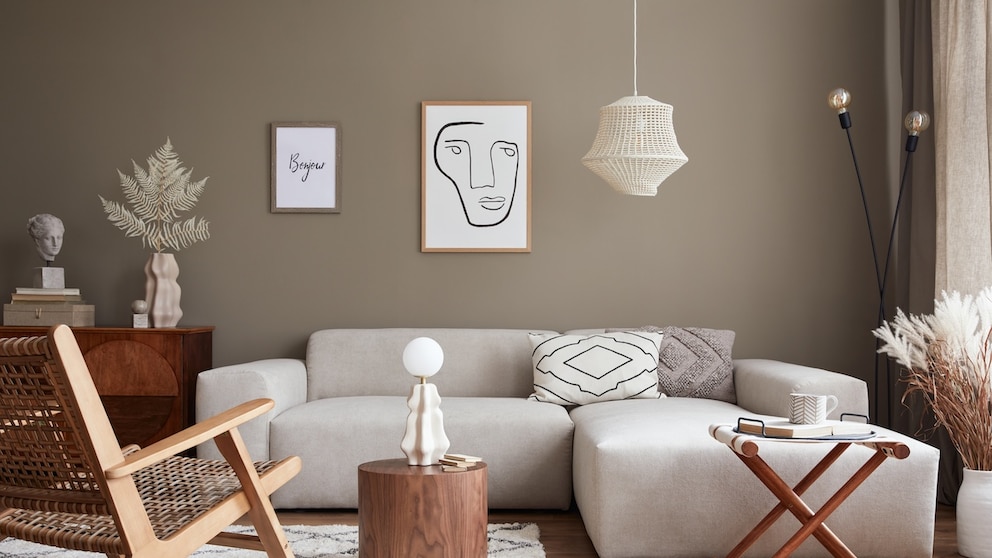
Just as you can instantly recognize a home from the early 2000s by cherry wood and orchids, you’ll eventually be able to identify the 2020s: beige bouclé, black fixtures, dried flowers, and wavy mirrors.
That’s not a bad thing. But perhaps it’s more honest than continuing to pretend there are trends outside of trends.

Why Everything in Interior Design Is Suddenly Labeled as “Timeless”

“Those Who Constantly Consume Home Content Never Find Peace”
We Now Buy Moods Instead of Furniture
Perhaps this is the biggest difference from the past: People today often buy less of a piece of furniture and more of a feeling. The Mediterranean linen dream, the calm luxury life, the creative artist’s apartment, the Parisian old building vibe: Living has become emotional and thus automatically more susceptible to rapid changes. Because feelings and desires change.
After years full of crises, many wanted their homes to suddenly exude calm. That’s why everything became beige, soft, and minimal. Now, a counter-movement is slowly emerging: more personality, more color, more chaos, more humor. You can almost feel how people have grown tired of the perfect Instagram home.
It’s Not That Interior Design Trends Age Faster, but That We Tire of Them More Quickly
The real question might not be why trends end so quickly. But why we constantly need new ones. There’s an increasing feeling that homes should never be finished. That there’s always a new lamp missing, a new style, a new wall color, a new aesthetic. But a home functions differently from what is depicted on social media. Good spaces don’t come together over a weekend or through a shopping cart full of trendy items. They develop slowly. With things that are allowed to stay. With objects that tell stories, and with corners that don’t have to look perfect.
Perhaps that’s exactly why vintage and personal decor are becoming so attractive again. Not because they’re perfect. But because they resist quick turnover. An old wooden dresser often ages more gracefully than the trend chair of the year.