

October 1, 2026, 12:18 pm | Read time: 4 minutes
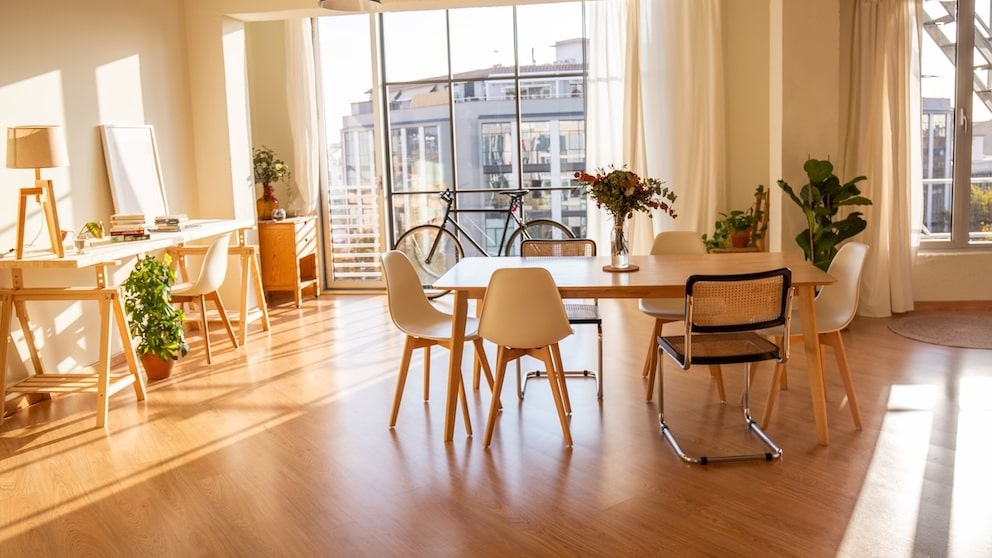
Whether it’s a cozy breakfast for two, a family dinner on Sunday, or long evenings with friends, the dining table is much more than just a practical piece of furniture. It often forms the centerpiece of the dining area and thus shapes the atmosphere of a room. Therefore, it’s important to consider not only design, material, and shape when choosing a table, but especially the right dining table size.
A table can be beautiful, but if it’s too small, dining quickly becomes cramped. Conversely, if it’s too large, the room looks disproportionate and you lose freedom of movement. But what dimensions does a dining table actually need? How much space should be allocated per person, and which table shape is suitable for small spaces? Here are the key answers.
Follow myHOMEBOOK on WhatsApp now
Dining Table Size Primarily Depends on the Number of People
The first question when choosing the right dining table is: How many people should regularly have a seat at it? As a rule of thumb, you can allocate about 60 centimeters of table width per seat. This ensures each person has enough space for a plate, cutlery, and glass without feeling cramped.
For four people, a rectangular dining table with a length of about 120 centimeters is suitable. If you want to comfortably accommodate six people, you should consider around 160 to 180 centimeters. For eight people, about 200 centimeters or more is advisable.
Different standards apply to round tables. A diameter of about 100 to 110 centimeters is suitable for four people. For six people, approximately 120 to 140 centimeters is sensible, while eight people may need a diameter of around 150 to 160 centimeters, depending on the desired comfort.
However, these values are only guidelines. The actual space needed also depends on the table shape, the width of the tabletop, and the chairs used. The table legs also play a role. A central pedestal or a delicate frame can offer more legroom than multiple table legs positioned directly at the seats. If you like to sit generously or regularly host guests, you should plan for a bit more space when choosing the size of the dining table.
Tip: If you regularly host larger gatherings, you don’t necessarily need a permanently large table. An extendable dining table can be a flexible solution. It remains compact for everyday use and can be quickly expanded when guests arrive.
Also interesting: How to Determine the Optimal Table Height
6 Common Mistakes When Setting Up the Dining Room

How to Properly Place a Rug in a Room–Tips from an Interior Designer
It’s Not Just the Tabletop That Matters
In planning, the size of the tabletop is often the only consideration. However, a dining table requires significantly more space than its actual dimensions might suggest. After all, chairs need to be pulled out, and there should be enough room behind the seats for people to pass by.
About 90 centimeters of space between the table edge and the wall or other furniture is comfortable. In areas where people frequently walk behind the chairs, a bit more space is preferable.
Before purchasing, it’s worth marking the planned table area, including chairs, on the floor with masking tape. This quickly reveals whether the chosen dining table size actually fits the room. This simple test can prevent a lot of trouble, especially in small dining rooms or open-plan kitchens.
Which Table Shape Fits the Room?
The right dining table size is closely related to the shape of the table. Rectangular models are particularly versatile and are well-suited for larger rooms or elongated layouts. They can be placed against a wall or set freely in the room and offer a relatively large number of seats.
A square dining table appears more compact and creates a communicative atmosphere. It is especially suitable for nearly square rooms. Round dining tables require a certain amount of floor space but have a significant advantage: Everyone sits facing each other, creating a particularly sociable atmosphere. At the same time, there are no awkward corners, which can be especially pleasant in smaller rooms.