


August 3, 2026, 3:38 am | Read time: 3 minutes
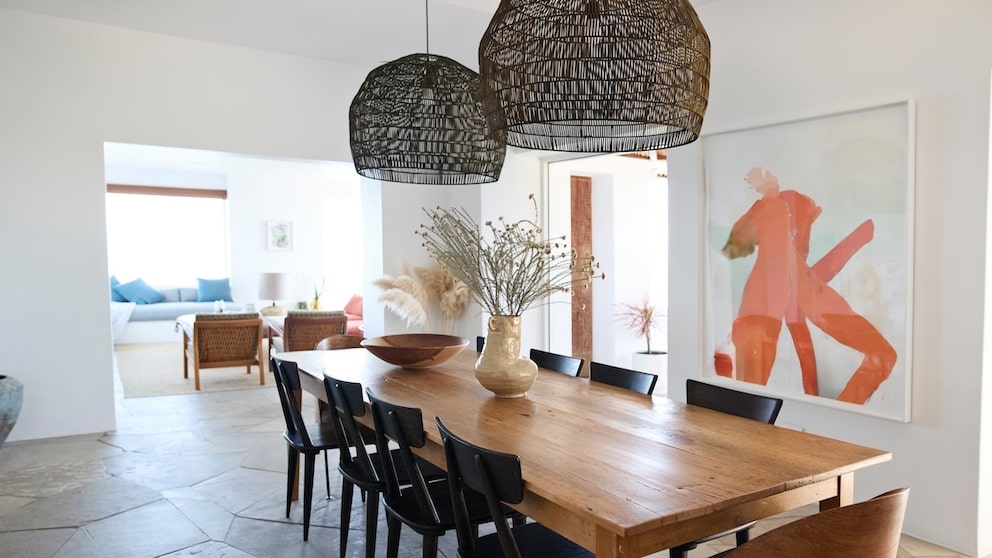
The right pendant light can make a dining table the focal point of the room. However, even the most beautiful design only works if the lamp hangs at the right height. If it’s mounted too high, the dining area feels cold and loses coziness. Conversely, if it hangs too low, it obstructs the view of the person across and can quickly become a nuisance in daily life. There are indeed guidelines that interior designers follow.
The Rule of Thumb
An ideal distance is about 24 to 28 inches between the bottom edge of the light and the tabletop. In this range, the dining table is evenly illuminated without the lamp glaring or obstructing the view.
The pendant light also creates a visual frame for the dining area. It connects the table and light source into a unit and ensures that the dining area appears clearly defined, even in open-plan kitchens.
Those with particularly high ceilings can slightly increase the distance. However, the light should not be moved too far up—otherwise, it loses its homely effect and appears more like general room lighting.
Why Many Lamps Hang Too High
Out of concern for bumping heads or visually constricting the space, pendant lights are often mounted much higher than necessary. The result: The light spreads throughout the room, leaving the dining table relatively dark and losing the cozy atmosphere.
Interior designers therefore see the light not only as a source of illumination but also as a design element. It should deliberately highlight the table and draw attention to this area.
Table Height Also Plays a Role
Not every pendant light suits every dining table. Over a small round table, a single light is often sufficient, while long dining tables benefit from two pendant lights or an elongated model.
The size of the lampshade also influences the ideal height. Large, closed shades can quickly appear dominant and should hang slightly higher than delicate lights with an open design. Conversely, narrow pendant lights can be placed a bit lower without visually overwhelming the space.
5 Tips for the Right Bedroom Lighting
What Makes a Good Nightstand Lamp
Glare-Free Light Provides More Comfort
Just as important as the height is the light effect. If the light source is visible in the lampshade, it can cause uncomfortable glare—especially if the light hangs too high and one looks directly into it.
Ideal are models with a diffuser or a shade that directs the light downward and diffuses it softly. This way, the table surface is evenly lit, while the light in the room feels pleasant.
For the dining area, warm white light with a color temperature of about 2,700 to 3,000 Kelvin is recommended. It creates a cozy atmosphere and makes food appear more natural than neutral white light.
What to Do if the Power Outlet Isn’t Centered?
In many apartments, the power connection is not directly above the dining table. However, this doesn’t have to be a disadvantage. With so-called canopies or discreetly guided textile cables or cable channels, the pendant light can be easily positioned over the center of the table.
The crucial factor is less the position of the power outlet and more the alignment of the light to the table. It should always be oriented to the center of the table—not the ceiling.