
October 1, 2025, 11:32 am | Read time: 6 minutes
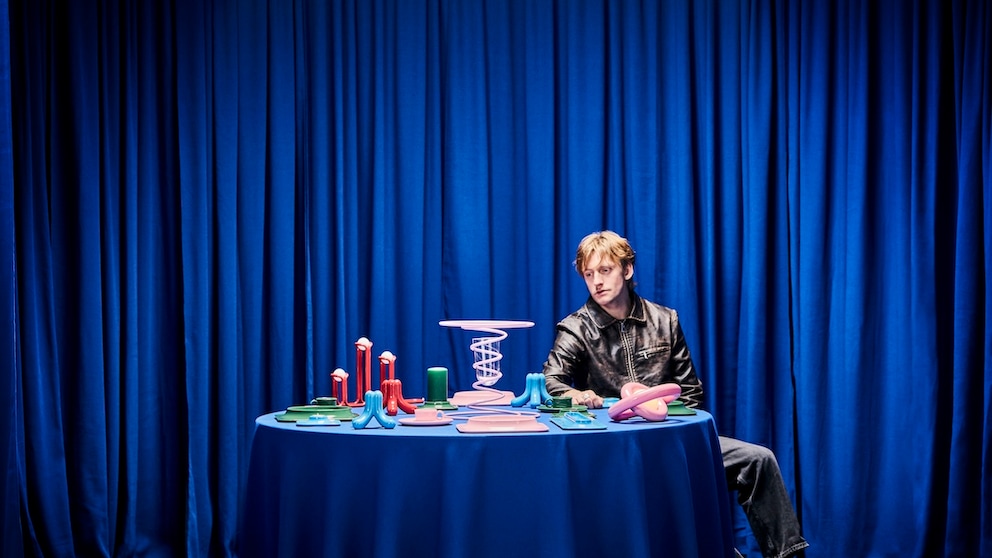
Ikea, in collaboration with young Swedish designer Gustaf Westman, will launch a limited collection of 12 pieces in 2025. This collection marks Westman’s first product design collaboration with Ikea and aims to bring a fresh breeze to the winter and holiday season. However, the pieces are not intended solely for festive occasions. Instead, they are meant to offer creative freedom and fill everyday life with joy. myHOMEBOOK took a closer look at the collection.
Colors, Curves, and Character
Westman’s design language is characterized by soft curves, playful shapes, and bold color contrasts. The collection mixes traditional Christmas colors like red and green with surprising accents such as pink and light blue.
The shapes are sculptural: plates with square edges and gently rounded hollows, vases with spiral rims, and light objects with orbital or wavy elements. The pieces are primarily made of porcelain or stoneware, steel, glass, and a part of the collection is made of plastic.
The Collection at a Glance
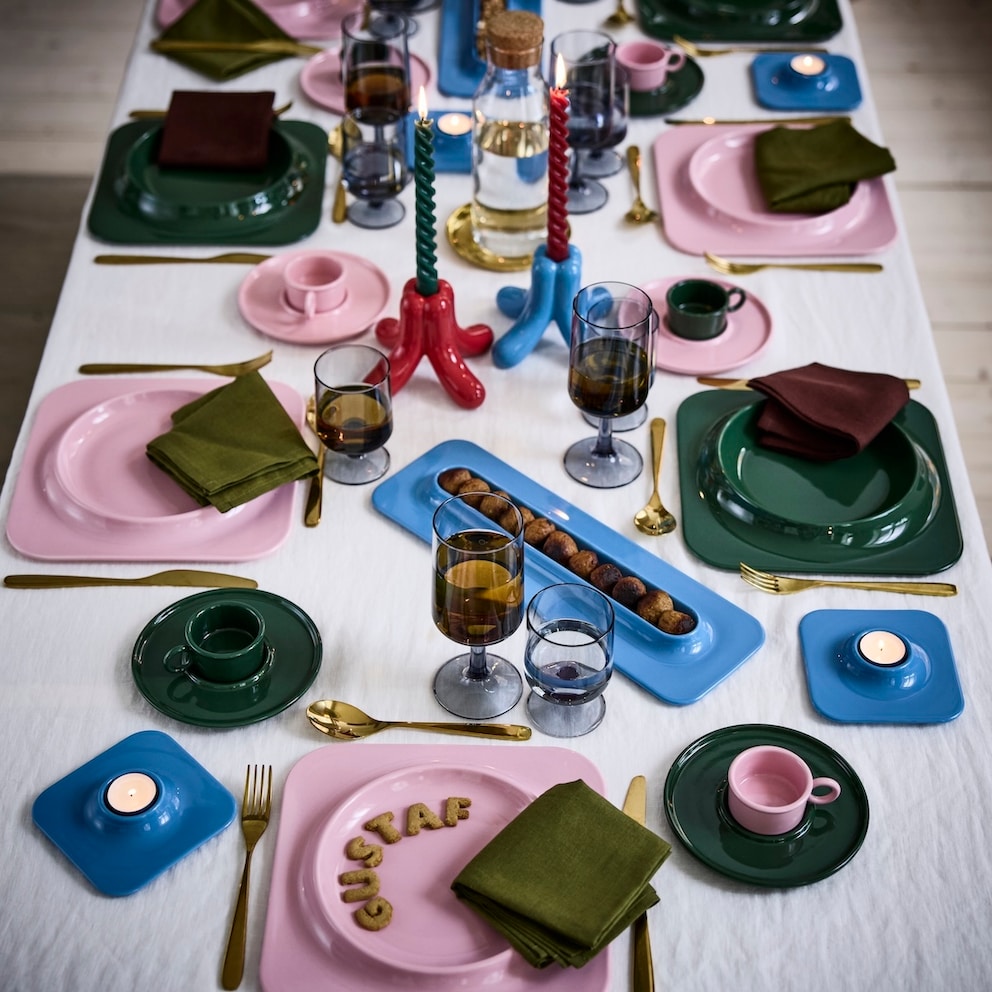
The first released item from the Ikea collection with Gustaf Westman is a porcelain serving plate specifically designed to showcase Ikea’s iconic meatballs attractively. The “Meatball Plate” has an elongated shape with a long hollow that fits exactly eleven meatballs. At the same time, the design is versatile and can also be used for small pastries, olives, chocolates, or other small items.
In addition to the Meatball Plate, there are also more classic pieces like plates and cups. These mix square outer edges and clearly defined rims with soft, centered curves. They are available in dark green and pink.
As decorative elements, the collection includes a block candle holder, a tealight holder, and a candle holder. The tealight and candle holder are available in light blue, with the candle holder also available in red. The block candle holder comes in dark green, matching the plates and cups.
Other decorative elements include a vase surrounded by a spiral of steel in pink and two decorative lights. One light, reminiscent of a three-armed candelabra, is available in red, while the other decorative light is in pink.
The pieces in the collection are priced between seven and 30 euros, making Westman’s art accessible to a much larger audience, which is a significant plus for many.
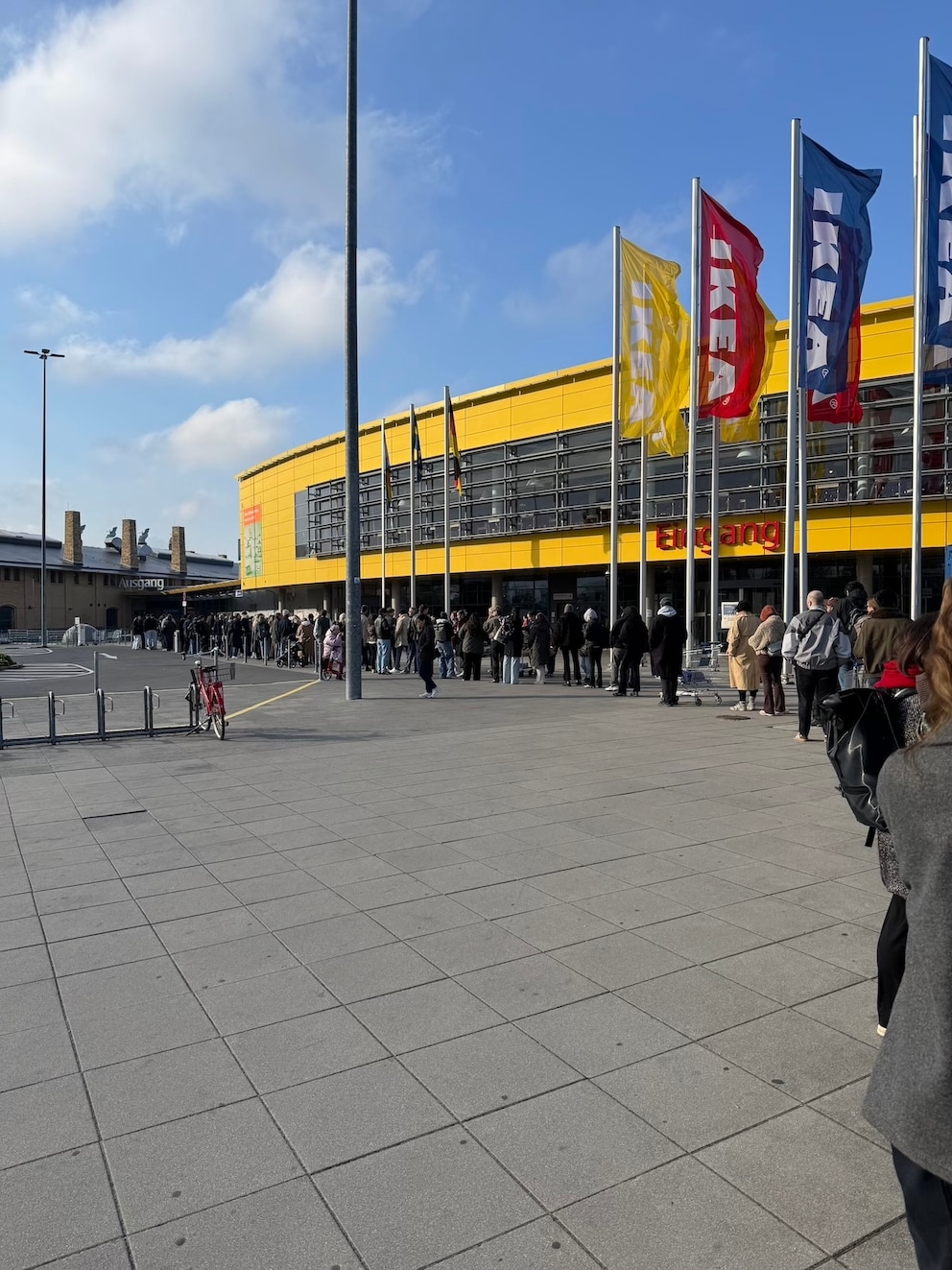
The collection will be available in Germany at all Ikea stores starting October 1, 2025. The pieces are limited to two per product per person and are not available online or through Click & Collect, but only in-store and while supplies last.

Is the First Piece from Gustaf Westman’s Ikea Collection Worth It?

Ikea Announces Partnership With Designer Gustaf Westman
The Hits and Misses of the myHOMEBOOK Editorial Team
myHOMEBOOK took a closer look at the collection and picked its favorites. While some products impressed, others did not find favor.
Hits

The vase particularly impressed, as it translates the designer’s unmistakable style into an everyday object. The spiral holder in pink picks up a central design element of Westman’s work, already known from his iconic book and magazine holder. This characteristic design language gives the vase not only a playful-sculptural character but also makes it immediately recognizable as a “Westman design.” By combining functional clarity with playful detail, the vase seamlessly fits into contemporary living spaces while offering high recognition value.
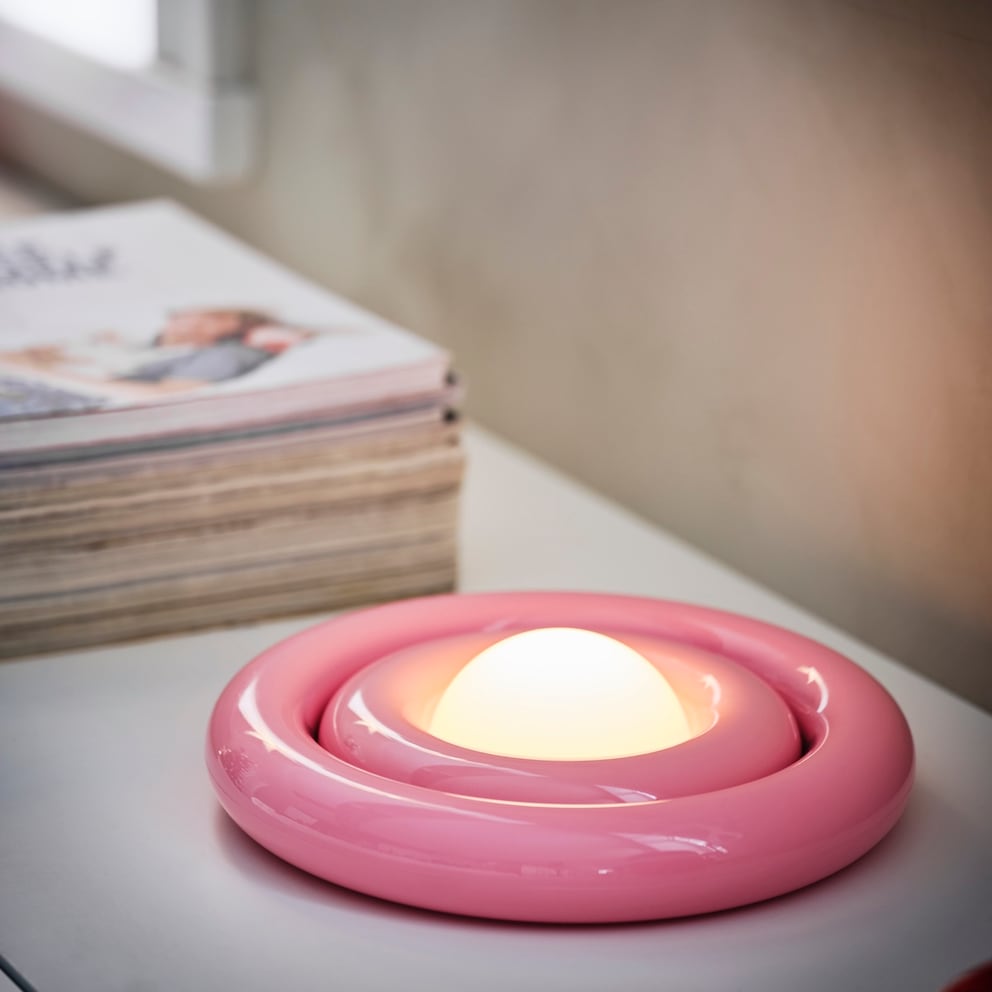
The same goes for the table decorative light in pink: It also conveys Westman’s typically playful yet reduced design language and demonstrates how his distinctive design elements can be harmoniously applied to different object types.
However, the lamp sparked discussions online even before its sales launch. On the official product images, it appears at times as an elegant statement piece, at other times—depending on the perspective—like a brightly colored children’s toy. Some buyers (who had the opportunity to purchase the collection earlier in Austria) expressed concerns about the materials. Instead of glass or ceramic, Ikea surprisingly uses plastic here. Those familiar with Westman’s previous works might have expected higher-quality materials. The editorial team was initially unsure how to assess the material.
On the other hand, the decision fits the concept: The lamp is meant to be a cheerful color accent—uncomplicated, flexible, and suitable for any corner. Being battery-operated makes it independent of power outlets and thus particularly versatile. Therefore, the lamp impressed and is among the collection’s favorites.
Misses
The plates and cups in the collection did not impress the editorial team. The design of the plates is more reminiscent of dog bowls than fine tableware, lacking the elegance desired for everyday use or even festive occasions. The color variants in dark green and pink also divide opinions—while they are striking and typically Westman, many find them too specific and thus not very suitable for everyday use.
Additionally, the limitation to two pieces per product and person makes it impossible to purchase a classic set of four or six plates. A compromise is to mix the colors and combine two plates in pink and two in green—a principle that can also be applied to the cups.
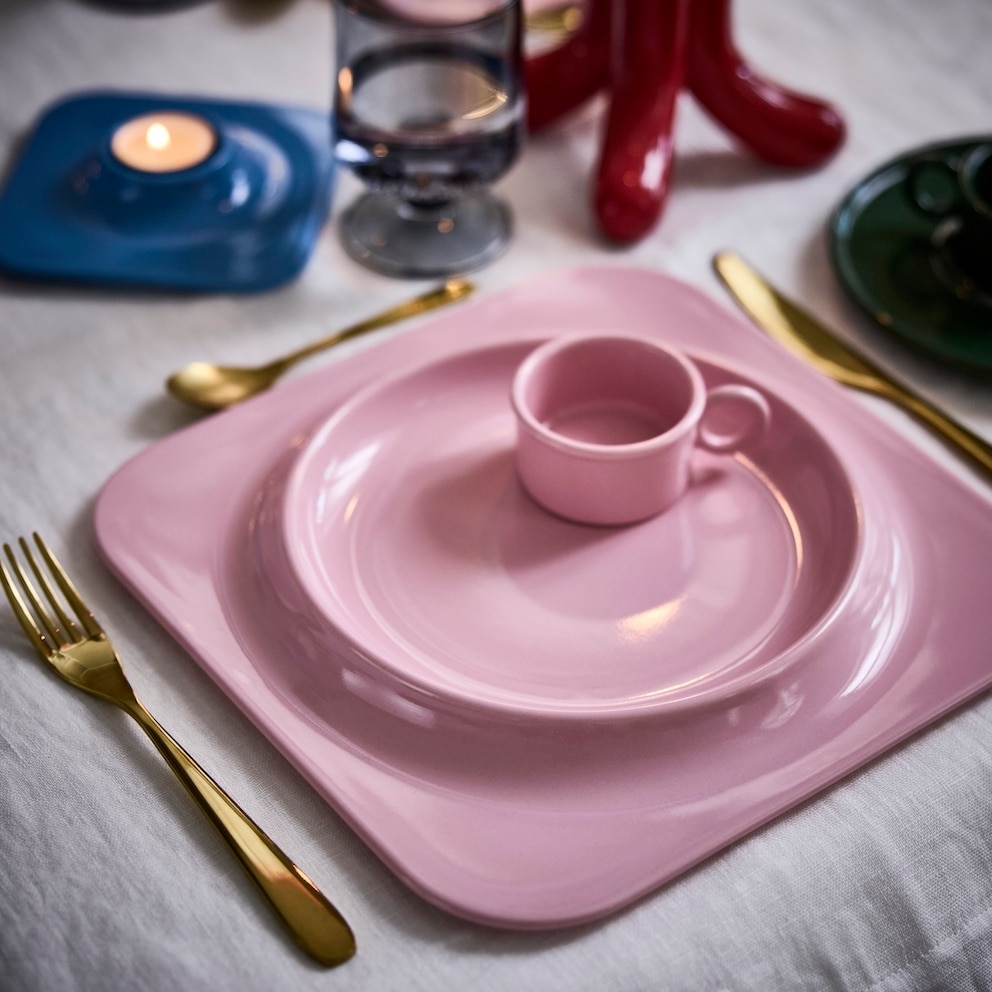
But the matching cups also failed to impress. With a capacity of just 70 milliliters, they resemble espresso cups and are too small for regular daily use. They are more appealing on special occasions, such as when placing a piece of pastry on the generously sized saucer and dipping it into a warm beverage.
Conclusion
The collection shows how Westman’s iconic aesthetics can be translated into affordable products. Bold colors, round silhouettes, and a touch of humor run as a common thread through the series. A must-have for Westman fans, but perhaps too colorful and playful for many others. However, those who prefer a less exciting look always have the option to showcase individual pieces subtly and decoratively.