


July 30, 2026, 12:28 pm | Read time: 4 minutes
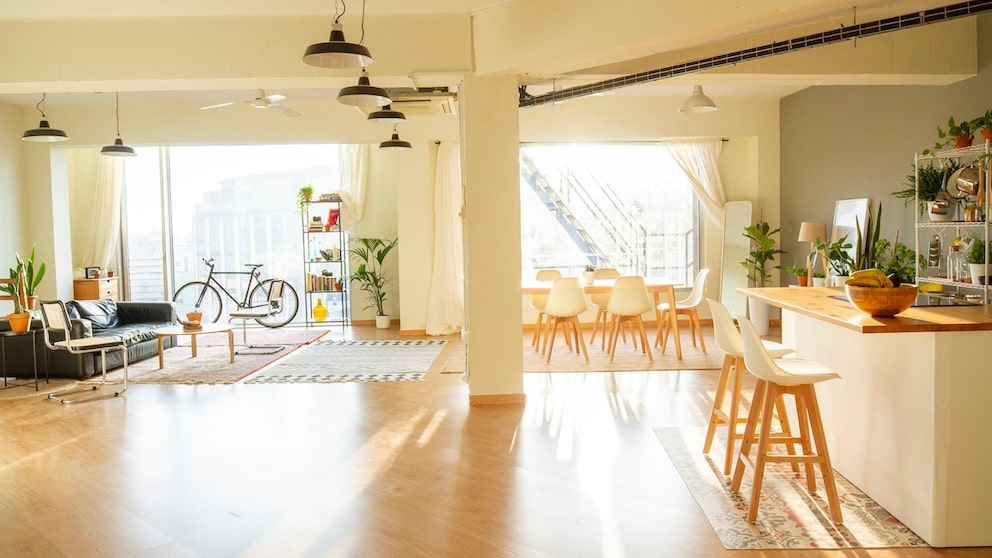
For a long time, open living concepts were seen as the epitome of modern living. Spacious, bright rooms and seamless transitions between the kitchen, dining, and living areas symbolized freedom and contemporary design. But the trend is shifting: More and more architects, interior designers, and homeowners are returning to clearly separated rooms. myHOMEBOOK editor Mareike Schmidt explains why open floor plans are losing popularity.
Follow myHOMEBOOK on WhatsApp now
The Desire for Retreat and Peace
A central reason for the change lies in our altered daily lives. A home is no longer just a place of relaxation but also a workplace, gym, learning environment, and social hub. Open floor plans quickly reach their limits here. Those who simultaneously talk on the phone, cook, learn, or relax quickly realize: Without spatial separation, there is a lack of peace, concentration, and privacy. Closed or at least clearly zoned rooms allow for retreat–a need that is stronger today than ever.
Acoustics, Odors, and Disorder
What is often glossed over in high-end magazines becomes all the more apparent in everyday life: Open living concepts are acoustically challenging. Sounds echo, conversations overlap, and kitchen appliances can be heard throughout the room. Cooking smells also spread unhindered. Additionally, there is a high demand for order. In open spaces, everything is visible. Disorder cannot simply be hidden behind a door. Many find this constant pressure burdensome.
Why Closed Kitchens Are Making a Comeback

Why the Dining Room Is Disappearing From More Households
New Appreciation for Functional Spaces
Alongside the farewell to radical openness, there is a growing appreciation for functionally defined spaces. A kitchen can once again be a kitchen, and a living room a place to relax. This clarity not only makes everyday life easier but also allows for more targeted design. Materials, colors, and lighting can be tailored to the specific use, rather than having to meet all functions simultaneously in one large room.
Also interesting: Why the dining room is disappearing from more and more households
However, this does not mean a complete return to the compartmentalized floor plans of past decades. Today, hybrid solutions are primarily in demand: sliding doors, glass walls, room dividers, or curtains create flexibility. Rooms can be opened or closed as needed. This way, the feeling of spaciousness is preserved without sacrificing structure and comfort.
Living in Harmony with New Life Realities
The departure from the open living concept is less a fashionable regression and more an adaptation to new life realities. Living is increasingly understood as a dynamic system that must adapt to life phases, moods, and social contexts. In a time when work, leisure, and private life increasingly overlap, clearly defined spaces are gaining importance again. They offer orientation, peace, and a sense of home. Those who consciously define spaces make a decision about how much closeness, exchange, or separation they want to allow in everyday life. Living thus becomes an expression of personal life plans rather than the implementation of a general ideal. The home no longer primarily serves representation but supports individual routines and needs.
This change can also be read socially: In an increasingly complex, accelerated, and digitized world, the home becomes a place of reliability. Clear spatial structures provide support and promote a sense of control in a daily life often characterized by simultaneity and constant availability. The need for spatial orientation is thus closely linked to the desire for inner peace.
Contemporary living, therefore, does not mean following trends but creating spaces that evolve with the lives of their inhabitants. A home that offers structure without constraining and allows openness without forcing it becomes a quiet but effective response to the challenges of modern life realities. Openness remains a design tool but is no longer the unassailable ideal of modern living culture.