


August 13, 2025, 12:59 pm | Read time: 3 minutes
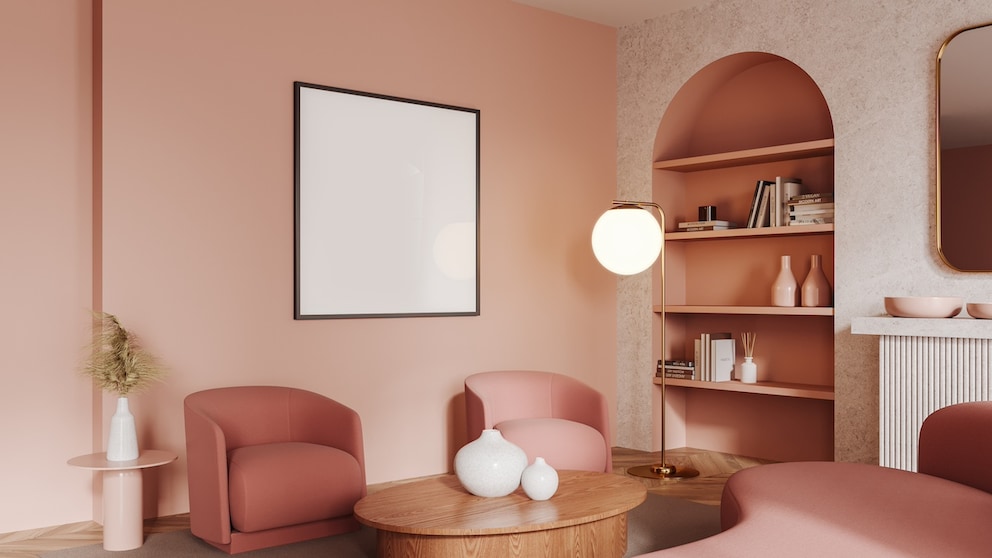
The days of accent walls or entire rooms painted in a single color are over. The new trend, “Color Capping,” is inspired by the so-called Color Drenching, where walls, ceilings, and often furniture are painted in a uniform color.
Color Capping Replaces Color Drenching
In recent years, the so-called Color Drenching trend was particularly popular in room color design. This trend involved painting an entire room in one color: all walls, the ceiling, and even the doors and moldings. But as stylish as this look was, it doesn’t work in every home. Now, a new color trend is emerging that aims to create more depth, structure, and even a larger sense of space: Color Capping.
Instead of using the same shade, the focus is now on graduated tones from the same color family that intensify from bottom to top. This creates a gentle color gradient that makes the room appear larger and adds more dimension. The ceiling, often overlooked as the fifth wall, is consciously included in the design.

What Lies Behind the Home Trend ‘Color Drenching’

How to Stylishly Incorporate Stripes in Your Decor
Why Color Capping Is So Effective
The key to Color Capping is the optical depth: By using multiple gradations of a color family, a gentle, ombré-like play between wall and ceiling is created, which visually enlarges the room and gives it more depth.
Also interesting: 4 Tricks to Make Small Rooms Look Bigger with Color
Light tones are used in the lower wall area, while darker shades adorn the upper part of the wall or the ceiling. This makes the rooms appear taller. At the same time, the color concept becomes more elegant and calmer than a completely monochromatic room. Architectural details such as stucco, moldings, or beams can be highlighted by placing transitions along these elements. The effect is subtle but effective. Ideal for those who want to bring color into their home without overwhelming the space.
How to Achieve the Look
For a harmonious result, it is recommended to combine three shades from the same family that have similar undertones but differ in intensity: a light tone for the lower wall area, a medium one for moldings or transitions, and a darker one for the ceiling. Whether the gradation flows smoothly or is set with clear lines depends on the desired look. Color Capping is particularly atmospheric in rooms with high ceilings, bedrooms, and cozy living areas. When choosing colors, one should pay attention to tone-on-tone harmonies to create a calm overall picture. Strong contrasts can destroy the effect.
There are essentially no limits to the colors for Color Capping. Currently, tones from the red color family with earthy terracotta and vibrant rust shades are particularly popular, but blue gradations are also increasingly seen. However, the trend is also suitable for those who prefer less colorful wall designs. Neutral tones can also achieve a strong effect with the trend.