



July 10, 2020, 8:28 am | Read time: 5 minutes
When persistent haggling occurs over the price of a rug at a traditional bazaar, it often indicates the item’s special value. However, sometimes it turns out later that the rug isn’t an original. Here’s how you can distinguish a genuine rug from a counterfeit as a layperson.
It’s not uncommon to return from a trip to the Middle East with a traditional souvenir in the form of an Oriental or Persian rug. These rugs create special vacation memories and add an extraordinary touch from a distant land to your home. Often, believing they’ve discovered a high-quality, unique piece, people spend a small fortune. However, the traditional carpet industry is rife with counterfeits, and many fall victim to fraud. So, how can you distinguish a fake from a genuine, hand-knotted rug?
A Genuine Rug Is Always Unique
When it comes to authentic rugs, they are always unique. Persian or Oriental rugs are always handmade, which often results in small imperfections and irregularities in the craftsmanship, as well as in the size and shape of the rug. All these factors are considered quality markers of a genuine rug. Each authentic product exists only once. However, if all the rugs offered by a dealer are identical and available in multiples, this indicates machine-made industrial goods.

The uniqueness of a rug can also be recognized by its design. Each design is individually crafted and stems from the pure imagination of the weaver, making it difficult to replicate. Thus, a rug is not always symmetrical. Even the best and most experienced weaver finds it challenging to reproduce small details, ornaments, or intricacies multiple times. It takes time to complete a genuine rug. In contrast, machine-made rugs are produced in just a few hours and usually feature completely identical, symmetrical designs.
Also interesting: Bet your rug is lying incorrectly?
What Material Is a Genuine Rug Made Of?
It’s important to carefully read the label on the back of a rug. Original pieces are usually made from natural materials like cotton, sheep’s wool, camel hair, or pure silk. These materials provide the rug with durability and robustness. In some cases, genuine rugs are also dyed entirely with plant-based colors.
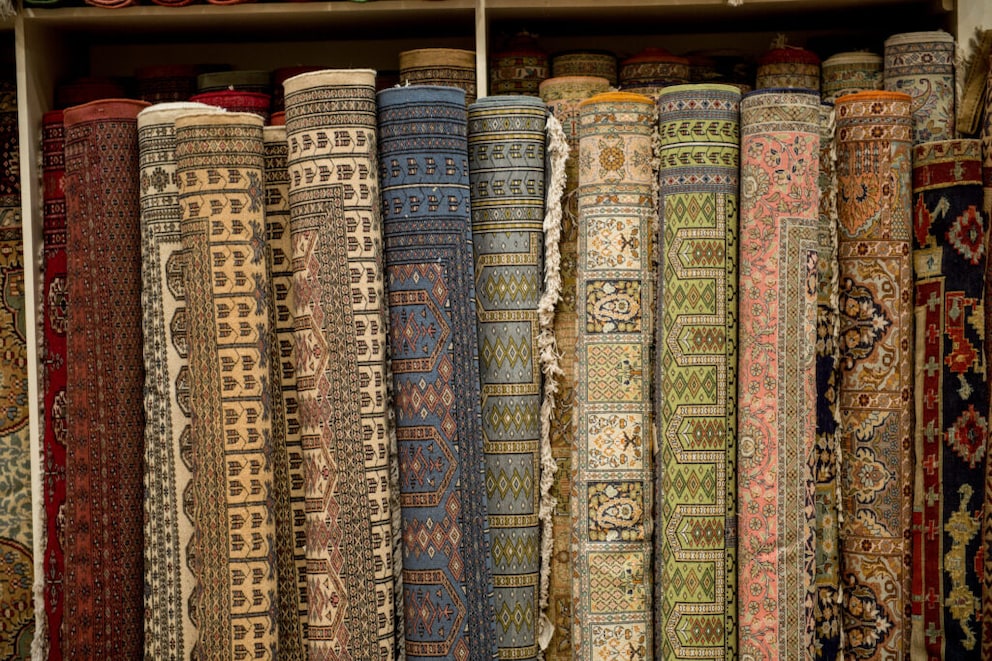
The pile, or the surface of a rug, is made from sheep’s wool, and the warp, or the back, is made from cotton or also sheep’s wool. Counterfeits, however, are often made from synthetic fibers and dyes—if not entirely, then at least partially. In some cases, machine-made rugs use wool, but the back is usually made from lower-quality fibers.
Besides the material information, the label usually states the country of origin of the rug. Oriental or Persian rugs are traditionally made in Arab countries or Iran. However, there are also models from India or China, as these two countries are also known for their high skills in rug weaving. But these are often counterfeits of poor quality or machine-made products. Even though these are often just copies, they can sometimes be of very good quality but still do not match the quality of an original.
Also interesting: 13 tips for setting up your hallway correctly
Focus on the Knots
The knots of a rug are an important indicator of whether it is an original or a counterfeit. A look at the back of the rug can be helpful here, as it reveals the regularity of the knots and the type of weaving. Both attributes are special criteria for determining the authenticity of a rug. Since it is handmade, small errors and irregularities are almost a quality feature.
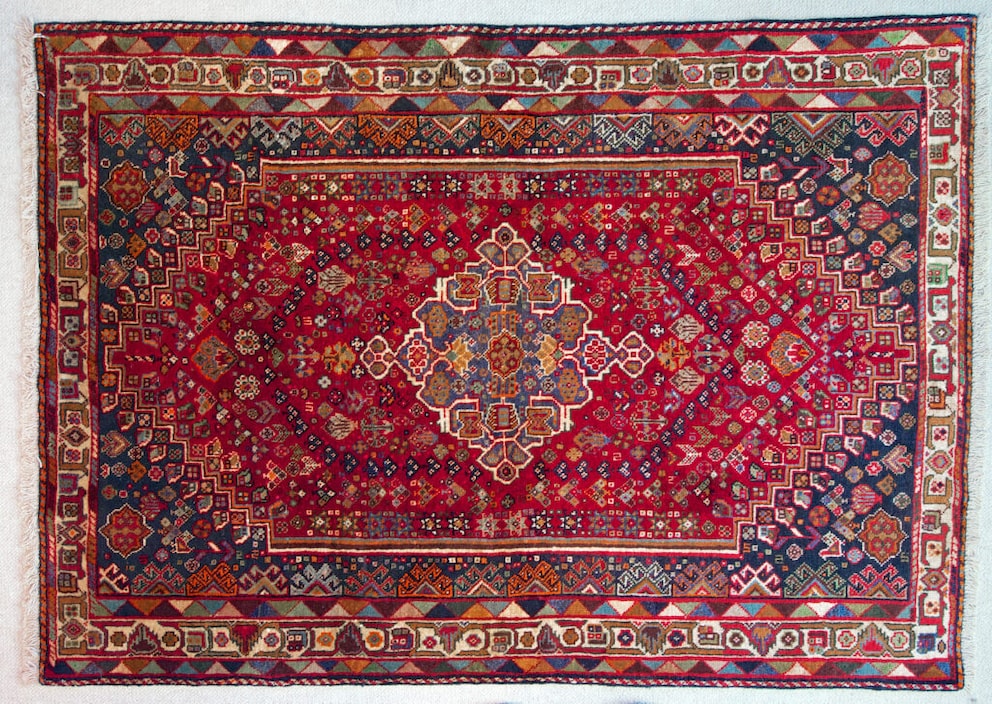
The number and density of individual knots also say a lot about a rug. The rule of thumb is: the more knots, the finer the pattern’s craftsmanship. A high knot density also requires a great deal of effort. It can take several months, if not years, for such a high-quality rug to be ready for sale. Industrially manufactured goods are produced within a few hours, but at a lower quality.

Why Persian Rugs Are Making a Comeback in Home Decor

How to Bring Boho Style Into Your Living Room
No Fringes, No Genuine Rug
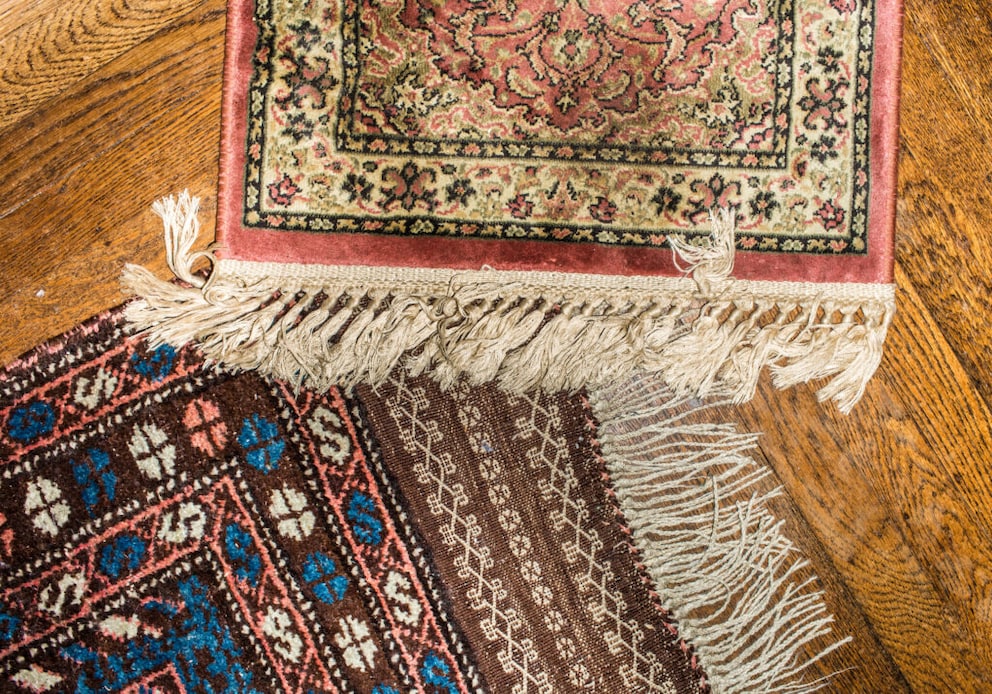
In a genuine Persian or Oriental rug, fringes at both ends are an integral part. However, these can also be sewn on afterward, which is proof that the rug is a counterfeit. In original pieces, the fringes come from the warp threads and are thus the end threads that are then bundled.
Also interesting: What you need to know about the trend piece outdoor rug
The Height of the Pile
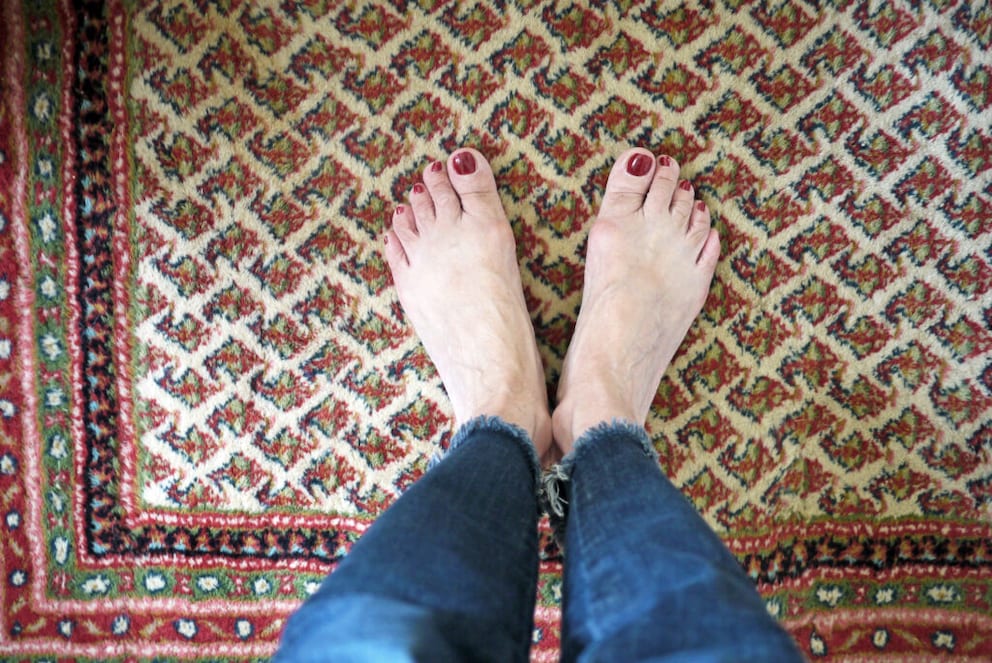
Also very crucial when it comes to the quality of a rug is the height of the pile. Particularly high-quality genuine rugs have a thickness of three to six millimeters. Only the most skilled weavers can produce such a thin rug.