


February 19, 2026, 5:08 am | Read time: 3 minutes
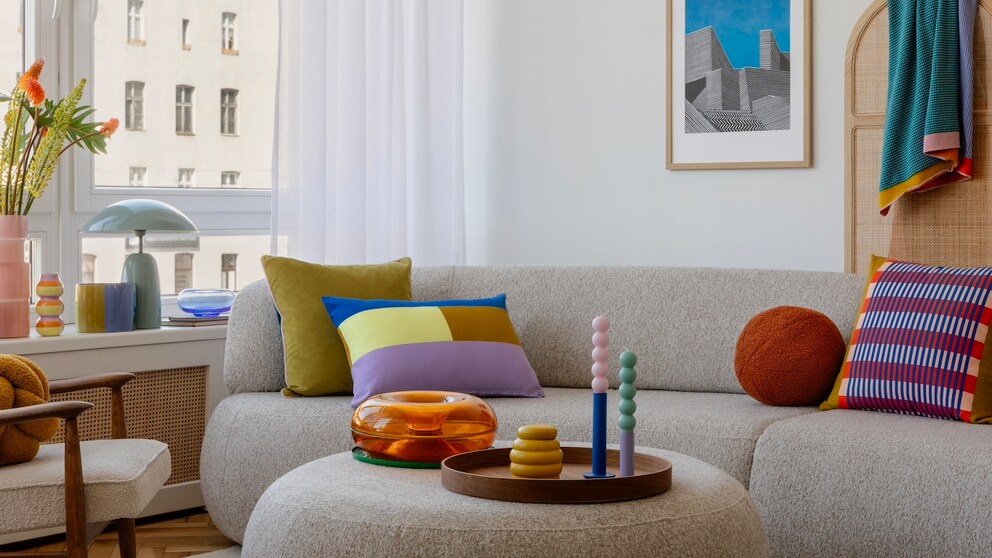
In 2026, noticeable surfaces, handcrafted unique pieces, and luminous materials will enter our living spaces. It’s about atmosphere, personality, and a new sensuality in detail. myHOMEBOOK editor Mareike Schmidt explains which decor trends will make our homes warmer, softer, and more individual.
Gentle 3D Textures

Smooth is a thing of the past. In 2026, soft, three-dimensional textures will continue to prevail, enriching spaces not only visually but also tactilely. Wall panels with organic waves, relief-like ceramic tiles, textured vases, or cushions with sculptural patterns create subtle plays of light and shadow. Particularly in demand are flowing forms reminiscent of natural phenomena: dunes, water movements, or cloud formations.
The trend is also evident in textiles: Bouclé, structured linen blends, crinkled cotton, or knitted home accessories add depth to sofas and beds. The color palette remains rather calm, emphasizing the sculptural character of the surfaces.
Crafted Authenticity
In 2026, craftsmanship will not only be appreciated but also celebrated. “Crafted Authenticity” stands for visible traces of production: small irregularities, hand-thrown ceramics, coarsely woven textiles, or untreated wood with knots and grain. Perfection takes a back seat to character.
This trend reflects a growing need for sustainability and transparency. Instead of investing in quick trend pieces, it’s better to consciously choose long-lasting objects with history. Vases that look like they came from a pottery studio, handcrafted bowls, or carved wooden elements bring soul to modern interiors. They are often combined with timeless furniture classics by designers like Alvar Aalto or Charlotte Perriand, whose organic design language perfectly complements the new artisanal aesthetic.
Why Neo Deco Is More Than Just an Art Deco Revival
Tile Trends for 2026
Colorful Glass Accents with Retro Charm
After years of transparent restraint, glass is becoming bold and, above all, colorful again. Vases, bowls, candle holders, or side tables made of colored glass set bright accents in amber, cobalt blue, smoky pink, or emerald green. Pieces with slightly irregular surfaces or gentle color gradients are particularly intriguing. The charm lies in the play with light: Depending on the time of day, new reflections and color shades emerge. As a standalone piece on a sideboard or arranged in groups on the dining table, colorful glass decor brings lightness to minimalist spaces and ideally complements warm, natural materials. Inspiration comes from the legendary Murano glass design, known for its artistic color compositions for centuries.
Art Deco 2.0
In 2026, a design classic is making a stylish comeback: Art Deco, but in a contemporary, pared-down version. Under the name Neo Deco, the glamorous elements of the 1920s merge with modern minimalism and sustainable materials. The trend is characterized by clear, graphic shapes, symmetrical patterns, and elegant curves. Instead of opulent overload, Neo Deco focuses on targeted statements. The look is also reimagined in terms of colors: Rich tones like emerald green, sapphire blue, or Bordeaux meet warm neutrals like sand, greige, or cream.
In decor, Neo Deco appears in the form of vases or trays with clear lines or rugs with graphic patterns. Velvet cushions, marble accessories, glass lights, or ribbed surfaces add structure to the room. Metallics should be used sparingly, for example, in the form of candle holders, picture frames, or lamp bases in brass and chrome. In Neo Deco, matte or brushed variants appear more modern than polished ones.