


August 6, 2026, 4:22 am | Read time: 3 minutes
Natural stone and mineral surfaces have been experiencing a real boom for years. While travertine is considered the epitome of Mediterranean elegance, marble stands for timeless luxury, and terrazzo is making a comeback as a versatile design classic. But which stone is actually suitable for everyday use, and what are the pros and cons?
Travertine as a Warm All-Rounder with Natural Charm
Few materials shape current interior design trends as much as travertine. The light limestone with its characteristic, slightly porous surface appears both high-quality and understated. Especially when combined with wood, linen, or warm earth tones, it unfolds its natural appeal.
Travertine is now used in a variety of ways indoors: coffee tables, side tables, sinks, shelves, or lamps made of travertine have become some of the most popular home accessories.
However, the natural material also comes with some peculiarities. Since travertine is relatively soft and open-pored, it is sensitive to acidic liquids like lemon juice or vinegar. Red wine or coffee can also leave stains if the surface is not sufficiently sealed. Therefore, travertine is only conditionally suitable for heavily used kitchen countertops.
Its greatest strength lies where its warm appearance is the focus: in the living room, bathroom, or as a decorative piece of furniture.
Marble as Timeless Elegance with High Maintenance Requirements
Marble has been synonymous with luxury for centuries. No other natural stone has a comparable depth effect and unique veining. Each slab is one of a kind, making even simple furniture or rooms appear particularly high-end.
Marble remains a popular choice, especially for bathrooms, windowsills, or impressive dining tables. It also adds special accents as wall cladding. However, in everyday life, it quickly becomes apparent that marble requires more attention than many other materials. The stone is sensitive to acids and can become dull from lemon juice, vinegar, or harsh cleaning agents. Additionally, scratches and so-called etch marks are almost unavoidable over time.
Those who choose marble should accept that a natural patina develops with use. For many interior designers, this aging process is part of the material’s character.

Interior Designer Reveals 2023 Home Trends

Living Room Trends for 2023
Terrazzo is Robust, Versatile, and Surprisingly Easy to Maintain
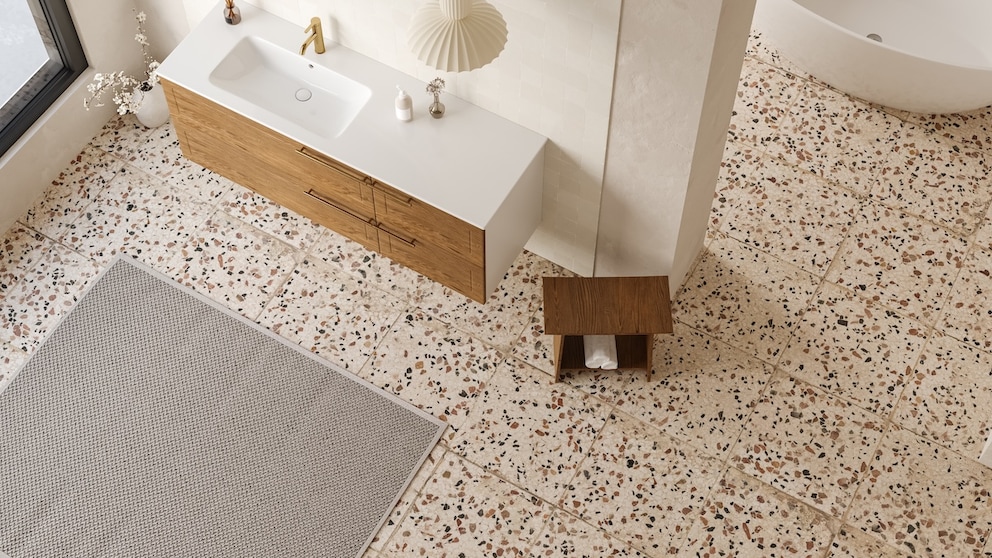
Terrazzo was long considered a typical flooring for public buildings. Today, the material is experiencing a comeback, albeit in a much more modern form. Visible stones in different sizes and colors make each surface unique and create a lively look.
Unlike travertine or marble, terrazzo is made from a mixture of natural stone chips and a binder—usually cement or resin. This allows the material to be designed almost any way. Terrazzo shows its advantages, especially in heavily used areas. It is extremely durable, long-lasting, and easy to maintain. Stains or scratches are much less noticeable due to its lively structure compared to monochrome natural stones.
It’s no wonder that terrazzo is now found not only on floors. Kitchen countertops, dining tables, sinks, or even furniture surfaces are increasingly being made from it.
Which Stone Fits Which Room?
The choice depends less on current trends and more on the area of use. Those looking to create a warm, cozy atmosphere will find travertine to be the right choice. Especially in living rooms and bedrooms, the natural stone appears calm and timeless.
For special accents and impressive rooms, marble remains a good choice. Its appearance makes it a focal point, but it requires regular maintenance and careful handling.
Terrazzo, on the other hand, impresses wherever practicality is needed. Family households or heavily used kitchens benefit from its robustness and easy cleaning.