


October 13, 2024, 10:49 am | Read time: 7 minutes
The Umgebindehaus is an architectural style primarily found in the Upper Lusatia region. Beyond this area, the historical building is relatively unknown, yet it offers a cozy and sustainable living solution.
Admittedly, an Umgebinde house with its half-timbered-like architecture doesn’t necessarily score with a contemporary look, but especially in terms of its ecological balance, this unusual construction style can indeed be convincing today. myHOMEBOOK explains what exactly this quaint house type is all about and why it is increasingly attracting the interest of home seekers.
The History of the Umgebinde House
As original as the Umgebinde houses look, they are just that. Their history goes back a long way: Back then, the Slavs developed a special construction method called the block room. Later, in the 13th century, German settlers came to the region, bringing with them the knowledge of half-timbering. This type of construction was considered stable, wood-saving, and even allowed for the construction of multi-story buildings. However, it was not easy to combine these two construction methods, as the wood joints of the half-timbering were not compatible with the grain of the wood in stone walls. Thus, craftsmen “tinkered” with the Umgebinde as a construction method of its own for centuries. It was not until the end of the 18th century that the eponymous Umgebinde arch of these houses finally emerged.
To this day, the traditional Umgebinde houses with their distinctive architectural style of half-timbering and solid stone construction are primarily found in rural regions of Central Europe, particularly in the tri-border area of Germany, Poland, and the Czech Republic.
Characteristic Features
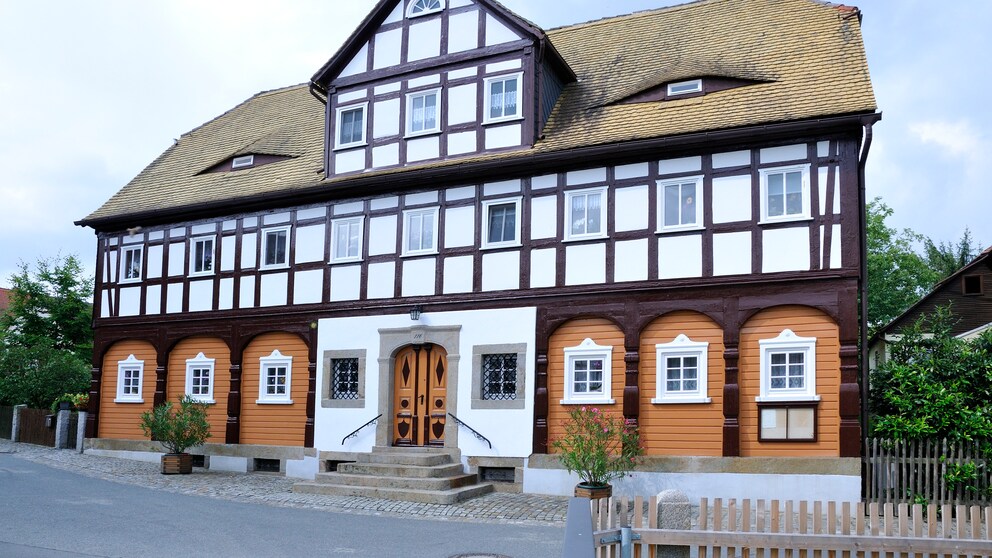
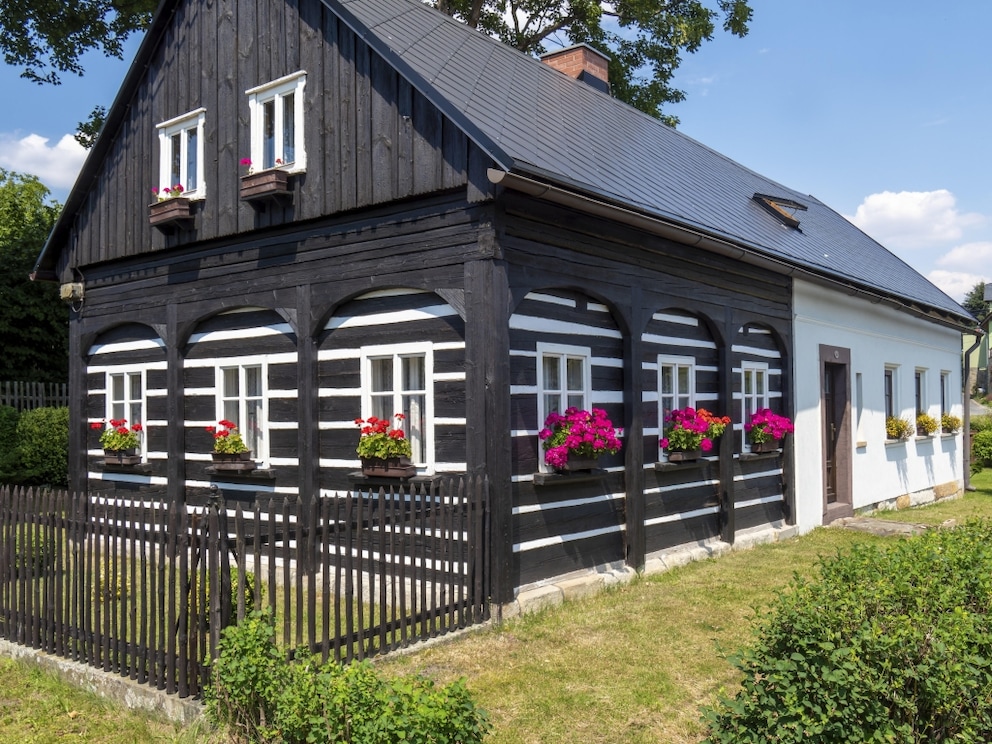
The unusual architecture and appearance of the Umgebinde house are immediately striking. It consists of a half-timbered structure with typical wooden beams and supports connected in a geometric pattern, forming the facade of the building. Another major part of the Umgebinde house is its solid stone construction, often made of sandstone or other regional stones. The stone walls serve as a supporting structure, providing stability and thermal insulation for the house.
But why is it actually called an Umgebinde house? The term “Umgebinde” refers to the special construction method of such a building, where the half-timbering encloses the solid masonry. The facade of an Umgebinde house varies regionally. Sometimes it is very detailed and full of decorations, while in other houses, the artistic aspects are more restrained. This is because the designs and styles can vary in different areas.
Also characteristic of an Umgebinde house are wooden cladding, slate coverings, and door frames made of sandstone or granite. It is not uncommon to find the year of the house’s construction in the latter. On some buildings, you can see suns in the form of radiating wooden cladding or even sundials on the gable.
The Block Room is the Heart
Typical of an Umgebinde house is especially its block room on the ground floor. This forms the heart of the building and is enclosed by the Umgebinde, a wooden structure with braces standing on posts. The block room is usually made of untreated or only linseed oil-treated beams or planks and supports everything above it. Sometimes this is just the roof, but in complexly constructed buildings, it can also be several floors. Due to weather conditions, the block room can deform significantly, but the infill of half-timbering or the roof structure would not withstand this. This is where the Umgebinde comes into play, as it supports all the structures stably while the block room can still move.
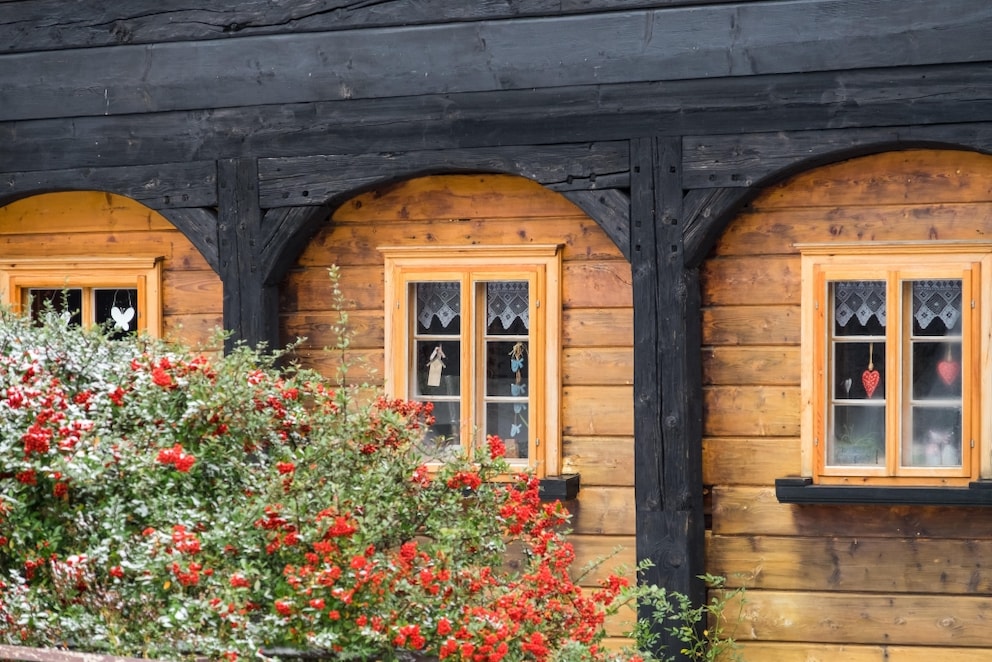
The block room in the Umgebinde house offers a significant advantage: the thick, solid wooden walls of this area can regulate temperatures well. The wood retains heat very well, especially in winter. In the past, the block room was often the only heated room in the entire building. Of course, this also has its advantages in summer, as the wood tends to contract during the drier season, allowing air to circulate better between fine cracks. Additionally, the block room only has small windows, which, thanks to their triple-pane construction, further minimize heat loss.
What Material is an Umgebinde House Made Of?
Traditionally, a lot of wood was used in the construction of an Umgebinde house. This was ideal because most Umgebinde houses are located in Upper Lusatia, a region prone to flooding. It was not uncommon for the houses to be flooded in the past. No problem for wood, as long as it can dry well after the water recedes.
In addition, rammed earth and stone were used as flooring, especially in the entrance area on the ground floor. According to traditional construction methods, the roof was covered with beaver tail tiles or straw. If the building was relatively large, there was sometimes a second block room or a masonry utility area. Overall, predominantly local natural materials such as spruce, fir, or pine wood from the region were used. Linseed oil paints were used for coatings, and clay plaster was often used for rooms–both of which still ensure a healthy indoor climate today.
Also interesting: What actually characterizes a manor house?
The Features of a Hybrid House
3 Tips for Designing a Unique Ceiling
What is the Status of the Historic Building Today?
The historic buildings still exist in southern Upper Lusatia and the adjacent Silesian and North Bohemian areas. A few examples can even be found in western Saxony and Thuringia. In the tri-border area of Germany, Poland, and the Czech Republic, there are an estimated 20,000 buildings, with 6,000 in Upper Lusatia alone. Especially houses on the German side are also under monument protection. Nevertheless, necessary repairs, adjustments to today’s housing regulations, or improvements to living comfort are allowed. There is no threat of trouble with the monument protection authority. On the contrary, the removal of construction sins is welcomed and even encouraged.
Umgebinde House Trend?
Currently, in Upper Lusatia, there is a real fascination with Umgebinde houses for many, especially young property seekers. After the reunification, many people left the region, but now more and more are returning to their old homeland and looking for a new home. The historic, architecturally remarkable building, which is somewhere between a half-timbered house and a log cabin, seems very fitting to them. And the timing couldn’t be better, as many Umgebinde houses are expected to be up for sale in the coming years. The reason: Most of the buildings are currently still inhabited by older, often single people.
Why this sudden enthusiasm for the small, quaint Umgebinde houses in the countryside? The reasons are varied. Above all, it is the rents and purchase prices in the east of the country, which have also risen more and more over the years. In addition, with the discussion of the climate crisis, the desire for environmentally friendly living has increased. An Umgebinde house, made of ecological building materials, is a suitable choice for this. Moreover, the building impresses with its traditional architecture and original appearance, setting it apart from other houses in a more classic architectural style.
And one last reason could also be the COVID-19 pandemic. Since that time, the need for a cozy, preferably secluded home–ideally with its own garden–has grown. City life, with all its noise, dust, and hustle and bustle, often seems less attractive. Umgebinde houses can also be well modernized, proving that a contemporary lifestyle and an old building do not have to be mutually exclusive.