


January 3, 2026, 4:59 am | Read time: 5 minutes
It often goes unnoticed yet holds extraordinary significance: the ceiling! Alongside flooring, walls, furniture, and lighting, it is considered the fifth design element of a room and significantly influences the atmosphere. In this article, myHOMEBOOK reveals how to design the ceiling.
Builders of old noble houses and palatial mansions once set the example. They viewed the ceiling of a room not just as a necessary construction element but also used it to express large paintings or adorn it with art. Thus, it became an absolute eye-catcher—a symbol of heaven on earth. After the European era of monarchies, the ceiling gradually lost its relevance. In private homes, it was often completely overlooked and simply painted white for convenience. Yet, when properly planned, it can visually enlarge spaces, define zones, create atmosphere, and shape the character of an interior. Ideally, it highlights or conceals the architectural features of the building, creating a coherent overall concept. Today, it is worth learning from historical design elements to bring the ceiling back into the spotlight and design it uniquely.
Tip 1: Be Bold with Color and Shapes
A white, smooth ceiling is classic and still popular with many, but there are alternatives that don’t require much courage. It’s important to consider the size of the room. The rule of thumb is: The higher the walls, the more color the ceiling can handle.
Dark tones such as midnight blue, anthracite, moss green, or Bordeaux red are now popular in ceiling design when combined with light wall colors. They create coziness and an elegant ambiance in spacious rooms, draw the eye upward, and convey intimacy or a sense of protection. Smaller or lower rooms benefit from lighter tones like cream, light gray, or a pastel pink. These visually expand the space, create an airy feel, and give angular architectures a softer structure. Because light colors reflect more light, the room appears larger and more spacious.
Also interesting: This painting trend makes rooms appear larger
If you love patterns, feel free to experiment—but sparingly. Colorful stripes with contrasting colors, for example, are a modern element that visually elongates the room. However, it quickly creates the feeling of standing under a kind of canopy and losing a sense of the actual ceiling height. Be cautious with geometric shapes, as they can quickly overwhelm a small room. Softer are floral patterns or a kind of wiping technique, which go particularly well with romantic interior designs.
Tip: The use of patterns should always be coordinated with the furnishings. Interesting are, for example, ornaments that are reflected in the furniture. But to maintain a calm atmosphere, often less is more.
Tip 2: Rustic Thanks to Wood & Co.
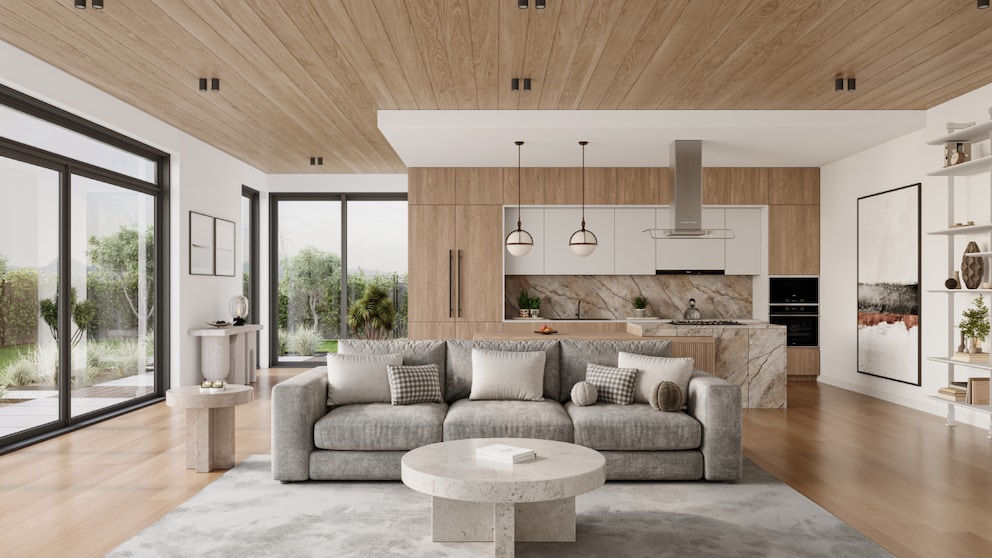
In the Alpine region, natural materials like stone or wood have traditionally been part of the interior design of mountain huts or chalets. They were deliberately used in the past to create a cozy, warm, and enveloping aesthetic during icy outdoor temperatures. Even today, these experiences are often relied upon, using wood or stone panels for homely spaces. Particularly popular in recent years are so-called acoustic panels, sound-absorbing boards with wooden strips. These can be mounted not only on the wall but also on the ceiling. This creates a particularly cool look while harmonizing the sound.
In addition to wood or stone paneling, clay or concrete plaster on the ceiling provides natural depth and texture. Such surfaces appear more subtle because they gently reflect light and harmonize well with minimalist, modern interior designs.
Which Light Fixture Matches Which Interior Style

How to make a first-floor apartment brighter
Tip 3: The Right Light
As effective as colors and shapes are, the ceiling only reaches its full potential with the right lighting. Light determines, among other things, whether it floats gently, emphasizes architectural strictness, or conveys a sense of security.
Indirect light sources can make the ceiling appear lighter and create depth—this can happen, for example, in the form of LED strips along the joints or suspended elements. Dark or colored ceilings, in particular, benefit from this form of lighting, as it gently brightens the surface without diminishing its effect. If you prefer to set targeted accents, emphasize structures, or highlight patterns, you can use spotlights. They are well-suited to highlight specific areas of the room. Thanks to pendant lights, the ceiling becomes an intentional part of the overall concept. They act as a design link and skillfully draw the eye from the floor to the ceiling. Because the light cones are often directed downward, they bathe the upper part of a room in a subtle, gentle glow. The light color is also crucial: Warm light appears cozy and soft, while cooler lights make rooms appear more factual and emphasize the architecture.
Look Up
No matter how much you immerse yourself in your furnishings, it’s worth occasionally looking up at the ceiling and consciously perceiving its effect on atmosphere, room proportions, and mood. By deliberately using color, shape, and light, you can design your ceiling in a special way, transforming it from a mere construction element into a defining design highlight above your head.