


May 28, 2026, 12:03 pm | Read time: 5 minutes
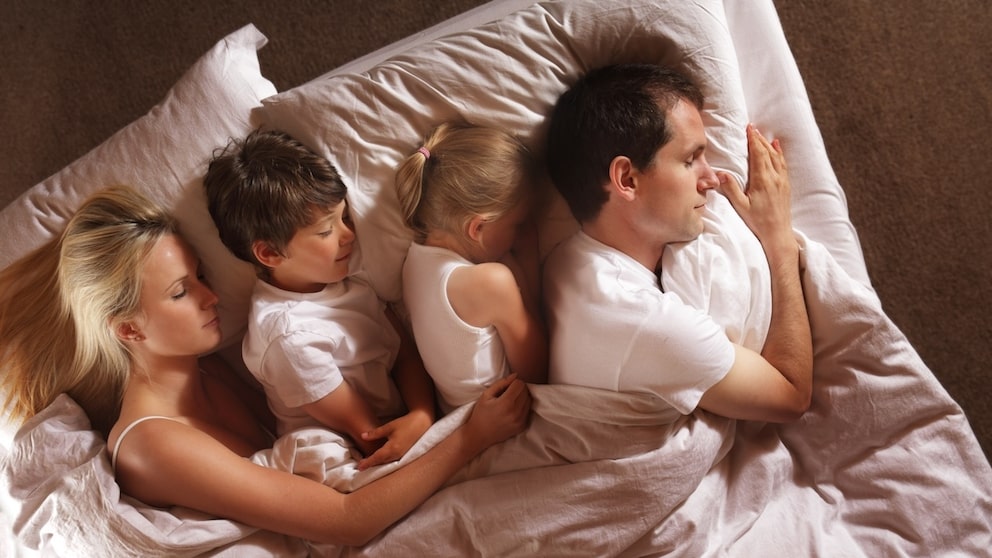
When a young family grows by one more member, new parents often do everything they can to keep an eye on the newborn. Even at night, they often value shared time and a large family bed. But how sensible is that? myHOMEBOOK takes a look at the pros and cons as well as important safety aspects.
Few topics are more hotly debated than the controversial question of sleeping arrangements for young families. All in one bed or separated in different rooms—the decision is usually made before the child is born and depends on the preferences of both parents. This decision should not be made lightly, as there are health guidelines to consider after the birth of a child, in addition to the pros and cons of a family bed. These guidelines include the sleeping situation.
The Family Bed Is Not a New Trend
Only when you have your own children do you realize how quickly time really flies. Just a baby, infants quickly learn and grow at a record pace. Because the first year of life often passes too quickly for parents, the idea of the family bed has been established over the years. The idea behind it: to be especially close even at night. While the form of co-sleeping is quite common in other cultures, the idea of all family members sharing a bed repeatedly sparks debates here.
It can generally be noted that shared sleeping has accompanied humans for thousands of years. Long before industrialization, people slept exclusively in groups—often due to lack of space, but also for individual protection and to maintain warmth. It was only much later, about 200 years ago, that a new sleep culture developed, which provided separate rooms for everyone.
Why the Family Bed Is So Popular
Especially in the first months of a newborn’s life, a family bed can have many advantages. Sleeping close together not only strengthens the parent-child bond but also provides security and a sense of safety. Babies cannot yet self-regulate and fall asleep on their own. Therefore, a family bed can help synchronize sleep rhythms and reduce wake-up cycles. Mothers also emphasize the practical benefit, as nighttime breastfeeding is easier when you don’t have to leave the bed.
So, those who breastfeed at night, value physical closeness, and have enough space might consider the option of a family bed.
Why a Family Bed Can Be Problematic
At the same time, it’s important to consider the negative aspects of a family bed. Safety is the top priority. One of the greatest risks for newborns is sudden infant death syndrome. The German Society for Pediatrics and Adolescent Medicine and the German Society for Sleep Research and Sleep Medicine both recommend avoiding bedding. Large blankets or pillows can lead to overheating of the small body and pose a risk of suffocation. Especially in the first months of life, a family bed is considered controversial from a medical perspective.
But there are other disadvantages. Lack of space and privacy can affect the parents’ sleep. Families with restless sleepers or significantly different sleep rhythms are advised against a family bed.
Safety Comes First
Even though a family bed brings serious safety concerns, it doesn’t mean parents shouldn’t sleep in the same room as their newborns. Numerous health authorities, including the British National Health Service (NHS), recommend a middle ground: no spatial separation, but an alternative to the family bed. “The safest place for a baby to sleep in the first six months is in their own crib in the same room as the parents.” The recommendation is primarily aimed at preventing sudden infant death syndrome. This way, the sleep environment can be made as safe as possible—with a firm mattress, no loose textiles, and a baby sleeping bag, which is much safer than a blanket, as emphasized by the Bavarian State Office for Health and Food Safety.
Many health authorities see increased risks in the first six months when sharing a bed. As the child gets older, the family bed is perceived as more relaxed and safer.

How Big a Bed Should Be at Minimum

What to Consider When Choosing a Crib
Can You Build a Family Bed Yourself?

The size of a family bed depends on the number of people, but it is much larger than a standard king-size bed. That’s why many families opt for a DIY approach. While couples often manage with 1.8-meter-wide beds, a width of 2.4 meters is recommended for three people. Popular constructions include multiple bed frames pushed together (such as three 90-centimeter frames) or platforms. However, it’s important to ensure that the gaps are properly sealed. Otherwise, there’s a risk that the frames will shift apart at night, and the child could slip into the gap. So-called love bridges, foam inserts pressed between the mattresses, can prevent this. Additionally, the frames should be securely screwed together.
The advantage of DIY: Since family beds are often only used in the early years of children, the modular systems can later be dismantled or reduced for free and easily. Remaining bed frames can then be directly reused as children’s or guest beds.
Family Bed: Yes or No?
Whether to opt for separate sleeping arrangements or a family bed ultimately depends on the individual needs of the family. Those who want to follow medical recommendations should pay particular attention to a separate sleeping place for the baby, especially in the first six months.