


February 26, 2026, 9:58 am | Read time: 4 minutes
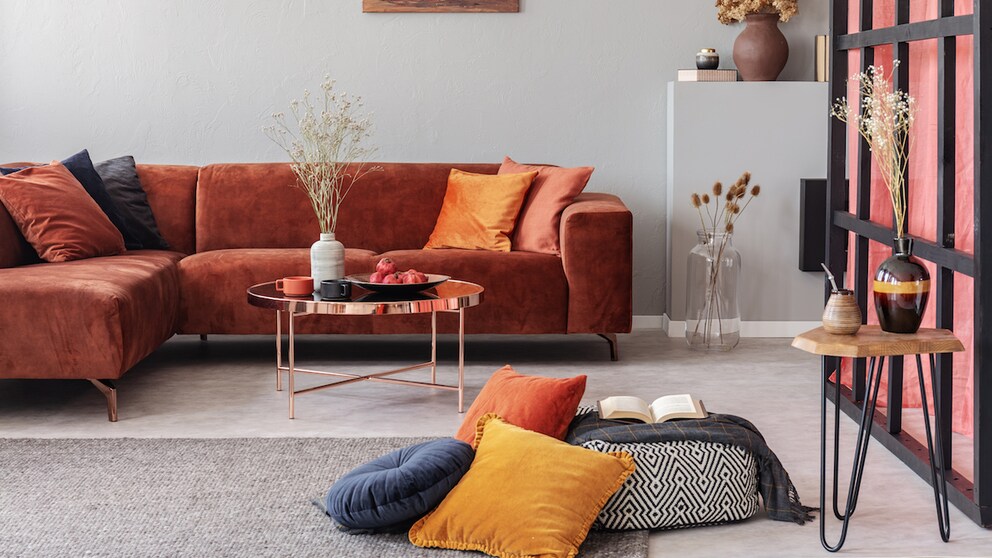
The Neo Deco style brings velvet, brass, dark wood, and a touch of past extravagance back into our living spaces. Unlike its historical predecessor, it doesn’t feel museum-like or strict, but rather contemporary, soft, and surprisingly relaxed. The style is more than a revival: It’s a modern interpretation of luxury that combines elegance with coziness. myHOMEBOOK editor Mareike Schmidt explains the trend.
Neo Deco vs. Art Deco–What’s the Difference?
The original Art Deco style emerged in the 1920s and 1930s and found its architectural expression in landmarks such as the legendary Chrysler Building in New York. It was characterized by optimism, faith in progress, and a strong penchant for symmetry. Typical features included strict geometries, elaborate ornaments, special materials, and a clear staging of luxury.
Neo Deco, on the other hand, dissolves this rigidity. While Art Deco was often highly symmetrical and ornamental, Neo Deco embraces more fluid forms and a sense of lightness. Ornaments are abstracted, patterns are used more broadly and calmly. The color palette often appears more muted and harmonious. Where Art Deco appears representative and sometimes monumental, Neo Deco is more homely and flexible. The style is adapted to today’s living realities with open floor plans and multifunctional spaces.
In short: Art Deco is the original with historical pathos, Neo Deco is the contemporary, relaxed evolution.
How Is Neo Deco Defined?

Neo Deco picks up on the iconic elements of classic Art Deco: geometric patterns, opulent materials, and expressive contrasts. These are translated into a reduced, modern design language. Clear lines meet gentle curves, shiny surfaces meet matte textures, deep colors meet warm metallic accents.
Characteristics are rich colors like emerald green, midnight blue, Bordeaux, or aubergine, combined with gold, brass, or chrome. Materials such as velvet, marble, glass, and dark wood play a central role but are used more consciously and sparingly than in the historical model. Furniture often features curved silhouettes—such as rounded sofas or semicircular sideboards—and appears sculptural without being overwhelming.
At its core, Neo Deco is about the interplay of elegance and comfort: The style is glamorous but not ostentatious; luxurious but not pretentious.

Which Decor Trends Will Be Popular in 2026
What Exactly Is Cosmic Chic?
Why Is the Style So Popular Right Now?
In a time when minimalism has long dominated, the longing for warmth, individuality, and a touch of luxury is growing. Neo Deco hits this nerve precisely. The style offers a counter-movement to cool, purely functional furnishings without becoming overloaded.
Additionally, Neo Deco harmonizes excellently with current living trends: Sustainable materials can be integrated just as well as vintage finds or design classics. The style is versatile and can be combined with modern mid-century design or contemporary art, creating spaces with character.
Last but not least, the visual impact also plays a role: Neo Deco is photogenic. Deep colors, reflective surfaces, and soft fabrics create a sensual atmosphere that impresses both in everyday life and on social media.
How to Implement Neo Deco at Home
Instead of many decorative elements, Neo Deco focuses on selected statement pieces, such as a velvet sofa, a round marble table, or an elegant arc lamp. Warm, indirect lighting completes the ambiance and gives the room a stylish, glamorous atmosphere.
The style is also easy to implement at home, as it doesn’t require many pieces of furniture and accessories with a uniform look. A few striking pieces are enough, allowing Neo Deco to gradually make its way into your home. You don’t have to buy everything new at once. Instead, the style can be integrated step by step with carefully selected pieces and harmoniously developed further. Neo Deco can also be easily combined with existing interior styles.
Especially minimalist living concepts provide a good foundation: Clear lines and reduced furniture can be enhanced with noble materials, rich colors, and metallic accents. For those who are tired of the beige uniform look but don’t want to completely redecorate, this style offers a stylish way to give their home more character and depth with minimal changes.