


May 10, 2026, 10:27 am | Read time: 4 minutes
Open-plan kitchens have been considered the heart of modern homes for years. Here, cooking, eating, working, and living all take place. Everything is visible and representative. However, this multifunctionality brings a problem: chaos, odors, and loud appliances can disrupt the desired living atmosphere. The solution is the “Back Kitchen.” myHOMEBOOK introduces the concept.
What is a Back Kitchen?
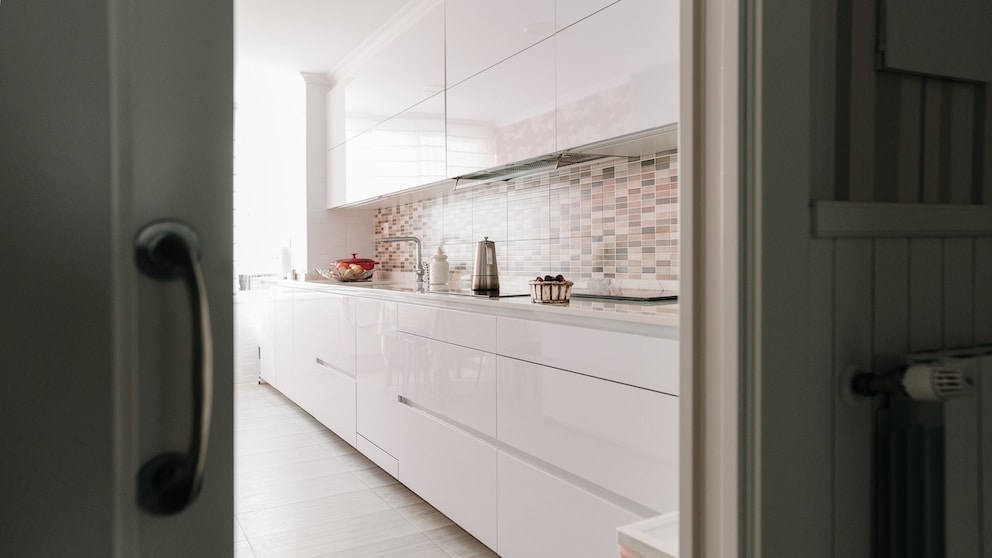
Does only a fairy tale lead to a new place through a hidden door? Not quite. The “Back Kitchen” concept makes at least this one fairy tale come true. The term describes a second, usually separate kitchen located directly next to or behind the main kitchen. Sometimes the secondary kitchen is hidden and cleverly accessible through a passage concealed behind kitchen fronts.

In reality, the trend is a kitchen concept, not a new idea. In the past, there were so-called sculleries where preparations were made or dirty work was done. A second kitchen was a concept found in wealthy homes with large staffs.
In the 21st century, this principle is making a comeback in a modern yet still luxurious interpretation. The secondary kitchen is often seen as an extension of the pantry. A walk-in, hidden space behind the kitchen where food can be stored, but also a kitchenette with a sink can be found. Whether the secondary kitchen is used for cooking, preparing, or washing up, or even intended for staff, the fundamental idea is that it supports the main kitchen.
Why the Trend Is Booming Now
The rise of the Back Kitchen is closely linked to changing living habits. The kitchen is no longer just a workspace for cooking but rather a social gathering place. Here, alongside chopping vegetables, people laugh, play, and spend time together.
At the same time, aesthetic demands are rising, partly due to social media. Minimalist fronts and tidy surfaces are the focus. This is where the Back Kitchen comes in. It separates the show kitchen from the working kitchen. So while work is done in the background, the main kitchen remains clean and presentable.
The Key Functions of a Back Kitchen
A Back Kitchen is versatile and can be equipped differently depending on the layout. These include:
- Preparation
- Washing and cleaning area
- Storage for food and bulky appliances
- Chaos buffer for guests (hide plates, pots, and food scraps)
Secondary Kitchens Aren’t Suitable for Every Home
As attractive as the idea seems, it is not suitable for everyone. A Back Kitchen primarily requires one thing: space. In traditional city apartments or smaller layouts, the concept is often difficult to implement. Costs also rise due to the need for additional connections, furniture, and appliances.
Why Closed Kitchens Are Making a Comeback
The Dream of Open-plan Living Has a Crucial Drawback
What to Consider in Planning
If you have enough space to integrate a secondary kitchen, you should consider several points in planning. These include short paths. The Back Kitchen should be directly adjacent to the main kitchen. Additionally, good ventilation and sensible equipment should be prioritized. In the secondary kitchen, the motto is: plan functionally rather than decoratively. It is also particularly useful to focus on a hidden integration of the kitchen. In many cases, the Back Kitchen is concealed behind sliding doors or built-in cabinets.
The goal is for both areas to work together optimally. One is in the foreground and visible, the other is in the background and invisible.
The Pros and Cons at a Glance
Advantages
The advantages of a Back Kitchen are:
- Order in the visible area, as the main kitchen always remains tidy
- Fewer odors and noise, as intensive cooking processes can be outsourced
- More storage space
- Better organization, as workflows can be more efficiently separated
Disadvantages
A Back Kitchen also has disadvantages:
- High space requirement
- More costs due to additional connections, furniture, and appliances
- Double planning effort
- More cleaning effort

My Conclusion
“The Back Kitchen is a trend that addresses a fundamental conflict in modern living culture. Those who have enough space, enjoy cooking, and frequently host guests can benefit from the additional workspace in the background. For small spaces, however, the concept remains more of an inspiration than a reality. I am somewhat critical of the concept. It is based on the desire for a perfect show kitchen and brings the ‘clean image’ shown on social media into the real world. In my view, it merely shifts the chaos out of sight rather than reducing it. Thus, for me, the Back Kitchen is more of an aesthetic luxury than a real added value.”