


April 14, 2023, 11:41 am | Read time: 5 minutes
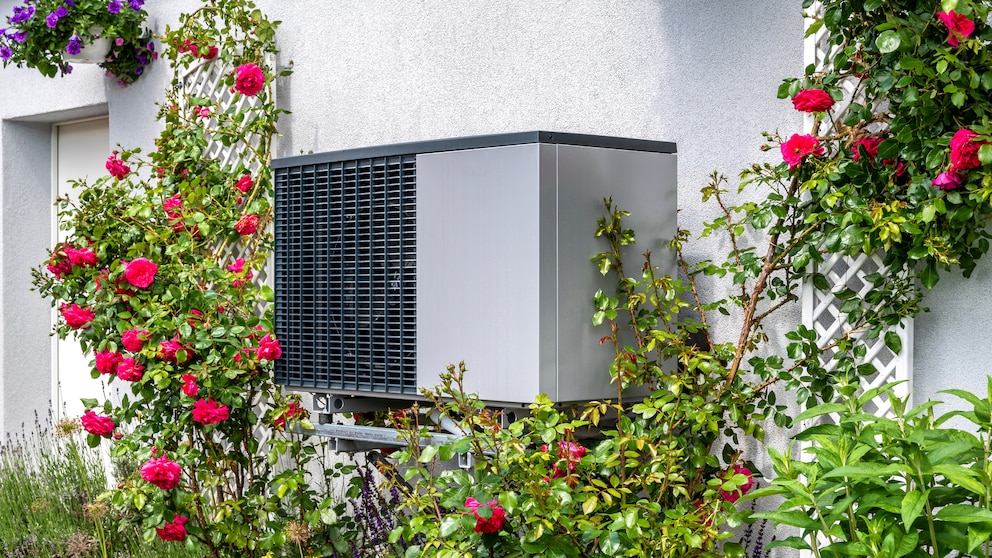
Heat pumps are a hot topic due to the energy transition. However, they often have a reputation for being loud and disruptive. Find out how loud heat pumps really are, when they are particularly noisy, and how to reduce the noise here.
In the future, heating will most likely be done primarily with heat pumps—at least that’s the plan of the government. The federal government wants to make this type of heating the standard due to the energy transition. However, a heat pump can produce noise during operation that can disturb both neighbors and oneself. myHOMEBOOK explains how loud a heat pump typically is and how to efficiently minimize the noise.
Overview
4 Tips to Reduce Heat Pump Noise
To keep the noise level of a heat pump as low as possible for both neighbors and oneself, certain considerations should be made during installation. There should be a sufficient distance from neighbors—the farther away, the quieter the noise. Additionally, exhaust fans should not face living areas but rather the street. Alternatively, a heat pump can also be installed indoors.
However, there are also some soundproofing measures that can be taken afterward:
1. Install a Soundproof Hood
A soundproof hood is usually offered by the heat pump manufacturer and can reduce the noise level by up to ten decibels.
2. Base with Rubber Mat
Placing the heat pump on a concrete base with a rubber mat can also minimize noise, as vibrations are less pronounced.
3. Night Operation
Some heat pumps can be set to reduce their output at night, resulting in quieter operation and less noise.
4. Hedges and Soundproof Walls
If the heat pump is located in the garden, a hedge can be a helpful way to reduce noise for neighbors. Less attractive but effective are soundproof walls.
Also interesting: Is a heat pump worth it for my house?
Why Do Heat Pumps Make Noise?
Only so-called air-water heat pumps produce noise because they require a fan. Heat pumps that draw energy from groundwater or the earth operate more quietly but are usually more expensive. For this reason, many homeowners opt for the cheaper model, which is also louder.
https://oembed/myhomebook/affiliate/2a90bf36efd79038e967fec64e036d6fa9337daa70bcf5116a8ea8b156076ff6/8e6e2b30-0677-421d-83d2-e1e4481878f8/embed
How Loud Are Heat Pumps?
The noise level of a heat pump is specified in the manufacturer’s documentation. Typically, the device reaches a noise level of about 50 to 65 decibels—though only when standing directly next to it. At a distance of three meters, the noise level usually drops to below 45 decibels.
To better understand how loud 45 decibels really are, here are some comparison values:
- Whispering about 30 decibels
- Bird chirping about 40 decibels
- Playing children about 55 decibels
- Car traffic about 70 decibels
- Jackhammer about 100 decibels
The farther away from the heat pump, the quieter the noise it emits.
Tip: With the sound calculator from the Federal Heat Pump Association, you can calculate the noise level of different pump models. Depending on the model, installation type, and distance to neighbors, the noise impact is determined. If the model proves too loud, users can also test which soundproofing measures could minimize the noise.

6 Common Mistakes in Planning and Installing Heat Pumps
The Best Heat Pumps According to Stiftung Warentest
What Makes a Heat Pump Particularly Loud?
While there are ways to reduce the noise level of heat pumps, there are also factors that unnecessarily increase it. The following things make a heat pump particularly loud:
Location directly against a wall: The wall reflects the sound of the pump, amplifying the noise.
Fan is blocked: If the fan cannot blow air freely because plants, a wall, or similar are in the way, it could become louder.
Too hard a surface: If the heat pump is on a terrace or concrete surface, it has a similar effect as a wall. The sound is reflected, which increases the noise level.
By the way: Heat pumps are particularly loud in winter because they have to work harder. When it’s cold outside, more heating is needed indoors, so the heat pump has to work more and can therefore be louder.
Can My Neighbor Prohibit My Heat Pump Because It’s Too Loud?
Generally, it’s best to start by talking if you feel disturbed by a neighbor’s heat pump. This saves costs for experts who might otherwise need to create a noise assessment.
As a neighbor, you cannot initially prohibit a heat pump—even if the noise is perceived as disturbing. However, if discussions don’t lead to solutions for noise reduction, it has occasionally gone to court in individual cases. These have always decided on a case-by-case basis whether a device is too loud or not.
How loud a heat pump can generally be depends on the time of day and the environment. It’s clear that the devices can be louder during the day than at night. The following table shows the requirements of the Technical Instructions for Noise Protection (TA Noise):
| Environment | Daytime from 6 a.m. | Nighttime from 10 p.m. |
| Residential areas | 50 decibels | 35 decibels |
| Industrial areas | 70 decibels | 70 decibels |
| Commercial areas | 60 decibels | 50 decibels |
| General residential areas and small settlements | 55 decibels | 40 decibels |
| Mixed areas | 60 decibels | 45 decibels |
| Resort areas (hospitals, care facilities) | 45 decibels | 35 decibels |