

November 28, 2022, 4:39 am | Read time: 5 minutes
The candle too close to the flowers, the fried egg forgotten in the pan: A fire can start faster than you think. These safety precautions can help protect you and your home.
Imagine a fire breaks out in your apartment–and you’re the last to notice. No one likes to picture this scenario. However, older adults are at a higher risk of dying in a house fire than younger people. There are several reasons for this. For instance, the senses of smell and hearing often don’t work as well in older age as they do in younger years. This means it takes longer to notice the smell of smoke, the presence of fumes, or the crackling of fire in the home. Additionally, “Many older adults have limited mobility,” says Frieder Kircher from the German Firefighters Association. For those who rely on a walker to get around the house, it takes longer to reach safety. With some behavioral tips and the right home equipment, older adults can be safer in the event of a fire.
Overview
1. Install a stove guard
Keyword: forgetting food on the stove. A so-called stove guard, installed above the range hood, provides more safety. It is a sensor unit that monitors the cooktop. It sounds an alarm if a pot is forgotten, overheats, or if the stove is accidentally turned on.
If the alarm is not deactivated within a few seconds, the stove guard cuts off the power supply–the stove turns off. However, this safety comes at a price: a stove guard can cost between 300 and 400 euros. It should only be installed by professionals.
2. Replace old appliances and reduce fire risk
Replace older electrical appliances, especially if irons, kettles, or coffee makers have been part of your household for decades. “Often, these models are not equipped with an automatic shut-off function,” says Claudia Groetschel from the Forum for Fire Smoke Prevention in Berlin. Modern devices are different. If, for example, an iron is left on, it is less likely to cause a problem quickly.
Related: The most dangerous household appliances
3. Keep phone and emergency call system within reach
If there’s a fire in the house, every second counts when it comes to calling for help or getting to safety. There’s no time to search for the phone.
It’s also a good idea to always keep the apartment key in the same place. Few things are more tragic than a locked door preventing you from escaping a fire.
4. Ensure clear escape routes
Furniture and other items should not be obstacles when you need to get to safety. “Ideally, these escape routes are also free of potential tripping hazards such as loose cables,” says fire safety expert Claudia Groetschel.
5. Avoid wax candles due to fire risk
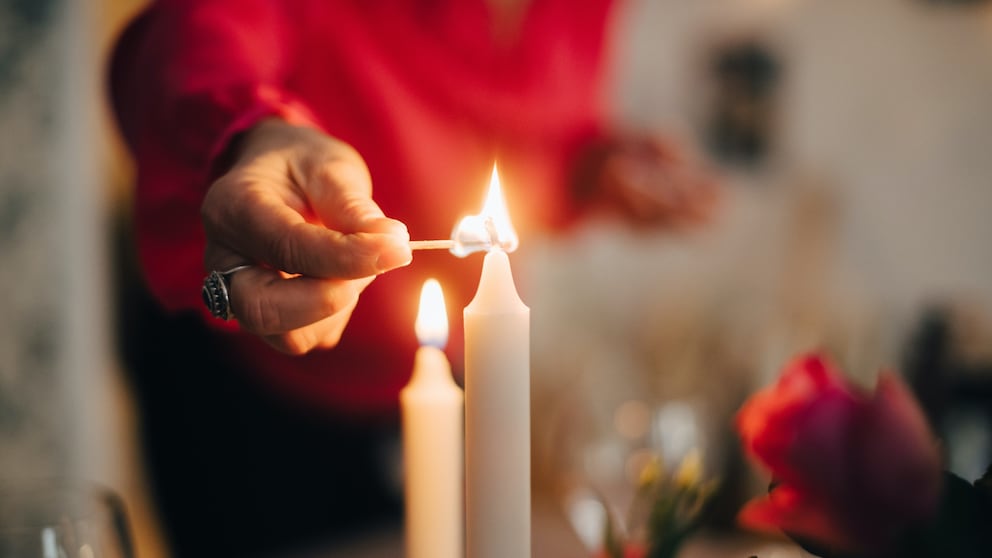
Important, especially in the dark season: Burning wax candles are a risk. “Candles left burning, room left, fire started–this unfortunately happens again and again,” says Frieder Kircher.
It often happens that a burning candle is accidentally placed too close to a vase with a bouquet. Kircher therefore advises those living alone to switch from wax to electric candles.
Related: Can a tealight heater really heat an entire room?

When CO and Gas Detectors Are Truly Worthwhile

How High Is the Fire Risk With Clothes Dryers?
6. Never smoke while lying down
Whether in bed, on the couch, or in a chair: Smoking while lying down poses the risk of falling asleep–with potentially severe consequences from a burning cigarette or cigar. This applies not only to older adults.
The safest option is, of course, to smoke outdoors. If you do smoke indoors, be cautious and always extinguish the embers in an ashtray. It’s understood that cigarette butts and matches should only be disposed of once they are completely cold.
7. Install interconnected smoke detectors
A smoke detector in every room is a must. But for older adults, there’s a risk they might not hear it go off–for example, if their hearing aid is not turned on.
To ensure they are reliably warned, the beeping of the smoke detector must be translated into another signal. “For the hearing impaired, there are special models that emit strong light flashes in the event of a fire,” says Claudia Groetschel. Another option is a vibrating pillow, which is placed under the pillow and vibrates strongly in an emergency.
According to the “Smoke Detectors Save Lives” initiative, these solutions involve connecting the smoke detector via radio to a so-called hearing-impaired module that converts the alarm–regardless of which room in the apartment smoke develops.
“It’s also possible for smoke detectors in a senior’s apartment to be networked with the apartment of relatives–if they live in the same building,” says Groetschel. More information on such solutions is available from the “Smoke Detectors Save Lives” initiative.