


November 12, 2026, 12:11 pm | Read time: 4 minutes
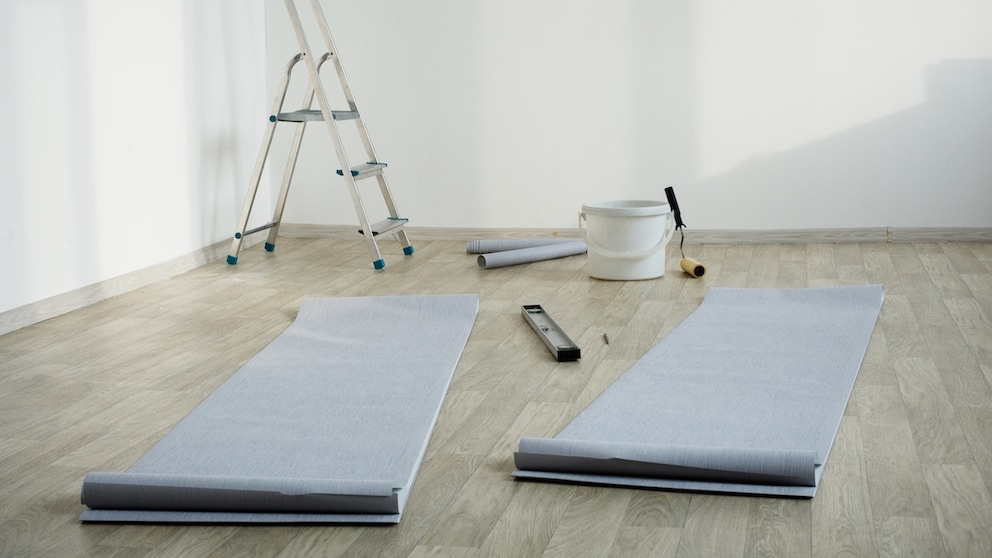
No radiator, no pipe, just a warm wall. Heating wallpaper sounds like a DIY magic trick from the hardware store. What’s behind the technology, and where is it worthwhile? myHOMEBOOK asked the Consumer Center NRW.
Electricity is behind the warm wall. “Heating wallpaper uses low-voltage electricity to generate thermal radiation,” explains Benedikt Sienz, a heating technology consultant at the Consumer Center NRW.
The heat is generated differently than with a traditional radiator, which primarily warms the air in the room. The radiation from heating wallpaper transfers more directly to people and objects. It’s similar to a sunny winter day. The air remains cold, but the face still feels warm. In heating wallpaper, conductive elements, such as carbon fibers, take on the role of the sun. They are embedded in fabric or films for installation.
The wallpaper typically connects to the power grid via a power supply with a small control unit. The power supply reduces the electricity from the outlet. The control unit can be operated by remote control or through smart home applications.
Every major hardware store now carries heating wallpaper. Due to the low voltage, they can also be installed and connected by oneself, according to Sienz. Depending on the model and mode of operation, the output ranges from about 15 to 250 watts per square meter, according to manufacturers.
When it comes to price, it’s worth comparing with heating films. The thin strips contain embedded heating elements, warm up as soon as electricity flows, and emit heat as radiation. Guides suggest prices of about 20 to 100 euros per square meter.
Finished heating wallpaper costs more. A complete set of four strips, a power supply, and a thermostat for rooms up to 20 square meters costs about 1,500 euros from some manufacturers. Calculated per room area, that’s about 75 euros per square meter. However, the strips only heat about four square meters. Thus, the wallpaper costs about 380 euros per square meter of heating area, clearly more than heating films.
Also interesting: What to consider with hanging fireplaces in the apartment
The Pros and Cons of Heating Wallpaper
The easy connection is one of the advantages. Additionally, heating wallpaper saves space and is hardly noticeable. However, it comes with a condition. The wall surfaces should remain largely free, meaning furniture or pictures in front of them are off-limits. Otherwise, the heat won’t reach the room. In everyday life, this isn’t always feasible. Pictures, shelves, or a curtain rod also require nails or dowels. According to a manufacturer, this is possible even after the wallpaper is applied. However, any object in front of or on the wall reduces the thermal radiation.
The electricity consumption is a more significant concern. “Like all electric direct heaters, heating wallpaper is significantly less efficient than electricity-driven heat pumps,” says the expert from the Consumer Center NRW. The reason lies in the principle. The wallpaper converts each kilowatt-hour of electricity into a kilowatt-hour of heat. A heat pump additionally extracts heat from the surroundings and requires much less electricity.
What this means for the bill is shown by a price comparison. In the first half of 2026, a kilowatt-hour of electricity cost households an average of about 38 cents. The same amount of heat costs about 12 cents with gas and about 7 cents with a heat pump. Thus, the wallpaper is more than three times as expensive to operate as a gas heater.
Replacing Old Night Storage Heaters? Expert Has a Clear Opinion

Solar Thermal or Photovoltaics: Which Is the Better Choice?
Where Heating Wallpaper is Worthwhile
Due to the costs, electric direct heaters are only suitable for certain rooms, according to Sienz. This refers to rooms without a connection to the central heating system that are not used continuously during the heating season. There, they play to their strengths. They heat a room very quickly. The heating is then only on as needed: on when entering, off when leaving.
In continuous operation, however, the electricity costs are too high. In the long run, connecting to the central heating system offers the cheaper option.
The heating expert especially recommends the wallpaper where there is no space for infrared panels or where they are visually disruptive. There is a side effect in rooms with an increased risk of mold. Mold primarily forms on cold surfaces. Heating wallpaper can reduce the risk. “However, this only applies to the exact areas where heating wallpaper is installed,” Sienz notes.
Removing and Disposing of Heating Wallpaper
If you want to get rid of the wall heating later, it’s not much trouble. It can be removed like regular wallpaper. The only difference is in disposal. The wallpaper is considered an electrical device. Therefore, it does not belong in regular trash but should be taken to a collection point for electronic waste.