


June 15, 2026, 3:19 pm | Read time: 3 minutes
Cooking is sometimes a high art, but often it’s just a matter of the right heat dosage. Open fireplaces have long been absent from homes. Gas generates intense heat instantly, but is considered dangerous. The classic stovetop takes forever to heat up and just as long to cool down. Modern cooktops use infrared. How cooking with an infrared cooktop works and what the pros and cons are, myHOMEBOOK explains in this article.
Known to Most as a Ceran Cooktop
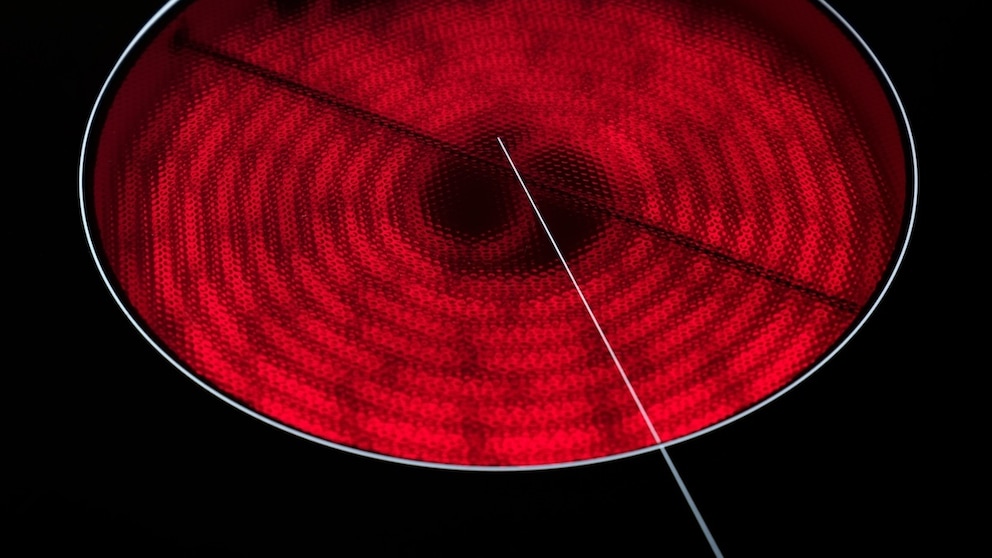
An infrared cooktop uses radiant heat instead of traditional heat conduction. “Electric current flows through a heating element, in this case, a halogen heating rod,” explains Patrick Bastian from the Federal Environment Agency in Dessau when asked by myHOMEBOOK. “The heating rod heats up to several hundred to a thousand degrees Celsius, visibly glowing orange-red through the glass-ceramic. This creates infrared radiation. It penetrates the glass-ceramic and hits the bottom of the pot. At the same time, the ceramic base also heats up and additionally transfers heat to the pot.”
Colloquially, this type of stove is known as a Ceran cooktop. However, “Ceran” is a brand name of the company Schott, which specialized in glass-ceramic cooktops in the early 1970s. The technically correct term is therefore “infrared cooktop”.

Converting a Stove to Gas–Is It Even Possible?
Can You Replace a Ceramic Cooktop With an Induction Cooktop?
Purchase Criteria for Infrared Cooktops
There are now many manufacturers of such cooktops with infrared technology. The market includes well-known names such as AEG, Bosch, Gorenje, Miele, and Siemens. The list cannot be exhaustive.
From the perspective of the Federal Environment Agency, the brand is not necessarily important. “Consumers should ensure before purchasing that spare parts like heating elements, regulators, thermostats, and control lights for the respective model are available for sufficiently long periods, or that the respective manufacturer offers appropriate repair services.” Bastian also recommends having repairs on such a cooktop carried out only by trained professionals. “The risk of electric shock or fire should not be underestimated here.”
Pros and Cons of the Infrared Cooktop
Compared to the classic cast-iron stovetop, a gas stove, or an induction stove, cooking with infrared radiation has several advantages:
- relatively low acquisition costs
- easy-to-clean surfaces
- universal pot selection
- residual heat from the cooking zone, for example, to keep food warm
However, there are also a few drawbacks:
- electricity consumption is about 20 to 30 percent higher than that of an induction cooktop
- lower energy efficiency compared to an induction cooktop due to higher heat losses: first, the heating element warms up, then the glass-ceramic, then the pot, and only then the contents
- slower temperature changes
- high surface temperature of the cooking area, resulting in a burn risk.
Therefore, the verdict from Patrick Bastian of the Federal Environment Agency is clear: “Induction has the highest efficiency of all stove technologies and is therefore technically and energetically the most efficient solution.” Although manufacturing requires more material, special pots and pans are also necessary for cooking. “However, these efforts are offset by lower energy consumption over the years of operation,” emphasizes the expert from the Federal Environment Agency.