


December 20, 2022, 3:44 pm | Read time: 4 minutes
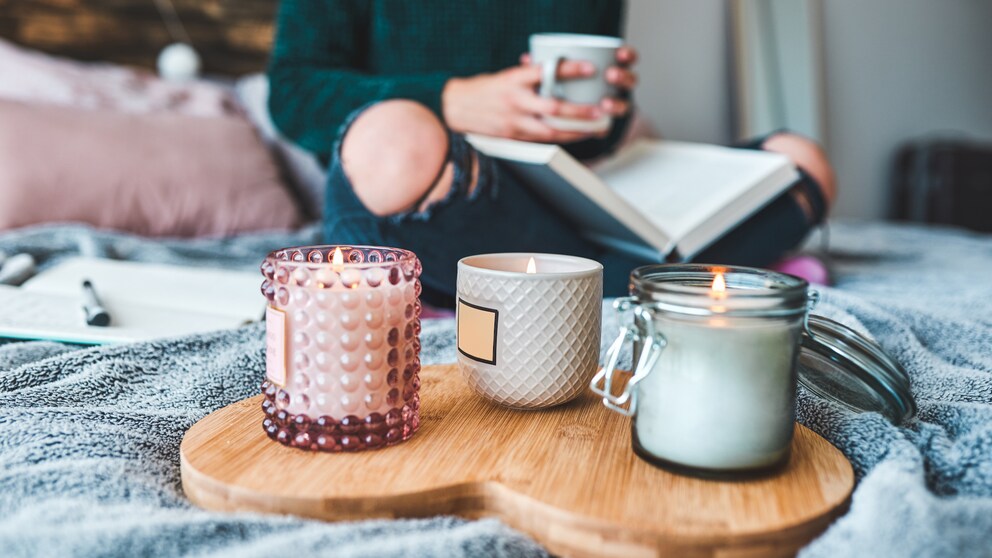
Scented candles are as much a part of winter for many as bratwurst is to a Christmas market. People cozy up on the couch and enjoy the aroma of essential oils or synthetic fragrances. However, scented candles are not as harmless as many think.
They smell like vanilla, pine, baked apple, or berries–the range is almost endless. Scented candles are especially popular in the cold season. But one should be cautious when buying candles. It’s not always clear what’s inside and how the ingredients might affect our health. Some scented candles can even be harmful to health.
Overview
Why do scented candles smell?
Essentially, a scented candle is a regular candle, but it is infused with fragrances. These are added to the wax during production using a carrier material. They can be natural or chemically produced. When the wick is lit, the wax melts and releases the contained fragrances into the environment.
Why scented candles can be harmful
Everyone is different and reacts differently to smells and the respective fragrances. Unfortunately, there is still little information about certain aromas and their possible effects on the human body, writes the German Environment Agency (UBA). Currently, it is known that some fragrances, like nickel in jewelry, “can trigger contact allergies or other intolerances.”
It further states: “Fragrances can enter the body through breathing and spread throughout the body via the bloodstream. Some are believed to also be absorbed through the skin. As contact allergens, they can cause inflammation (eczema) when they come into contact with the skin.”
According to current knowledge, there are more than 3,000 fragrances used, 26 of which have been classified as particularly allergenic by the European Union’s advisory committee. In cosmetics or cleaning products, these fragrances must be listed. For other products, like candles or room fragrances, there is no obligation to disclose unless the ingredients fall under the hazardous substances regulation, writes the German Environment Agency. “Consumers can therefore hardly recognize whether harmful chemicals such as polycyclic or nitro-musk fragrances are present, which can accumulate in breast milk and fatty tissue,” explains the Consumer Center NRW.
A controversial fragrance is the so-called limonene. It naturally occurs in oranges and lemons. However, under certain conditions, it can produce formaldehyde. “When the terpene hydrocarbon limonene, contained in numerous indoor products, reacts with ozone, which usually flows indoors from outside air, ‘limonene oxidation products’ (LOP) such as formaldehyde in relevant concentrations are formed,” states a research paper on indoor air by IBO Innenraumanalytik OG.
According to the Federal Institute for Risk Assessment, it is ideally best to avoid contact with formaldehyde. “Formaldehyde is harmful to health, it irritates the mucous membranes and can cause cancer in the nasopharynx when inhaled.” However, it is also stated that the amount of formaldehyde produced by burning scented candles is very low, so health effects can be largely ruled out according to current research.
Related: What to consider when buying sustainable candles

Why You Should Avoid Using Air Fresheners

Why Fragrance Oils Can Often Be More Harmful Than Expected
Not all scented candles are harmful
To be on the safe side, one should primarily look for the RAL quality mark, advises the Consumer Center NRW. With this seal, the German candle industry has established certain quality features to ensure candles burn as low in pollutants as possible.
“Ventilation is better than ‘scenting,'” writes the German Environment Agency. Experts generally recommend avoiding fragrances. This specifically applies to scent lamps, incense sticks, aroma diffusers, and similar products. The same goes for so-called “wellness” or “aromatherapy” products that can be inhaled.
Tip: Poor indoor air should not be masked with fragrances. It’s better to eliminate the sources of unpleasant odors, regularly ventilate, and clean the home.
Not just the aroma of scented candles can be harmful
Candles are often attractively decorated. Glitter, artificial snow, plant components, or even varnish are often used, writes the Consumer Center NRW. When these additives burn, they can further pollute indoor air. For this reason, it’s better to avoid scented candles.