

November 24, 2026, 12:43 pm | Read time: 3 minutes
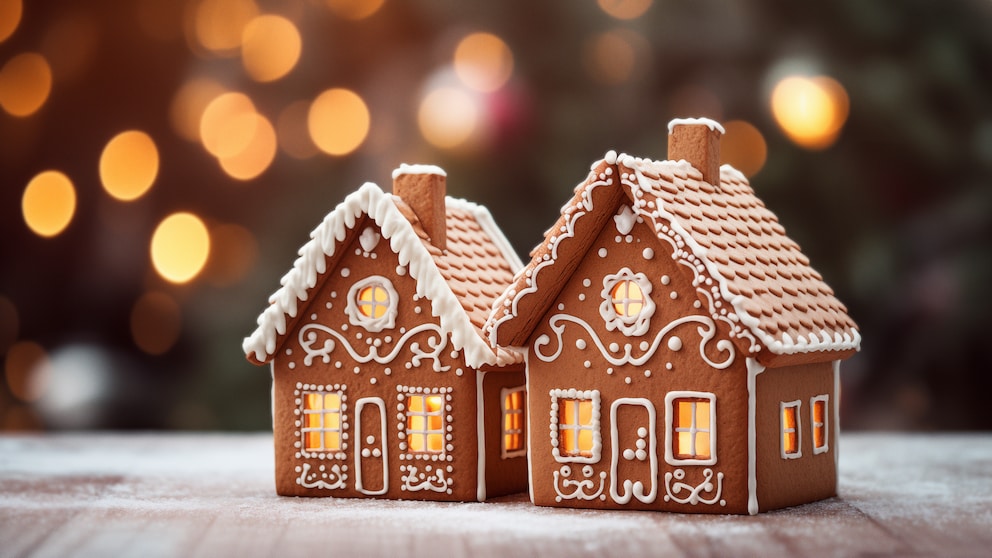
The holiday season offers plenty of treats. These include not only speculoos or stollen but also gingerbread. Whether as a heart to wear at the Christmas market or as a house–the pastry is very popular with many people. But how long does gingerbread actually last, and how should it be stored properly?
Follow myHOMEBOOK on WhatsApp now
The Shelf Life of Gingerbread
In 2025, nearly 72,800 tons of gingerbread were produced, according to the Federal Statistical Office. Although this is a decrease of about 10% compared to the previous year, gingerbread remains one of the most popular pastries around Christmas and beyond. A first point of reference is the best-before date on packaged gingerbread in the supermarket. Even after opening, the pastry can still be enjoyed for some time if stored correctly. But why does gingerbread last so long?
“The high sugar content in gingerbread contributes to its longer shelf life. Additionally, gingerbread contains little water, which makes it harder for microorganisms to multiply. Industrially produced gingerbread is also vacuum-sealed, making it last for several weeks,” explains Sabrina Schulz from the Berlin Consumer Center.
Also interesting: How long does speculoos last at home?
How Long Does Stollen Actually Last?
How Long Does Speculaas Last at Home?
What Is Important for Storing Gingerbread?
To ensure gingerbread is truly shelf-stable for several weeks, it must be stored correctly at home, and in this regard, it doesn’t matter whether it’s store-bought or homemade. For both types, the experts at the Consumer Center advise: “Gingerbread should be stored in a cool, dry place, ideally in a pantry or cellar. Refrigerators, freezing temperatures, heat, sunlight, and moisture can cause it to become hard, dry, or moldy more quickly. An undamaged, well-sealed package ensures it stays as fresh as possible until the best-before date.”
Important: Especially with used gingerbread, pay attention to the packaging. Storage instructions are listed there. If these are not followed or only partially followed, the pastry may lose its shelf life more quickly.
When Is Gingerbread No Longer Edible?
One of the most obvious signs that gingerbread is no longer edible is mold. However, before it gets to that point, there are other signs that the pastry has exceeded its shelf life. If the pastry smells musty and no longer appetizing, this can be an initial sign of declining shelf life. An unusual taste can also indicate that the gingerbread is no longer good.
“A whitish coating on chocolate-covered gingerbread is usually harmless,” adds Sabrina Schulz. “This occurs due to temperature fluctuations and consists of fat or sugar.” Gingerbread can also quickly become dry if not stored properly, but this is not yet a sign of reduced shelf life. Instead, the pastry can be made a bit fluffier again with a simple trick.
The Apple Trick:
- Place an apple slice on a piece of parchment paper in the gingerbread container and seal everything
- The gingerbread absorbs the moisture from the fruit within a few hours to days
- Then immediately remove the fruit from the container, as mold can otherwise develop