

June 2, 2026, 12:06 pm | Read time: 2 minutes
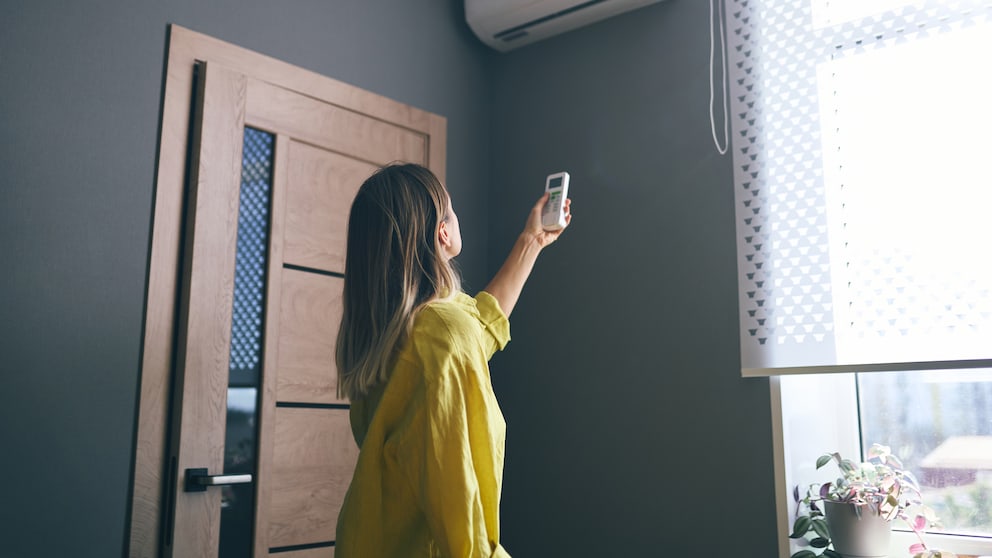
When temperatures rise, any form of cooling is welcome. Air conditioners and portable cooling units can provide comfortable room temperatures but may also significantly increase electricity consumption. With a few simple measures, cooling efficiency can be optimized. myHOMEBOOK explains how to operate air conditioners in an energy-saving manner.
How to Use an Air Conditioner Efficiently
Avoid Large Temperature Differences
To operate an air conditioner as economically and energy-efficiently as possible, the temperature should be set carefully. According to consumer advice centers, the difference between indoor and outdoor temperatures should ideally not exceed five to six degrees Celsius.
Excessive cooling not only increases energy consumption but can also be detrimental to health. Generally, the warmer a room is, the more power the air conditioner needs to reach the desired temperature. Consequently, electricity consumption and operating costs rise.
Prevent Rooms from Overheating
An air conditioner operates sustainably when rooms do not become excessively warm in the first place. Therefore, it is advisable to keep curtains or blinds closed during direct sunlight.
Additionally, the unit should only run when there is an actual need for cooling. In the bedroom, for example, it is often sufficient to turn on the device shortly before going to bed. If the outside air is cooler than the room air at night, opening the windows can be an energy-saving alternative to the air conditioner.
The Right Location Improves Efficiency
Positioning also plays an important role. Fixed air conditioners should be installed as high up on the wall as possible. Since warm air rises and cool air sinks, the cooled air can distribute better throughout the room. A favorable placement supports air circulation and increases cooling efficiency.
The outdoor unit of a system should be installed as close to the building as possible and in a shaded location.
Place Mobile Units Freely
For portable air conditioners, ensure that air can circulate freely. The unit should not be placed behind curtains, furniture, or a couch. If air intake or output is obstructed, energy demand increases further.
Split Air Conditioners Are More Cost-Effective Long-Term
Portable air conditioners are usually cheaper to purchase and easier to install. However, fixed air conditioners are considered more economical in the long run. Additionally, so-called split systems operate significantly more efficiently than portable monoblock units, achieving better cooling performance with less energy consumption.
With material from dpa