

August 18, 2026, 9:24 am | Read time: 7 minutes
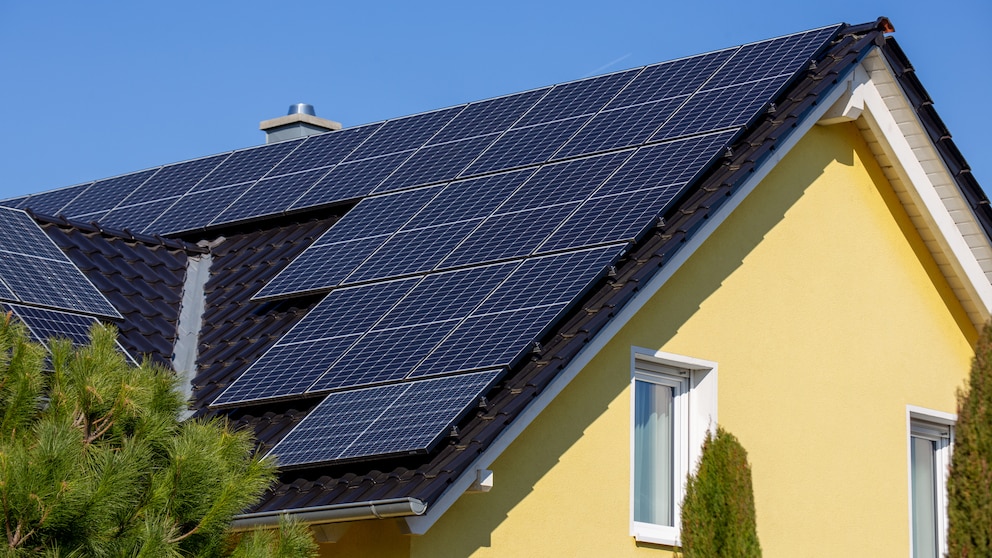
Anyone considering a solar system on their own roof faces an important decision. With the turn of the year, the conditions for feeding solar power into the grid in Germany could fundamentally change. This raises a central question: Is it worth completing the installation by 2026, or will photovoltaics remain attractive afterward?
Planned EEG Amendment: What Will Apply Starting in 2027
The federal government is planning a realignment of solar subsidies. In the future, the focus will be more on large open-space systems, which are considered particularly cost-efficient. For smaller photovoltaic systems with less than 25 kilowatts of peak output, typically installed on single-family homes, no permanent feed-in tariff is planned from January 1, 2027.
According to the plans, operators of newly installed systems will initially receive a transitional payment for three years. This would be significantly lower than the currently guaranteed tariff rates and would be around 5.2 cents per kilowatt-hour fed into the grid, depending on the model. After that, excess solar power is to be marketed directly and compensated at the current market electricity price.
So far, operators have received a fixed guaranteed feed-in tariff for excess electricity over a period of 20 years. Currently, up to 7.7 cents per kilowatt-hour is possible for partial feed-in and systems up to 10 kilowatts of peak output. As the system size increases, the tariff decreases.
However, the reform is still in the legislative process. So far, the federal cabinet has only passed the corresponding draft law.
Install Quickly or Wait?
For people already seriously considering a solar system, the planned reform could be an argument for timely implementation. Robin Knies from Stiftung Warentest says: “Anyone who is already planning their own PV system and perhaps has already obtained offers from installation companies has a financial incentive to bring the commissioning to completion by the end of 2026, if possible.”
Those who put their system into operation by 2026 secure the guaranteed feed-in tariff for two decades.
Knies assumes that feeding excess electricity into the grid for systems installed only from 2027 will be less profitable if the reform is implemented as planned. Additionally, there is greater uncertainty about returns because future sales prices on the electricity market are currently unpredictable.
Benjamin Weigl from the advisory portal Finanztip also points out that operators can remain flexible later. “This path is always open,” he says, referring to the possibility of switching from the feed-in tariff to direct marketing if it promises higher returns in the future. However, the reverse path would not be possible under the current plans.
Henner Schmidt from the German Real Estate Association (IVD) considers the existing tariff system simpler. Nevertheless, he warns against being pressured: “The economic disadvantage of a hastily constructed, poorly configured PV system can be greater than the supposed advantage of the guaranteed feed-in tariff.”
René Zietlow-Zahl from the Consumer Center of Lower Saxony also points out that it could be difficult in many places to have a system installed before the end of the year if planning is not already well advanced.
What Interested Parties Should Consider When Planning
Despite the potential time advantage, experts advise careful preparation. Robin Knies emphasizes: “Anyone who wants to quickly install a PV system on the roof by the end of the year should not do so at the expense of thorough planning.”
Numerous factors play a role in the design of a system. These include roof orientation and condition, individual electricity consumption, and the correct sizing of a storage unit. Support is available from specialist companies or energy consultations from consumer centers.
Caution is also advised when comparing offers. Benjamin Weigl recommends: “Obtain binding offers from at least three, preferably five different specialist companies. Compare the offers.” According to the Finanztip rule of thumb, a solar system should cost no more than 1,600 euros per kilowatt of peak output. For battery storage, a maximum of 600 euros per kilowatt-hour is considered a sensible benchmark.
Zietlow-Zahl also advises caution if companies demand the full amount before work begins. Instead, payments should be made gradually as work progresses.
Direct Marketing: How the Model Works
With the planned reform, direct marketing is set to become significantly more important. Robin Knies explains the principle: “The principle of direct marketing is that system operators sell their generated solar power on the electricity market.” He further states: “For each kilowatt-hour fed into the grid, they then receive compensation that depends on current availability and demand.”
Since solar power is valued differently at different times of the day, returns can vary depending on the time of feed-in. Higher prices can be achieved, especially in the evening hours, compared to midday when a lot of solar power is fed into the grid.
However, private individuals cannot trade directly on the electricity market. They need a specialized service provider for this. According to Knies, while there are already some providers, the necessary structures are not yet available nationwide. This is why the three-year transition phase is planned.
According to Henner Schmidt, operators who decide on direct marketing during this transition period can also benefit from a bonus of 1.5 cents per kilowatt-hour, provided the system has a capacity of up to 25 kilowatts.
A prerequisite for the model is a smart meter. Schmidt explains: “Today, not all operators of small private PV systems have such a smart meter, so it must be installed in some cases.”
Opportunities and Risks of Direct Marketing
According to Benjamin Weigl, direct marketing can offer financial advantages. “A temporal shift in feed-in to the hours with the highest electricity demand also relieves the power grid for everyone and reduces the often costly ramp-up of fossil power plants.”
However, there are some hurdles. So far, direct marketing for private solar systems is not yet a mass market. In addition, the technical and contractual requirements are currently considered relatively complex, according to Henner Schmidt. There are also fees from direct marketers that reduce the yield.
Funding Ends After 20 Years: Changes for Older Solar Systems
When a Rooftop Solar Panel System Is Worthwhile
Will a PV System Remain Economical After 2027?
Despite the planned changes, experts still see good reasons for photovoltaics. Henner Schmidt says: “Even from 2027, smaller PV systems will mostly remain attractive.”
The key factor is primarily self-consumption. This is especially true for households with heat pumps, air conditioning, or a wall box for an electric car. A large portion of the generated electricity can be used directly there.
Benjamin Weigl explains the calculation: “If you spread the typical acquisition and operating costs of a PV system over 20 years, generating one kilowatt-hour of electricity often costs around 10 cents.” At the same time, purchased household electricity usually costs at least 25 cents per kilowatt-hour. This results in a significant financial advantage. Weigl adds: “Every self-used kilowatt-hour saves 15 to 20 cents on the electricity bill—much more than the nearly 8 cents that today’s feed-in tariff brings.”
Therefore, the importance of high self-consumption is likely to increase in the future. Henner Schmidt recommends combining a solar system with a sufficiently sized battery storage unit.
No Changes for Balcony Power Plants
The draft law does not provide for any adjustments for balcony power plants. According to Benjamin Weigl, feed-in tariffs hardly play a role for these systems anyway. “They are financed purely through the self-consumption of electricity in the household, and excess electricity flows into the grid without compensation,” says Weigl. Thus, the rules for balcony power plants remain unchanged according to the current status.
With material from dpa