

June 16, 2026, 3:02 pm | Read time: 5 minutes
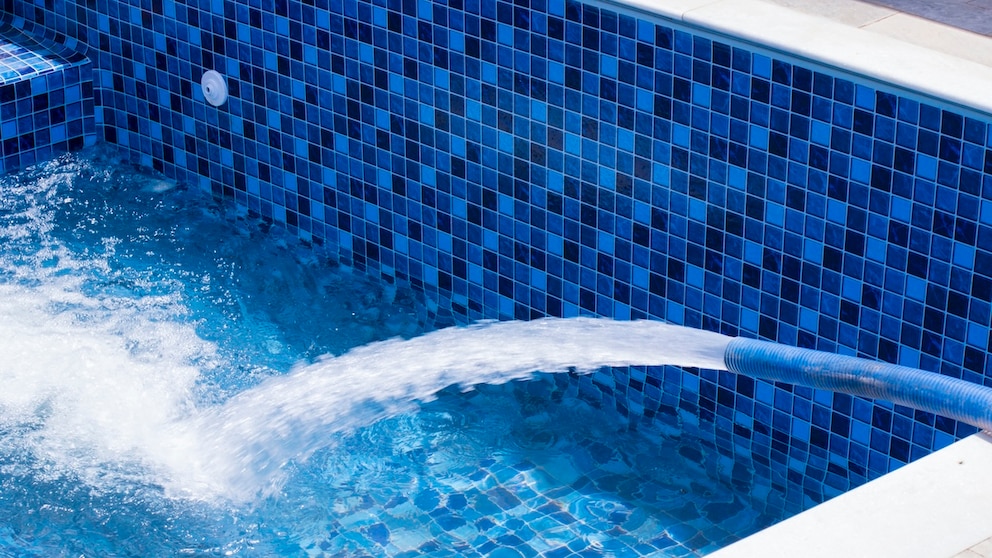
When summer is just around the corner, many people dream of having their own pool. However, it requires a lot of work—it needs to be cleaned and, of course, filled. To save money, some pool owners might consider filling the pool with well water. myHOMEBOOK explains what to keep in mind when using well water in Germany.
What to Consider When Using a Well?
If you don’t have a well yet, you might be in the dark about its use. Depending on the state and the depth of the well, construction must not only be reported but also approved, as the ground is “opened” and groundwater is used. Therefore, you should report the construction project to the relevant water authority at least one month in advance. If the well is deeper than 15 meters, a permit is necessary. This is stipulated by the Water Resources Act. The following information should be included in the report:
- Notification form (informal or from the relevant authority)
- A site plan marking the exact location of the borehole
- Information on the well depth and the amount to be extracted
The type of well use is also important: If the water is simply used for watering your own garden, it only needs to be reported. If water is used for commercial purposes, it must be reported and approved.
Can the Pool Be Filled with Well Water?
In principle, it is allowed to fill the pool with well water. Using water from the well is more cost-effective since no tap water is used. However, there are some things to consider. Well water should only be used for the pool if there is no health risk. myHOMEBOOK consulted the Federal Environment Agency: “We recommend a chemical and microbiological analysis of the well water by a certified laboratory beforehand.”
How to Protect Your Backyard Pool From Frost and Ice

Testing Water Quality at Home – How to Do It Yourself
These Factors Determine if Well Water is Suitable
If you want to fill your pool with well water, you should pay attention to various factors. There are certain things that determine whether the well water can be used as pool water at all.
Is There Too Much Iron in the Well Water?
If the well water is too high in iron, it can be identified by an orange discoloration, and the iron tends to form slimy deposits, especially in paddling pools and pools. Iron deposits in the pipes can not only restrict the well’s pumping capacity but also easily clog any filters.
Iron-rich water is generally not a hazard, but bacteria can settle in the iron deposits, which can be harmful to health.
If you want to do something about iron in the water, you can prevent it with the following measures:
- A sand filter system should be connected to the well water for pool use
- The addition of so-called flocculants can also influence the iron content
Nitrates in the Water
Regular drinking water is subject to certain limits for nitrate content. In Germany, this is 50 milligrams per liter for adults, and only 10 milligrams per liter for infants. When filling a pool with well water, this limit does not necessarily have to be met, but the nitrate content in the well water should be determined and regularly monitored.
If the nitrate content is too high, algae can even form in the pool water, turning it greenish and cloudy. Nitrate cannot be easily removed from the water. Therefore, in many cases, a partial water change is the most sensible option. About 50% of the well water in the pool is replaced with tap water.
Bacteria Can Also Be in Well Water
Pool water is often swallowed, especially by small children. So if you want to fill your pool with well water, you should first check whether the water is contaminated with bacteria. This check should be done before using it as pool water, as even chlorine cannot combat bacteria like E. coli, but is only intended for prevention. The VSR-Gewässerschutz e.V. conducts water analyses for well water.
The Right pH Level
The pH level in water determines how acidic or basic the water is. 7.0 is considered the average value. Slight deviations are more common, but water is considered basic above approximately 9.5 and acidic below 6.5. However, it is important to distinguish: If you want to fill your pool with well water, you should keep the pH level between 7.0 and 7.4. If the water is too acidic, it can be harmful to the well’s pipelines. Basic pool water blocks the effect of chlorine.
Check the Quality Before Use
Well water can certainly be used for your own pool, but only if the water is in a condition that is not harmful to health. Therefore, a water sample should be taken and sent to a laboratory before use. If the quality is safe, nothing stands in the way of enjoying water fun in your own pool.