

December 7, 2022, 4:18 am | Read time: 5 minutes
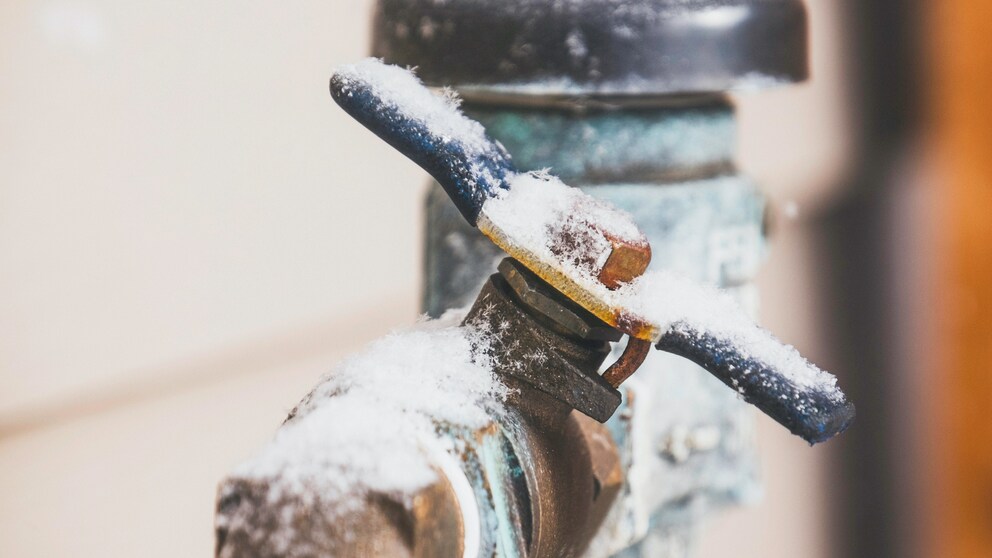
Heating is expensive–but not heating isn’t a solution either. Not turning on the heat risks frozen water pipes in the house–and burst pipes. How can you prevent this without wasting energy?
Heating less means freezing? Yes, that can indeed be the case–especially if the water in the pipes freezes and they burst. Then you can’t heat at all. How can you prevent frozen pipes, and what should you do in an emergency? And which insurance covers this situation?
Overview
Which Pipes Can Freeze?
“Even in mild winters, numerous damages occur because there are always local frost periods,” says Hans-Hermann Drews from the Institute for Damage Prevention and Damage Research of Public Insurers (IFS) in Kiel.
At risk are pipes in basements and attics, as well as in extensions with multiple exterior walls, but also vacation homes or outdoor connections used for garden irrigation, lists Michael Pommer from the DIY Academy in Cologne. Also, in rarely used rooms–such as former children’s rooms or ironing rooms, which are only heated as needed in winter.
When Is There an Increased Risk?
An increased risk also exists for properties that are not continuously used, such as during a change of ownership in winter or during renovations, says damage researcher Drews. But even in occupied buildings, the risk can increase, for example, after renovations, says the scientist: “Previously protected installations can suddenly be in frost-prone areas. This can be due to a new heating system that produces less waste heat and no longer radiates to the surroundings.”

Nevertheless, the cause of frost damage like burst pipes is almost always human, says Michael Pommer. “Outdoor water pipes are usually laid frost-proof at least 80 centimeters deep in the ground. Therefore, the water always flows to the building even at low temperatures.” The critical mistakes are made inside the buildings by not heating rooms sufficiently.
Related: Frost damage in the garden–how to prevent it?
Frozen Pipes–Tips for Emergencies
And frozen pipes sometimes only become apparent at second glance. For example, when radiators no longer get warm or water only drips from the faucet. And then? “Stay calm and act quickly,” says DIY trainer Michael Pommer. Here are the tips for emergencies:
Open All Faucets
As a first measure, you should close the main water supply and open all faucets, advises Hans-Hermann Drews. “When water freezes, it expands and can, in the worst case, burst the pipes due to this expansion.” Opening the faucets relieves some pressure from the pipes and allows thawed water to drain.
Warning: When thawing pipes, open flames like candles or gas burners are prohibited. “They can increase the pressure further, and these flames can also cause fires,” says damage researcher Drews.
Hair Dryer, Heating Pads, and Wet Towels
It is more promising to warm frozen exposed water pipes with a hair dryer or heating pad–but from a certain distance. The pipe must not become too hot too quickly, or further damage may occur. Alternatively, you can place cloths or towels soaked in hot water on the pipes to act for a few minutes. Start thawing at the faucet area and work your way back to the supply line.
Warm the Interior
At the same time, try to warm the entire affected room, for example, with electric heaters. This is also one of the few options if you suspect the frozen spot is behind a panel or in the masonry. Once the water flows again, the blockage is cleared.
But sometimes a pipe burst occurs, creating damp spots on the wall or even water leakage. As an immediate measure, you should turn off the circuit breakers and shut off the water supply. Then inform the building manager, neighbors affected by the damage, a plumbing company, and the insurance company.
How Can You Prevent Frozen Pipes?
“In winter, temperatures in unused rooms should never drop below 16 degrees,” advises Michael Pommer from the DIY Academy. This “prevents not only frost damage but also mold growth.” Where heating is uneconomical, such as in a weekend house, pipes in frost-prone areas should be drained, and the supply line shut off.
Heat Efficiently Without Damaging Your Home
What to Keep in Mind When Building a House in Winter
Do Frost Guards Protect Against Frozen Pipes?
For indoor spaces, “frost guards” are available–heaters with built-in thermostats that automatically turn on when the room temperature drops below a preset value.
But they do not protect against frozen pipes, says damage researcher Hans-Hermann Drews. “These devices monitor the room temperature but do not measure the temperature in pipes located in walls and ceilings. So they miss whether there is a frost risk there.” Homeowners should therefore find out if there are water-carrying pipes in frost-prone areas of their house.
Note: Where such areas can be and what you can do, the Institute for Damage Prevention and Damage Research of Public Insurers has compiled online as a checklist.
Which Insurances Pay in Case of Damage?
For insurance companies, burst pipes are routine. “About 1.1 million water damage claims are reported to building and household insurers annually,” reports Kathrin Jarosch from the German Insurance Association (GDV). So, a leak occurs on average every 30 seconds–for various reasons.
Damage to the building caused by water-carrying pipes is covered by homeowners insurance. According to GDV, these amounted to 3.3 billion euros in 2020. Household insurance covers damage caused by leaked water to carpets, furnishings, or clothing. These totaled 280 million euros in 2020.
However, in cases of gross negligence, the insured may have to bear part of the damage. This applies, for example, if the affected rooms were not adequately heated.
with material from dpa