


December 17, 2022, 11:12 am | Read time: 5 minutes
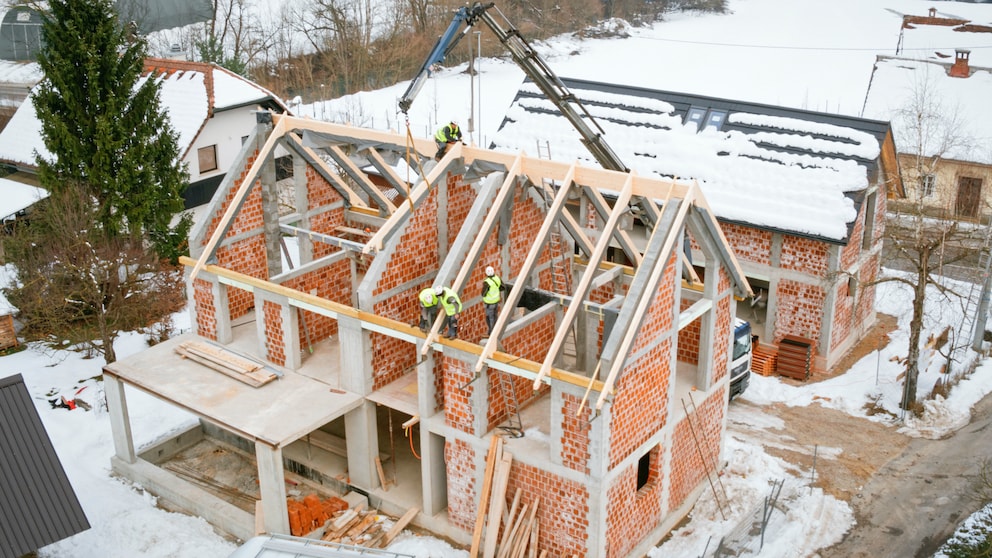
Building a house in winter was long considered impossible. However, construction now takes place even in the cold season. There are several things to consider. Homeowners should meticulously focus on proper planning and preparation.
For many homeowners, winter means lost time. The completion of their home must pause for several months, delaying the dream of homeownership. However, there are ways to make progress even in cold seasons. What is important when building a house in winter?
Table of Contents
Low Temperatures Cause Construction Halts
In winter, most construction sites in Germany are closed. Low temperatures cause construction halts, especially in the frosty winter months. Moisture and frost pose problems for many materials, particularly those that are water-soluble and water-bound, such as concrete, cement, and mortar.
Some adhesives and paints also change their properties in winter months, which can become a real hazard. Erik Stange from the Homeowners Protection Association confirms: “Building when it’s too cold or wet outside makes physics your enemy.”
Avoiding Frost Damage During Winter Construction
If you want to avoid frost damage during winter construction, the shell of the building should ideally be completed before the freezing temperatures set in. It is crucial to prevent water from entering. Good drainage in the shell is therefore advisable.
Additionally, existing openings should be protected and sealed with waterproof film. By adhering to the prescribed measures, freezing water can be avoided. Since water expands when it freezes, this can lead to significant damage.
When water freezes, concrete cannot properly cure even with the addition of substances. Concrete and bricks can break or burst more easily in winter moisture. Ensure that already installed and not dried building materials are dry in winter. Therefore, heating in the shell should be in place before construction begins.
Important: If you plan to build your house traditionally with masonry and concrete, in other words, in solid construction, the project should be completed before freezing temperatures.
Also interesting: Which materials are suitable for an indoor windowsill
Construction Measures Possible at 5 Degrees Celsius
Excavation
If the ground is frozen because temperatures are below freezing, excavation work is no longer possible. However, it is still feasible when temperatures are up to 5 degrees. The soil excavated from the construction site can thus be more easily removed.
It is also possible to pour the concrete slab for the basement. Caution: While this construction measure is possible at lower temperatures with the addition of antifreeze agents, it is not recommended, as the slab must then cure.
Installing Masonry
As mentioned, solid construction with bricks should be completed before winter. Mortar must not freeze, and moisture must not penetrate the bricks. Masonry should not be constructed below 5 degrees during winter construction. If the winter is mild, masonry construction is feasible.
Also interesting: When homeowners should protect their construction site from damage in winter
Roofing
A roof can generally be covered in winter. Temperatures are crucial here. Proper site and structure protection is essential, and good planning for roofing is vital. Construction should begin in October, as frost can cause delays in winter.
There is also an increased risk of accidents in winter. If you want to cover the roof before winter, choose a construction company with proven experience early on.
Interior Construction in Winter
Interior construction includes trades such as windows, drywall, plumbing, electronics, heating, flooring, walls, and stairs. If the shell is complete with a covered roof and dried exterior plaster, interior construction can proceed in winter. Ensure construction lasts at least three months and may extend longer in winter. Good planning is crucial. Windows and exterior doors should be installed first to keep the shell warm. PU foam can be processed down to minus 10 degrees.

Can a Green Facade Cool a Building?
Can 3D Printers Really Build Houses?
Building in Winter with Prefabrication
It is often said that those who build with wood do not need a winter break. This is true to some extent. Especially in the prefabrication segment, houses are built in winter. The advantage is that walls, ceilings, and other components are prefabricated in the factory and later assembled on-site with a crane.
However, the basement ceiling must already be poured, and the necessary excavation completed. It may take several days until the prefabricated house is fully assembled and you can begin interior construction. Building a prefabricated house in winter has several advantages over traditional stone construction in winter. Just ensure that heaters are used when temperatures are below freezing during later interior installation.
Also interesting: What is a cold conservatory?
Important Tips for Winter Construction
- If you plan to build a house in winter, consult specialized companies with proven successful projects. It is also important to involve trained and experienced craftsmen and architects, especially those with extensive knowledge of winter construction.
- During interior construction, the shell should already be heated to prevent filled water pipes from bursting due to frost damage. The access to the attic must be closed. Otherwise, moist but warm air can rise and cause mold in the attic.
- Be cautious with water-based building materials! Mortar, adhesives, and plaster cannot withstand freezing temperatures.
- For earthworks, the outside temperature should be above freezing.
- Variable winter temperatures can lead to construction halts.
- Do not build below 5 degrees.
- For wooden components, also watch for moisture. Moisture can lead to mold.
- Masonry can experience explosive effects from moisture and frost. As mentioned: Water expands when it freezes.
- While winter construction is possible, expect higher costs due to increased effort. Special machines, materials, and extra heating costs are often needed.
- Drying phases in winter take longer, extending the construction phase.
- Prefabricated houses are manufactured in the factory and delivered and assembled directly.