


June 5, 2026, 5:11 am | Read time: 5 minutes
Anyone who has ever moved knows the dilemma: You’d love to take heavy furniture with you, but weight and size quickly become a challenge. With the right tools and expert tips, you can not only save energy but also protect your body and surroundings—for a better start in your new home.
The large wardrobe, the bulky piano, or the new sectional sofa: Large pieces of furniture are the biggest factors in terms of effort and time during a move. And if you don’t approach the task carefully, they can even cause real damage. In many situations, simple transport aids from the hardware store are sufficient.
These Moving Tools Are Invaluable
Felt Gliders
When you need to transport heavy furniture from one apartment to another, every saved meter counts. Therefore, especially indoors, you should focus on pushing rather than carrying. This way, you can save valuable strength in your arms and upper body. To avoid damaging the floor and the furniture and to make pushing easier, sturdy felt gliders that stick under the furniture legs are recommended. They reduce friction between the furniture and the floor and prevent scratches.
Dollies
Similar to felt gliders, dollies made of wood or plastic allow heavy furniture to be easily pushed through the apartment and possibly into an elevator. However, since they can tip over quickly, they are recommended only for use on flat surfaces. Additionally, these rolling aids require at least a short burst of strength, as you need to lift the furniture briefly to place it on top. Precision is key here. For wardrobes and large sofas or beds, multiple dollies may be necessary, while for smaller items, the dolly should be placed exactly in the center for even weight distribution.
Hand Truck
A sturdy hand truck can make it easier to transport washing machines, refrigerators, or other heavy appliances or moving boxes. You only need to lift the items slightly on one side to slide the transport device’s shovel underneath. Some models even come with stair gliders, making it possible to transport items over steps.
Lifting Straps
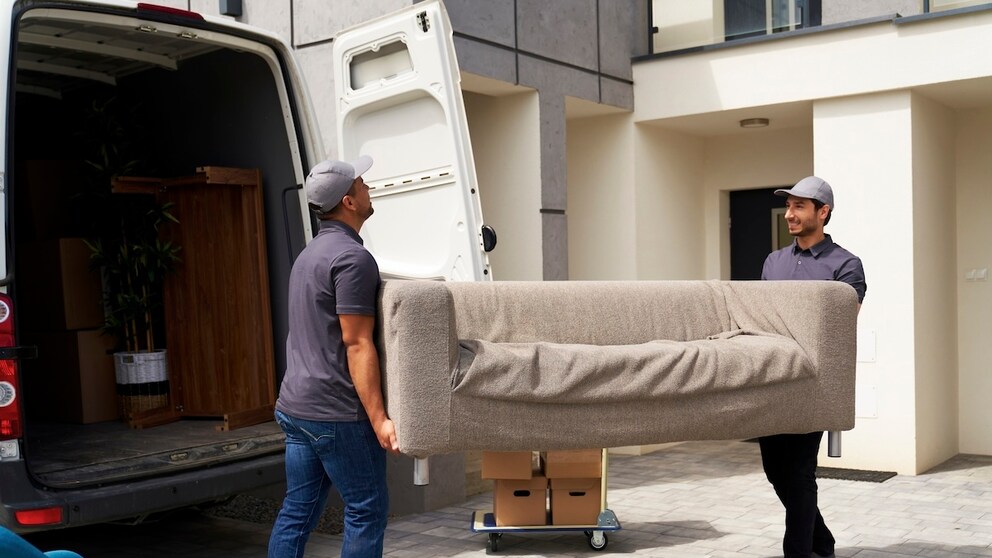
During a move, it’s important to protect your spine, shoulders, and arm muscles. Lifting straps can better distribute the weight of bulky furniture, relieving your body. Most of the weight rests on your shoulders and thighs, allowing for more ergonomic, back-friendly work. Heavy loads should never be carried alone; it’s best done as a team, with both people using lifting straps.
Tension Straps
To prevent drawers from opening or furniture from shifting while being carried, tension straps are helpful. This way, everything stays in place, and you can focus solely on the weight.
When Professional Equipment Becomes Necessary
If the moving route includes narrow staircases, multiple floors, or particularly sensitive items, common aids quickly reach their limits. In this case, it may be necessary to enlist professional equipment. “Professional moving companies offer vehicles with lift gates or possibly external lifts for easier transport,” explains a spokesperson for the Federal Association of Furniture Forwarding and Logistics (AMÖ). Additionally, freight elevators or electric stair climbers can facilitate the move. However, these should only be operated by experts to prevent injuries or damage to sensitive items like pianos, safes, antiques, or designer furniture.

7 Pieces of Furniture That Make Moving Easy

How to Move Your Refrigerator Without Damage
The Biggest Mistakes When Moving
According to the AMÖ, most problems in private moves arise from a lack of preparation. “Improper packaging is one of the most common mistakes,” says the spokesperson. “Overloaded moving boxes can also quickly lead to physical injuries.” Those who overexert themselves risk losing the strength needed to properly lift heavy furniture.
Typical mistakes in furniture transport include the ambition to carry everything alone. Working as a team is much faster, safer, and more resource-efficient, especially when using lifting straps. Additionally, heavy furniture should always be lifted using leg strength, not the back. This is the only way to prevent severe damage to the spine or muscles. The German Social Accident Insurance (DGUV) recommends carrying heavy loads as close to the body as possible and avoiding abrupt movements.
As mentioned earlier, preparation is key. Therefore, door and staircase dimensions should be checked in advance, transport routes cleared, and furniture adequately secured or disassembled. The choice of moving vehicle should not be underestimated either. It’s particularly frustrating when a painstakingly transported wardrobe doesn’t fit into the vehicle in the end.
Tips for Narrow Staircases
Transport routes during a move are not always easy to navigate. Especially in old or narrow city houses, floors can be uneven, and staircases narrow and steep. Twisting hallways also make handling heavy furniture difficult. In this case, an expert team can be helpful: “The carrying techniques are well-practiced, making loading and unloading easier. This also prevents damage to staircases, elevators, etc., which can cause additional costs,” says the AMÖ expert.
If you still want to manage the move alone, good preparation is essential. Furniture can often be disassembled into parts that are easier to transport. Drawers and loose parts should be removed before lifting and packed separately. To prevent damage in narrow staircases, railings and walls can be protected with blankets or padding. Measuring the transport route in advance can help estimate and plan turning angles, pivot points, and movements accurately. Again, working as a team is crucial to react in case of an emergency.
Those who want to transport heavy furniture can save not only energy but also valuable time and nerves with good preparation, suitable aids, and teamwork.