


January 18, 2022, 3:54 pm | Read time: 4 minutes
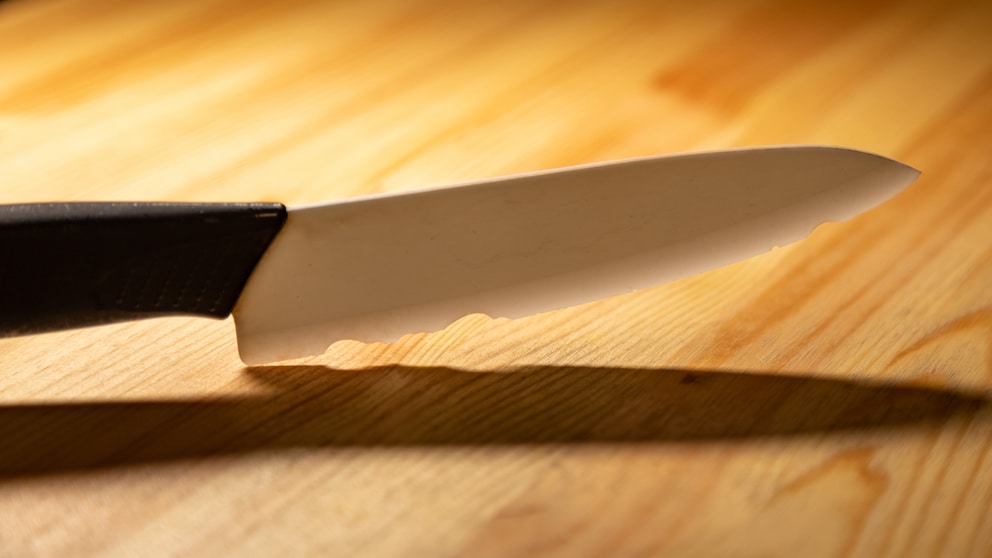
Hygienic, sharp, and long-lasting–a knife with a ceramic blade is a true kitchen helper. However, there’s a catch.
Among amateur chefs, opinions differ on this question: Does a kitchen knife with a ceramic blade cut better than a steel blade? Although well-suited for kitchen use, a knife with a ceramic blade is still rarely seen. Ceramic offers many advantages: A ceramic knife is lightweight, and the material hardly absorbs odors. The blade is also abrasion-resistant. This is particularly interesting for those allergic to metals such as nickel. Unlike a kitchen knife with a steel blade, a ceramic knife does not transfer metal allergens into the food.
Knife with Ceramic Blade Is Harder Than Steel
Another point in favor of a ceramic knife: The material is extremely hard, even harder than steel. A knife with a ceramic blade can be very sharp–and usually stays that way for a long time. Decomposing acids, such as those from fruits and vegetables, can quickly dull a conventional knife with a steel blade. However, contact with acids hardly affects a ceramic blade. A ceramic blade is rust-free and taste-neutral.
The Catch with a Ceramic Knife
Not every ceramic knife seems to have an extra sharp blade. The experts at “Stiftung Warentest” conducted an extensive test on kitchen knives, including a closer look at three knives with ceramic blades. Two of the three tested knives had little cutting ability from the start. During the test, the sharpness of the knives further diminished.
Another disadvantage: Compared to a conventional knife with a steel blade, a ceramic knife blade is quite brittle. In a busy kitchen, tiny chips can quickly form on the blade. Intense chopping or cutting of harder foods can cause the blade to chip or break. This can also happen if the ceramic knife is dropped. The testers dropped the knives 20 times. Surprisingly, the cutting tools survived the first falls without issue. However, no ceramic blade withstood the final drop.
What Does a Ceramic Knife Cost?
The production of ceramic knives is quite cost-effective. A small fruit knife with a ceramic blade of good quality is available in stores starting at around six euros. The average retail price for knives with longer ceramic blades ranges between 30 and 85 euros. Professional chef’s knives can be significantly more expensive.
Also worth reading: How to Recognize a Good Kitchen Knife?
Can You Sharpen Ceramic Knives?
In principle, yes. However, due to the hardness of the material, a ceramic knife cannot be sharpened like a regular steel knife. You need a special sharpening stone with sufficient grit or a sharpener with a diamond grinding wheel. Such a device is likely owned by few amateur chefs. The experts at Stiftung Warentest also recommend having a ceramic knife professionally resharpened. Many manufacturers also offer a free sharpening service.
If you still want to sharpen your ceramic knife yourself, you should draw the blade flat over the moistened diamond sharpening stone. The blade must also be turned toward the knife tip while sharpening.

Which Knives Are Dishwasher Safe?

How to Sharpen Dull Tools Again
Can a Ceramic Knife Go in the Dishwasher?
Ceramic knives are generally dishwasher safe. However, too hot water is not good for any knife, as it dulls the blade faster. In the dishwasher, the knife must also be placed so that it does not bump into anything and get damaged. In general, knives, whether with a steel or ceramic blade, should be washed by hand. This is especially true for knives with wooden handles. How to properly clean a kitchen knife is explained by an expert in this article from myHOMEBOOK.
Also interesting: Which Knives Can Go in the Dishwasher?
What Is a Ceramic Knife Made Of?
Ceramic blades are typically made from zirconium dioxide. The material is also used in medical technology and mechanical engineering. Initially in powder form, the substance is pressed into shape and then intensely heated.