

July 21, 2024, 4:24 am | Read time: 6 minutes
AEG, with its slogan “Good from Experience,” was considered one of the largest electronics companies worldwide. But at the beginning, in 1881, it was just a vision–that of Emil Rathenau. The rise and fall of a global electronics giant from Germany.
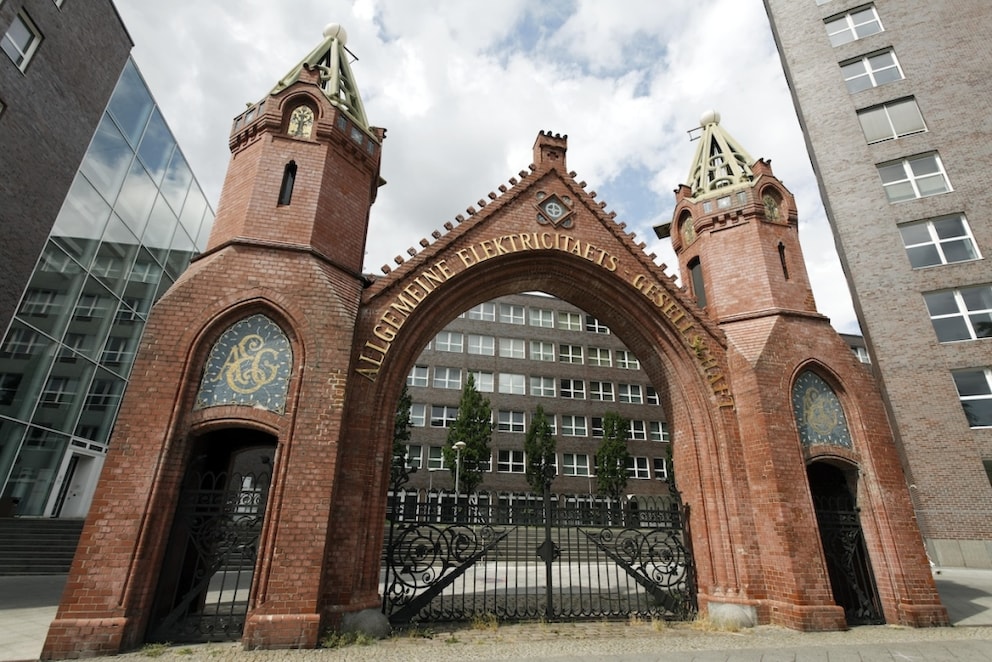
Rathenau recognized the future potential of electricity and electrical engineering very early on. In 1881, he acquired the license for the patents of inventor Thomas Edison, who is primarily known for the widespread electrification of New York. Rathenau’s Berlin company, founded in 1883, initially operated under the name Deutsche Edison-Gesellschaft. Just four years later, it was renamed Allgemeine Elektricitäts-Gesellschaft, or AEG. This acronym would gain national and then international renown in the coming decades.
Rathenau prepared for the later rise with smart strategic decisions. In 1907, designer and architect Peter Behrens, considered by many as the forefather of industrial design, was hired. Behrens was tasked with satisfying the growing demand for products that not only worked well but also looked good. He was the first to give an industrial company a visible, distinctive appearance. This corporate identity, as we call it today, permeated nearly all areas. Behrens not only created the AEG logo and the company’s entire advertising presence but was also responsible for product design and the appearance of building architecture.
Ascent to the Olympus of Global Corporations
Today, the AEG brand might be associated mainly with washing machines, dishwashers, vacuum cleaners, and other electrical household appliances. However, in the first half of the 20th century, AEG produced (almost) everything powered by electricity–and more. The portfolio included electric building heating systems, streetcars, (electric) locomotives, as well as airplanes, motor vehicles, and household appliances. The success story gained momentum, and even World War II couldn’t stop AEG. Like most large German companies, AEG also bore guilt. In 1942, about 35 percent of the 175,000 workers were forced laborers, and in some departments, it was even 60 percent.
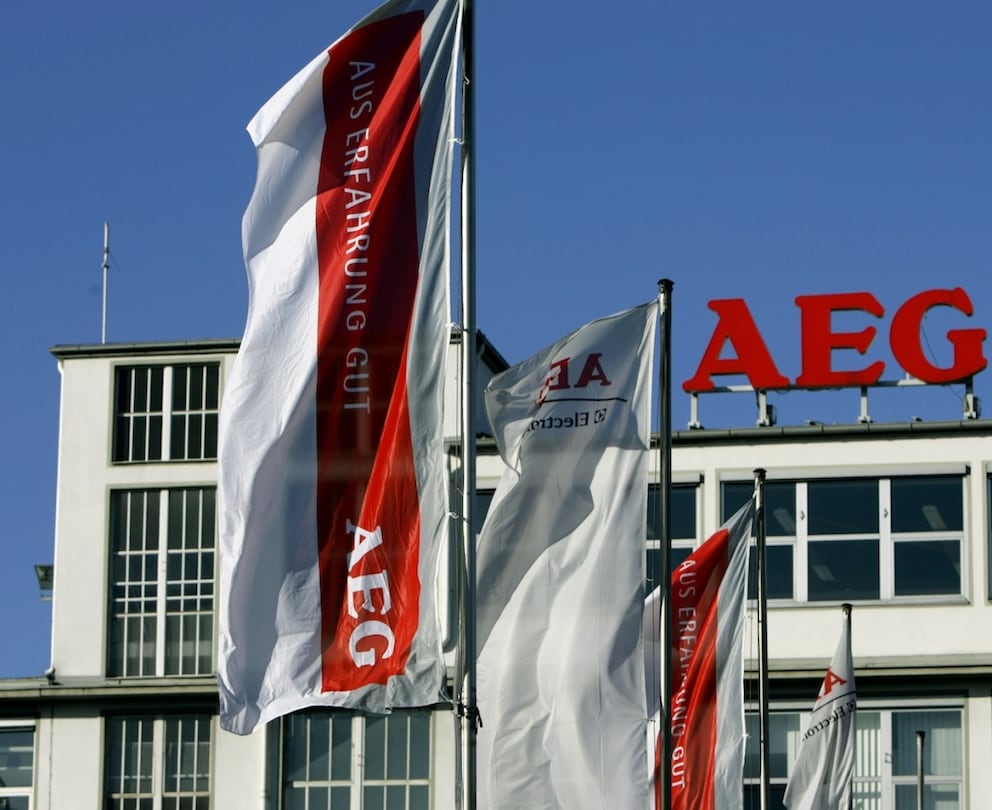
After the war, the company headquarters moved from Berlin, where the situation as a “divided city” posed a significant competitive disadvantage, to Frankfurt/Main. The smart, highly effective advertising claim “AEG – Good from Experience” was introduced. In 1958, the first fully automatic washing machine model, Lavamat, was launched. By the early 1960s, the then approximately 130,000 employees generated a turnover of 3.1 billion Deutsche Marks. Ten years later, AEG-Telefunken AG–having acquired the German consumer electronics manufacturer in 1967–was among the twelve largest electronics companies in the world, with around 180,000 employees.
Also interesting: What ever happened to “Ata” from Henkel?
Settlement Application and Sale of AEG
As is often the case in the history of successful economic giants, AEG made its biggest mistakes during its greatest success. The bloated administrative apparatus, with almost 1,000 employees at the Frankfurt headquarters alone, increasingly burdened decision-making processes. Additionally, the quality of some products occasionally left much to be desired. The once-celebrated slogan was parodied in popular culture. With phrases like “AEG – All a Mess,” “AEG – Unpack, Turn On, Doesn’t Work,” or alternatively “AEG – Unpack, Turn On, Warranty Case,” no one at AEG found it amusing.
AEG-Telefunken had simply become too large and too inflexible. The settlement application filed by the responsible parties on August 9, 1982, was no longer a big surprise for economic experts. AEG could not be saved, even with a loan of 1.1 billion Deutsche Marks from a consortium of banks. Three years later, in 1985, Daimler-Benz AG took over the long-deficient electronics company for the gigantic purchase price of 1.6 billion Deutsche Marks–the largest takeover in German economic history at the time. The then Daimler-Benz CEO Edzard Reuter dreamed of an “integrated technology group.” However, this dream soon turned into a nightmare for Reuter.

The History of the Manufacturer WMF
Who Is Actually Behind Osram?
The AEG Corporation is Deleted from the Commercial Register
Even today, nearly 40 years later, it can be said that this takeover was by far the most disastrous decision in the history of Daimler-Benz. A few years ago, the contentious economist Ekkehard Wenger estimated the costs of the corporate restructuring attempt at 36 billion Deutsche Marks. For the now-retired Würzburg professor, it was simply the “largest capital destruction ever in Germany during peacetime,” as he told the “Handelsblatt.”
Starting in the early 1990s, Daimler-Benz began to divest individual divisions with unpleasant regularity. AEG Elektrowerkzeuge GmbH was sold to the Swedish company Atlas Copco in 1992, and AEG Haushaltsgeräte GmbH was sold to the Swedish home appliance company Electrolux in 1994. Two years later, the end of AEG as an internationally operating company was also sealed on paper: on October 2, 1996, the AEG Corporation was deleted from the commercial register in Frankfurt/Main. Thus, AEG as a company was definitively history. However, the brand name was to survive.
The Logo Lives On
At Electrolux, they were evidently convinced that the acronym AEG still had a strong appeal. Rightly so, as marketing expert Martin Fassnacht explained in a 2019 interview with the “Münchner Merkur.” “It costs a lot of money to build new brands,” said the professor of strategy and marketing at WHU Düsseldorf. “It can be cheaper to secure an existing brand–provided it evokes positive associations among consumers.” And the “TAZ” succinctly called it “a logo that simply can’t be destroyed.”
Since 2013, the AEG logo has been found on everything Electrolux offers in Germany to make household tasks easier. Whether it’s a refrigerator, washing machine, induction cooktop, luxury coffee machine, or vacuum robot, customers today still believe that AEG products are “Good from Experience.” However, they are rarely made in Germany anymore. Electrolux primarily manufactures in Italy and Poland. Of the former German AEG production sites, only the plant in Rothenburg ob der Tauber remains in operation.