


October 5, 2026, 2:34 pm | Read time: 4 minutes
At the end of the warm days, many heating systems awaken from their summer slumber. But not all of them. Often, when you turn up the thermostat, only the top or bottom half of the radiator heats up. In such cases, there isn’t necessarily a defect. myHOMEBOOK spoke with the Consumer Center NRW about why some heating systems stutter after the summer period.
If the heating system warms unevenly, it’s usually because there’s too much air in the system. The Consumer Center NRW often receives similar questions at the start of the heating season. The cause can usually be fixed by laypeople. However, sometimes only a professional can help.
Follow myHOMEBOOK on WhatsApp now
Device noises can provide clues
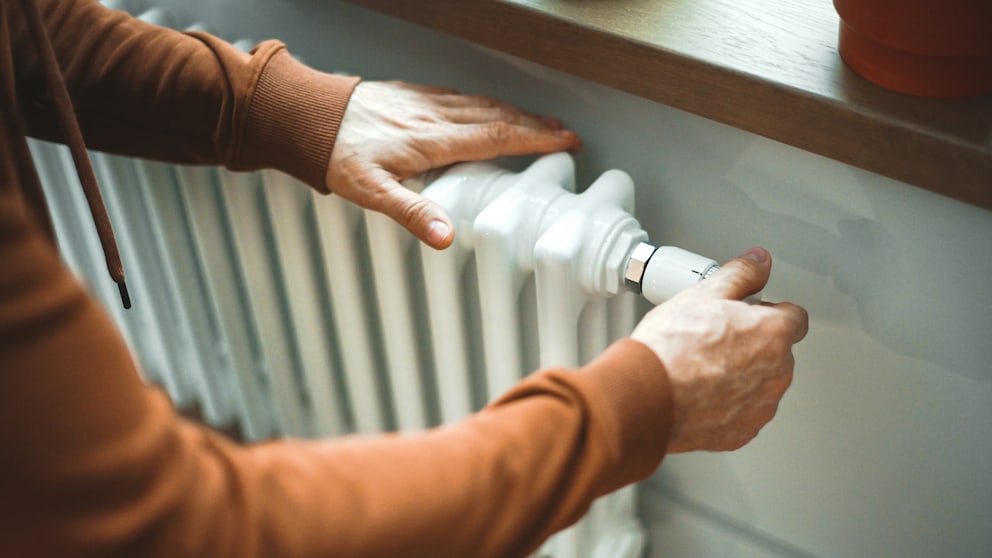
To get to the root of the problem, experts say it’s enough to listen carefully. If the heating doesn’t start, turn the thermostat all the way up. If the radiator gurgles but still doesn’t get warm, it’s usually air in the system, according to the Consumer Center spokesperson. If there’s complete silence after turning it up, the valve pin might be stuck. This happens when the thermostat hasn’t been moved for a while.
A stuck pin can often be freed with a few simple steps:
- Turn the thermostat to the highest setting, then unscrew the regulator.
- Carefully move the small metal pin underneath back and forth with pliers, without pulling it out completely; alternatively, tap it lightly with a hammer.
- If resistance persists, apply some lubricant or contact spray and let it sit for a short time.
- Reattach the thermostat and set it to the desired temperature.
Also interesting: When to check the thermostat
Usually, it’s not a defect
According to the Consumer Center NRW, it’s not unusual for radiators to be warmer at the top than at the bottom. Three harmless reasons are possible:
- Low water flow rate
- Low supply temperature, especially at the start of the heating season
- A radiator that’s relatively large compared to the heat demand, such as after retrofitting insulation.
In all three cases, the room should still warm up sufficiently. A room thermometer can provide clarity: If the room temperature is correct, there’s no need for action.
The opposite case, a radiator that only heats at the bottom, is a classic issue. According to the Consumer Center NRW spokesperson, this always indicates air in the heating system. Since air is lighter than water, it rises to the top, blocking the water flow.
Proper venting is crucial
Therefore, it’s usually enough to vent the heating system. You should turn the thermostat fully up and let the radiator warm up. Use a vent key to carefully open the valve a quarter turn until a steady stream of water comes out instead of air. To prevent water from shooting onto the floor, hold a small container underneath. Repeat the process for all radiators. Note: On multiple floors, vent the lower floors first, then the upper ones, otherwise the air will move up a floor.
The Consumer Center advises: Before venting multiple radiators, it’s always worth checking the system pressure. If the pressure is too low, the system might draw in additional air instead of expelling it during venting. The optimal pressure for your system is in the heating system’s manual. If in doubt, consult a professional.
Also interesting: How to vent your heating system in 4 simple steps

Why Your Heating Isn’t Getting Warm: 7 Possible Reasons
8 typical errors when bleeding the radiator
What if venting doesn’t help?
If the radiator remains unevenly warm after venting, there may be two more complex causes.
Sludge buildup: Over the years, rust and lime particles accumulate in the heating water, blocking the lower part of the radiator, similar to an air bubble, which is noticeable by the cloudy, brownish water during venting.
Lack of hydraulic balancing: Water flows preferentially through short, thick pipes, leaving more distant radiators with too little. Hydraulic balancing adjusts each valve precisely to the heat demand of each room.
In both cases, the Consumer Center NRW advises consulting with a professional.
Preparing your heating system for winter
The Consumer Center also recommends an annual “tune-up” of the heating system for winter, ideally in late summer and in consultation with a professional and chimney sweep. Scheduling this appointment in your calendar can prevent the unpleasant situation of a cold apartment and fully booked tradespeople on the first really cold weekend.