


April 14, 2025, 1:23 pm | Read time: 3 minutes
The sun is gaining strength–it’s high time your solar system delivers full performance again. But what if hidden damage or dirt is slowing down electricity or heat production? Those who conduct proper checks now can avoid losses and maximize their system’s output.
Between March and September, solar systems achieve the majority of their annual output. Homeowners should therefore inspect their solar systems in the spring, as dirt, weather, and technical defects can significantly reduce yield. Learn how to proceed and when to contact a professional here.
Why You Should Inspect Your Solar System in the Spring
Regularly checking your solar system ensures it consistently delivers high yields–especially in the spring when the most productive period begins. According to the information program Zukunft Altbau, residues such as leaves, pollen, fine dust, lichens, or bird droppings can accumulate on the modules during the cold season. These significantly reduce performance. In cases of heavy soiling, the efficiency of the modules can decrease by 10 to 15 percent, according to Zukunft Altbau.
The first step: a visual check from the ground. Even without climbing onto the roof, you can spot major dirt or obvious damage. Experts recommend initially inspecting the modules with the naked eye. This way, you can directly identify major dirt or defective solar modules.
Also interesting: Why You Should Regularly Clean Your Solar System
Digital Data Provides Clues to Damage
Modern photovoltaic systems typically have monitoring tools via app or web platform. These show the current power output and condition of the system. This allows you to quickly detect performance deviations–even if they are not visible.
If current values are below the expected yields, it may indicate restricted operation. In this case, comparing with previous year’s values or publicly available data from the region is helpful. This allows for a better assessment of whether a professional inspection is necessary.

Hydraulic Balancing–What Does It Involve?

Is it permissible to install solar panels on the roof of a garden shed?
When Professionals Should Take Over
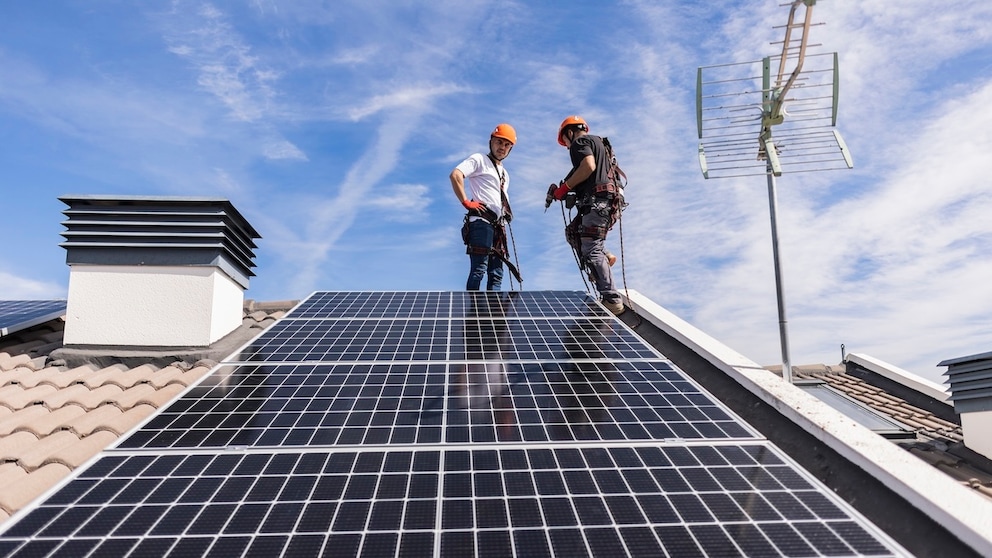
As soon as irregularities occur–whether in the measurement data or during the visual inspection–do not attempt any DIY fixes on the roof. Professional expertise is required for a thorough inspection. Professionals not only check the modules but also the electrical connections, wiring, glazing, and inverter. They can also make hotspots on the modules visible with thermography. Increasingly, modern technology such as drones is being used for this purpose.

When in Doubt, Hire a Professional
“If you’re unsure whether the solar system is still delivering the appropriate performance, and before you climb onto the roof yourself, it’s better to consult a professional. Professionals can not only assess the situation technically–you also avoid putting yourself in danger. And for insurance purposes, professional approval plays an important role.”
Simple Touch Test for the Solar Thermal System
If it’s a solar thermal system for water heating, a simple test can check if the system is working at all. Just feel the pipes in the sunshine: The pipe coming from the collector should be noticeably warmer than the one going into it.
However, this so-called touch test only shows whether heat transfer is occurring at all. For an accurate performance assessment, Zukunft Altbau recommends looking at the yield data. The touch test only indicates that the system is functioning–not how well it is doing so. More informative is the evaluation of the heat meter. Here, too, a comparison with previous year’s values is worthwhile.
With material from dpa