


October 3, 2026, 2:01 pm | Read time: 3 minutes
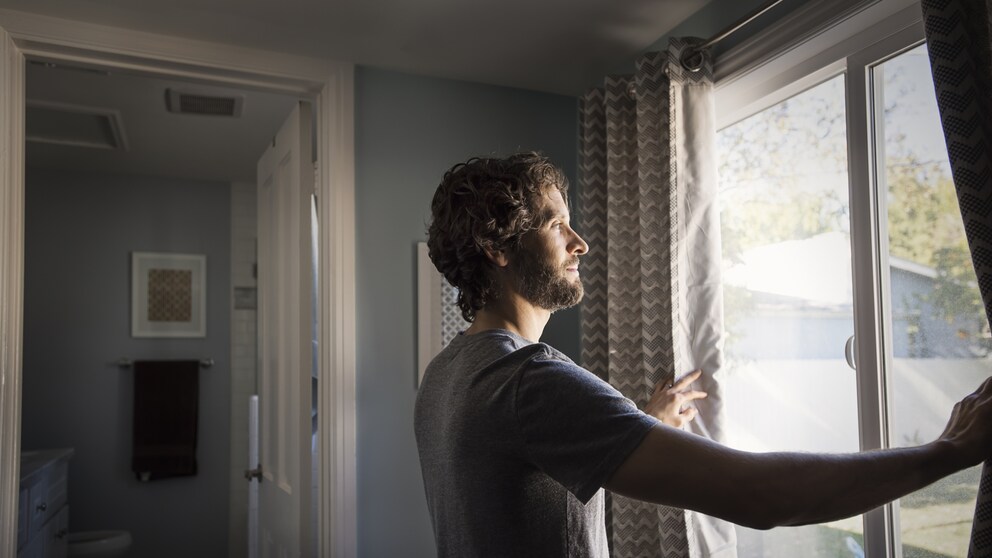
Disputes between neighbors occur daily in this country. It’s not unusual for a case to occasionally end up in court. A bizarre neighborhood dispute in Nuremberg led to an appellate court ruling in 2024. A man felt he was being watched through the windows of the adjacent neighbor’s house, filed a lawsuit, and invoked the so-called “window right.” What is this about?
Plaintiff Invokes the “Window Right”
The plaintiff from Nuremberg, owner of a single-family home built in 2017, demanded that his neighbors, who had lived in an adjacent house since 2019, alter their windows so they could neither be opened nor looked through. Both properties had previously been part of a larger estate that was divided in 2000, making the defendants’ house a boundary construction. The plaintiff invoked the so-called “window right” and sought to enforce it according to legal provisions.
Such a law indeed existed in the Free State of Bavaria. In the law implementing the Civil Code (AGBGB) in Bavaria, Article 43 contains the so-called “window right.” It states: “If windows are less than 0.60 meters from the boundary of a neighboring property on which buildings are erected or which serves as a courtyard or house garden, they must be arranged at the request of the owner of this property so that up to a height of 1.80 meters above the ground behind them, neither opening nor looking through is possible.”
Simply put, this meant that under certain circumstances, it could be required that the neighbor’s windows be closed or darkened. Indeed, the defendants’ apartment had several windows and balcony doors whose distance from the plaintiff’s house was less than 60 centimeters. The Nuremberg-Fürth Regional Court had initially ruled in favor of the plaintiff in 2022.
Also interesting: Can the Neighbor Ride a Bike Across My Property?
How Close Heat Pumps Can Be to Property Lines

What Are the Legal Implications if You’re Allergic to Your Neighbor’s Plants?
Windows Do Not Have to Be Closed and Darkened
The Nuremberg Higher Regional Court overturned the first-instance decision in 2024. Although it considered the conditions met, it still ruled against the plaintiff. During an on-site visit, the court examined the situation, lighting conditions, and escape routes.
The court found that up to 80 percent of the window areas would be affected, and adequate light and air supply in the apartment would no longer be ensured. This could represent an unreasonable burden for the neighbors. Therefore, the Higher Regional Court decided that the plaintiff could not invoke the “window right.” Consequently, the defendant was allowed to continue looking out the window.
Different Regulations on “Window Right” in Germany
In Germany, there is significant inconsistency regarding the “window right.” There is no clear regulation, and each federal state regulates this issue individually. In ten of the 16 federal states, there is a so-called “window right,” but it is handled differently. These minimum distances must be observed depending on the federal state:
- Baden-Württemberg: vertical 1.80 meters, horizontal 0.6 meters (NRG, § 3 Distance of Light Openings)
- Bavaria: vertical 1.80 meters, horizontal 0.6 meters (BayAGBGB Art. 43 (1))
- Brandenburg: horizontal 3 meters (BbgNRG § 20 Content and Scope)
- Hesse: horizontal 2.5 meters (NachbGHE § 11 Scope and Content)
- Lower Saxony: horizontal 2.5 meters (NNachbG § 23 Scope and Content)
- North Rhine-Westphalia: horizontal 2 meters (NachbG NRW § 4 Scope and Content)
- Rhineland-Palatinate: horizontal 2.5 meters (LNRG RPL § 34 Content and Scope)
- Saarland: horizontal 2 meters (NachbGSL § 35 Content and Scope)
- Schleswig-Holstein: horizontal 3 meters (NachbG Schl.-H. § 22 Content and Scope)
- Thuringia: horizontal 2.5 meters (ThürNRG § 34 Content and Scope)
While the listed states have clearly defined regulations regarding the “window right,” there are no guidelines or regulations in Berlin, Bremen, Hamburg, Mecklenburg-Western Pomerania, Saxony, and Saxony-Anhalt.