


March 12, 2024, 10:16 am | Read time: 4 minutes
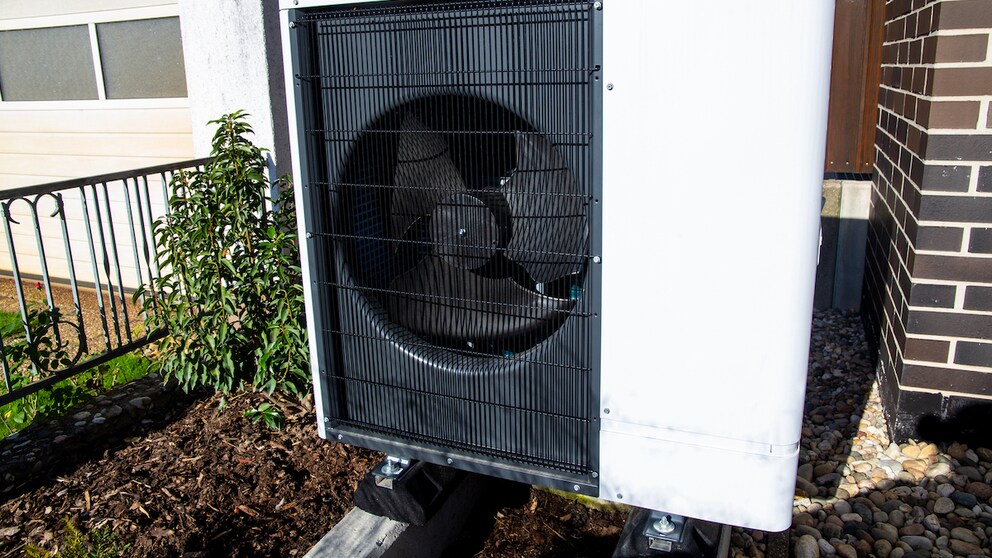
Standard in new buildings, often retrofittable in existing ones: the heat pump is expected to drive the energy transition. However, air-source heat pumps also generate noise, which is why certain distance regulations apply. And these are anything but uniform.
Distance regulations in Germany ensure that nothing is built too close to the property line. The rules vary depending on the federal state. In some cases, there are special rules for individual municipalities. Since heat pumps are usually located outdoors on a property, the applicable distances should be observed here as well. Failure to comply can result in a fine. However, there are relaxations in this area.
What Distances to the Property Line Apply for Heat Pumps
The distances to the property line are regulated in the respective building codes of the federal states. Since heat pumps generate a certain level of noise, they must maintain a minimum distance from neighbors in some cases. It is generally not allowed to place the unit directly at the garden fence. Otherwise, the neighbor could take action against it for noise protection reasons.
Follow myHOMEBOOK on WhatsApp now!

When the View Out the Window Becomes a Point of Contention

The different rules for using tiny houses
Change in Building Code in Thuringia
However, neighbors may have to get used to the noise in the future–at least in Thuringia. In this federal state, a draft amendment to the building code is before the cabinet that would reduce the distances, as reported by the German Press Agency. Thuringia’s Minister of Construction Susanna Karawanskij (Left) justified the initiative: “The amendment to the building code is primarily about renewable energies, about simplification.”
If the building code is revised accordingly, heat pumps may be built directly at the property line in some cases. According to the draft, they may be a maximum of two meters high and three meters long. However, the cabinet and the state parliament must first approve the draft.
Related: 4 Tips to Reduce the Noise of Heat Pumps
What About Other Federal States?
Distance areas are a matter for the states–which is why there are no uniform regulations in Germany. In addition, there are local stipulations in the respective development plans. “In general, three meters are recommended for air-water heat pumps,” explains Katja Weinhold from the Federal Heat Pump Association in Berlin upon myHOMEBOOK’s request. But she confirms: “There are different building requirements in the states.” For ground-source heat pumps, however, the distance between the probes must be three meters and six meters to the property line.
In Baden-Württemberg, for example, the minimum distance is only 2.5 meters. However, noise development also plays a role: If the units are quieter than 35 decibels at night in a residential area, they may be closer to the boundary. The basis for this is the “Technical Instructions for Noise Protection” (short TA Noise). And in North Rhine-Westphalia, the distance can be reduced to half a meter if an application is submitted.
According to the heat pump association, the following regulations apply in the 16 federal states. For clarification: “Conditionally without minimum distance” means that certain criteria must be met so that no distance area is necessary, such as the height or length of the device. “Unrestricted without distance area” is accordingly without further requirements.
- Baden-Württemberg: conditionally without minimum distance, but noise protection must be observed
- Bavaria: conditionally without minimum distance, as no “building-like effect”
- Berlin: allowed with a height under 2 meters and a total length of 3 meters
- Brandenburg: conditionally without minimum distance, but maximum height of the heat pump 2 meters and total length 3 meters (including foundation, enclosure, etc.)
- Bremen: unrestricted without distance areas, heat pump not defined as a structural facility
- Hamburg: conditionally without minimum distance, if the heat pump is not classified as building-like, otherwise 2.50 m distance
- Hesse: conditionally without minimum distance for heat pumps up to 2 meters high and 3 meters long
- Mecklenburg-Western Pomerania: conditionally without minimum distance, provided not classified as building-like and not higher than 3 meters and not longer than 9 meters
- Lower Saxony: No distance to the property line required if “building-like effect” and under 2 meters high and 3 meters long
- North Rhine-Westphalia: 0.5 meters, new building code since 2024
- Rhineland-Palatinate: unrestricted without distance areas, heat pump not defined as a structural facility
- Saarland: no minimum distance for heat pumps up to 2 meters high and compliance with TA Noise
- Saxony: No clear regulation
- Saxony-Anhalt: No clear regulation
- Schleswig-Holstein: Conditionally without minimum distance, provided not classified as building-like
- Thuringia: Conditionally without minimum distance, provided not classified as building-like

Best to Inquire Locally
“The building codes in Germany specify different distances, and the regulations can also vary locally. In many places, it is also unclear whether heat pumps are classified as ‘building-like.’ The simplest and most reliable way through the regulatory jungle: ask the local building authority about the current status. That way, you’re on the safe side.”