


September 10, 2025, 2:04 pm | Read time: 3 minutes
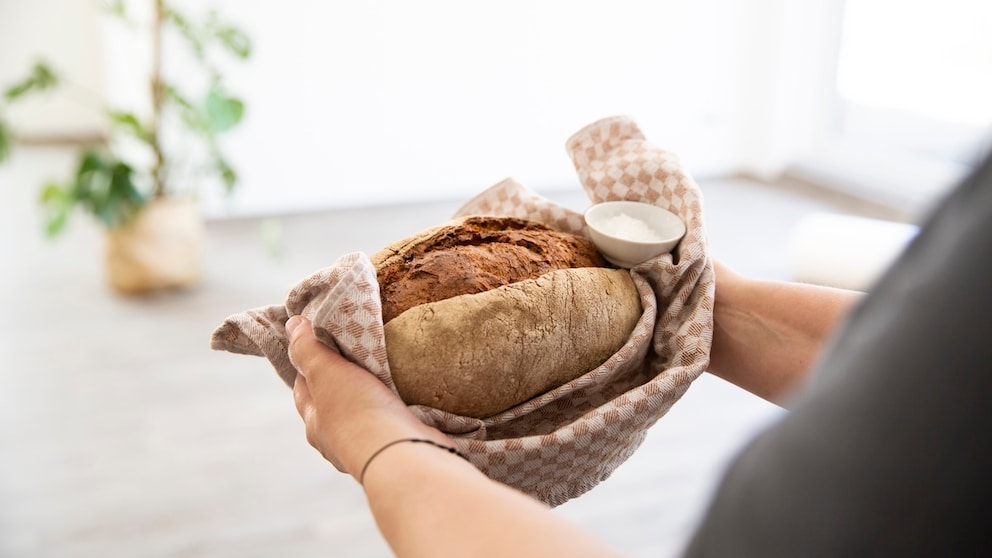
When friends or family members move, it’s a thoughtful gesture to give them a housewarming gift. But what to give? If you don’t want to risk choosing the wrong home decor, you can rely on old customs: Traditionally, a loaf of bread and a bowl of salt are given as housewarming gifts. But why?
Where Does the Tradition of Giving Salt and Bread as Housewarming Gifts Come From?
“Bread and salt, may God preserve it” is just one of many traditional sayings used when presenting this housewarming gift. Another goes: “As long as you have salt and bread, all troubles will stay away.” The tradition of giving bread and salt when moving into a new house or apartment dates back to the Middle Ages. The gift carries deep symbolism—and, of course, heartfelt good wishes.
Both bread and salt are considered staple foods in our culture. Especially during times of drought, crop failures, or wars, they were invaluable. Blessed were those who had access to these foods. As a result, bread and salt gained enormous symbolic significance.
Roasting Chestnuts at Home Made Easy

Why Many Decorate the Christmas Tree Only on Christmas Eve
Salt Was Once More Valuable Than Gold
The significance of bread in Germany is well known: Those who have bread do not go hungry. Historical films and books make it clear: In times of need, people did not ask for cheese or meat, but simply for a piece of bread—the ultimate symbol of survival. Grains and flour were also valuable trade goods for centuries. Bread was by no means taken for granted.
Salt, on the other hand, carries less obvious symbolism. Today, salt is easily and cheaply available, as it is produced industrially in large quantities. In the Middle Ages, however, it was a rare and precious commodity, sometimes as valuable as gold. Its extraction was laborious: It was either mined from salt mines or obtained by evaporating seawater.
Moreover, salt is essential for the human body. Sodium and chloride help regulate water balance and maintain stable blood pressure, ensuring all organs function reliably. But that’s not all: Before refrigerators, salt was the most important means of preservation. Meat, fish, and cheese were made durable with it. Without salt, it would have been impossible to stock up for the winter.
Religious Symbolism
From the worldly significance of these goods, a religious symbolism also developed. As indispensable staple foods, bread and salt were so precious to people that they even found their way into daily Christian prayer: “Give us this day our daily bread.” In Christianity, bread is considered a symbol of life, nourishment, and divine blessing.
Incidentally: In all three monotheistic religions—Judaism, Christianity, and Islam—bread and salt are considered elemental, God-given foods that possess a spiritual and symbolic dimension beyond mere nutrition. Even earlier, in ancient Egypt, bread was a central offering and grave good, as it was seen as a guarantee for life and sustenance in the afterlife.
Salt, on the other hand, is considered a symbol of purity, permanence, eternal life, and divine support. Those who give bread and salt wish the recipients exactly this: a carefree life in prosperity and under (divine) protection.