


November 23, 2025, 11:51 am | Read time: 3 minutes
At the Christmas market, you’ll often find a small stand offering hot chestnuts. For many, these nuts are an essential part of the holiday season. If you can’t find the stand at the market, you can also prepare these treats in your own kitchen.
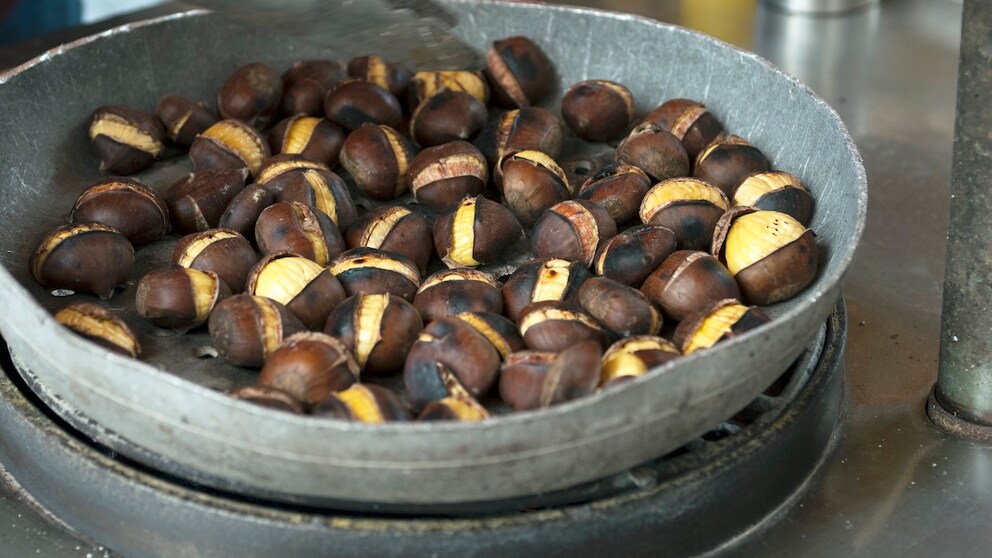
In fall and winter, it’s the season for chestnuts and marrons. A highlight for lovers of this healthy holiday delicacy. Starting in November, you can usually find these nuts in supermarkets. To make them just as delicious as at the Christmas market, you should roast marrons as follows.
Preparing Marrons at Home
Marrons are known and loved for their nutty, sweet aroma, which only develops when heated. During this process, the starch is converted into sugar. For roasting, you can use special chestnut roasters, an oven, or a pan.
Roasting Marrons in the Oven
- Score the marrons crosswise with a knife. This reduces cooking time and makes them easier to peel.
- Spread the marrons on a baking sheet and bake in a preheated oven at 200 degrees Celsius (about 400 degrees Fahrenheit) for about 20 to 30 minutes. To prevent them from drying out, it’s advisable to place an ovenproof dish of water in the oven.
- When the marrons’ shells bulge slightly and open, they are done and can be removed from the oven.
Roasting Marrons in a Pan
- Use a sharp knife to score a cross into the marrons, ensuring you cut through the shell.
- Place the marrons in a hot pan. Reduce the heat and cover the pan with a lid.
- Occasionally shake the marrons.
- After about 20 to 30 minutes, the marrons should be ready.

Tricks to Make Peeling Chestnuts Easier

With our recipe, the chocolate bread turns out especially moist.
The Health Benefits of Marrons
Chestnuts, including marrons, are a true superfood, rich in valuable nutrients. They are gluten-free and low in fat and calories, with two grams of fat per 100 grams of fruit. They are also high in fiber, vitamins, phytochemicals, and minerals.
Chestnuts offer various health benefits. Fiber aids digestion and keeps you full longer. The different vitamins, such as C and B, are good for the immune system and brain. Minerals like potassium, magnesium, calcium, and iron are important for muscles, nerves, bones, and oxygen transport in the blood. Marrons are an ideal part of a conscious and natural diet.
The Image Shift of the Marron
In the past, marrons and chestnuts were a staple food for the poorer population. Due to their high starch content, these nuts are particularly filling. In times of poor harvests or in mountainous and impoverished regions, they served as a substitute for grains. The fruits were dried, ground, and processed into flour to make bread, porridge, or soups.
However, with the spread of potatoes and wheat, chestnuts and marrons lost their significance. Potatoes and wheat flour became more widely available and affordable from the 19th and early 20th centuries. The marron, as a staple food, disappeared.
From the second half of the 20th century, urbanization led to many traditional poor people’s dishes being seen as nostalgic and exotic. Gourmet cuisine transformed the marron into a refined and seasonal ingredient. Today, it is appreciated as a side dish to game or in soups, serves as a substitute for meat or potatoes, and adds a special touch to desserts.
Once a staple food and considered a meal for the poorer population, the chestnut is now a symbol of conscious and high-quality enjoyment. The health and sustainability trend of recent years has also contributed to the renewed popularity of this small nut.