


October 28, 2026, 5:46 am | Read time: 4 minutes
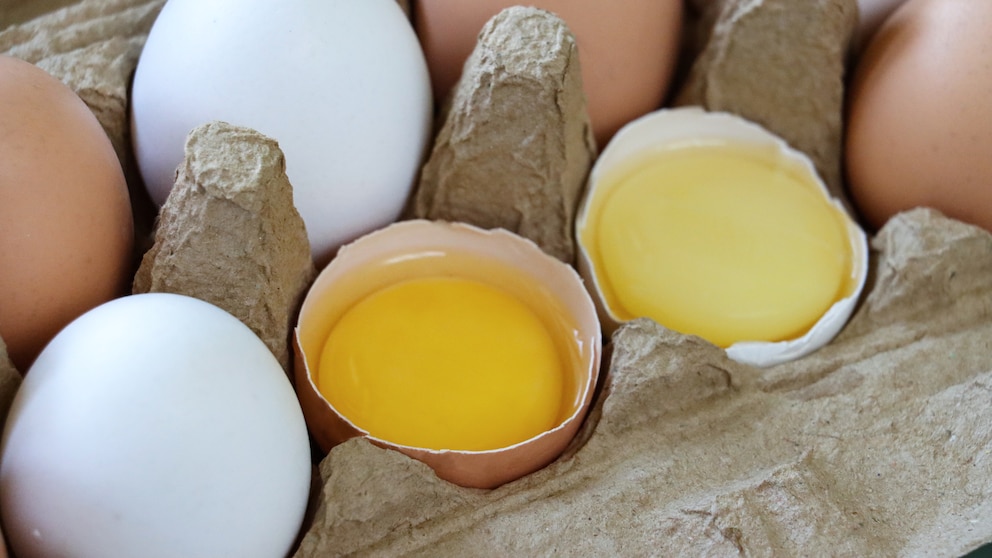
Vivid orange yolks appear particularly appetizing to many people. Some even associate the intense color with more nutrients, better animal welfare, or higher freshness. However, such conclusions are not always correct. Why yolks can vary in color and what the color really reveals about an egg.
Why Yolks Vary in Color
Cracking open an egg can sometimes be surprising: While some yolks appear pale yellow, others shine a vivid orange. Many consumers suspect this indicates better chicken welfare or higher nutrient content. In fact, the color is primarily determined by the feeding of the laying hens.
“The yolk color of a chicken egg is created by the deposition of yellow and red pigments,” explains Astrid Donalies from the Federal Center for Nutrition (BZfE). Depending on how many of these pigments are present in the feed, the color can range from pale yellow to vivid orange.
Also interesting: How to achieve the perfect poached egg
These Feed Ingredients Create a Particularly Vivid Yolk
According to the expert, the intensity of the yolk color depends on pigment-rich feed ingredients or carotenoids. These are found in foods such as paprika, alfalfa meal, turmeric, or marigold. They can be naturally present in the feed but may also be artificially produced.
“The more carotene is fed, the more the yolk color shifts from yellow to orange,” explains the BZfE. A vivid orange yolk is therefore primarily an indication of the hen’s diet.
Is Dark Yolk Healthier?
A particularly orange yolk is considered by many consumers as a sign of a high-quality egg. But this conclusion is not valid, according to Donalies. “The color does not indicate health value,” the expert clarifies. A vividly colored yolk is not healthier than a paler one. While most of an egg’s nutrients are found in the yolk, including protein, fat, vitamins, and minerals, the color alone does not reveal their content.
Related: Brown spot in the yolk – is the egg still edible or not?
Does Yolk Color Reveal Freshness?
The color of the yolk also does not indicate the freshness of an egg. Instead, there are other characteristics that consumers can use to identify a fresh egg.
According to the BZfE, the yolk of a fresh egg is domed after cracking. Additionally, the egg white is still separated into thick and thin layers. As the egg ages, the yolk becomes flatter and increasingly mixes with the egg white. Therefore, it can break apart more easily when separating eggs.
Brown Spot in Egg Yolk–Is the Egg Still Edible or Not?

Did you know? Oranges are actually green
Can Yolk Color Indicate the Type of Housing?
Those who believe they can identify an organic egg by its particularly orange yolk are also mistaken. The color does not provide reliable conclusions about the type of housing, Donalies explains. “The housing type can only be clearly identified by the producer code on the shell or packaging.” The labeling is clear: The number 0 stands for organic production, 1 for free-range, 2 for barn, and 3 for cage or small group housing.
Interestingly, organic eggs can have a paler yolk in winter. According to the expert, the hens consume less fresh green feed, which contains natural carotenoids. Conversely, eggs from other housing types can have particularly intensely colored yolks.
Even a green ring around the yolk is harmless
Sometimes a greenish-gray ring forms around the yolk of a hard-boiled egg. Many consider this a sign of poor quality or lack of freshness. In fact, it is merely a chemical reaction between iron from the yolk and sulfur from the egg white. According to the BZfE, this ring occurs mainly when eggs are boiled for more than ten minutes. However, the quality or edibility of the egg is not affected.
Which Yolk Color Do Consumers Prefer?
Which yolk color is considered particularly attractive also depends on cultural habits, according to Donalies. In her research, she found references in the food lexicon: In northern European countries, paler yolks are preferred, while consumers in southern countries often expect gold-orange yolks. Even within Germany, there is said to be a north-south divide: In the north, paler yolks are favored, while in the south, more vividly colored yolks are appreciated.