


November 6, 2024, 4:42 pm | Read time: 3 minutes
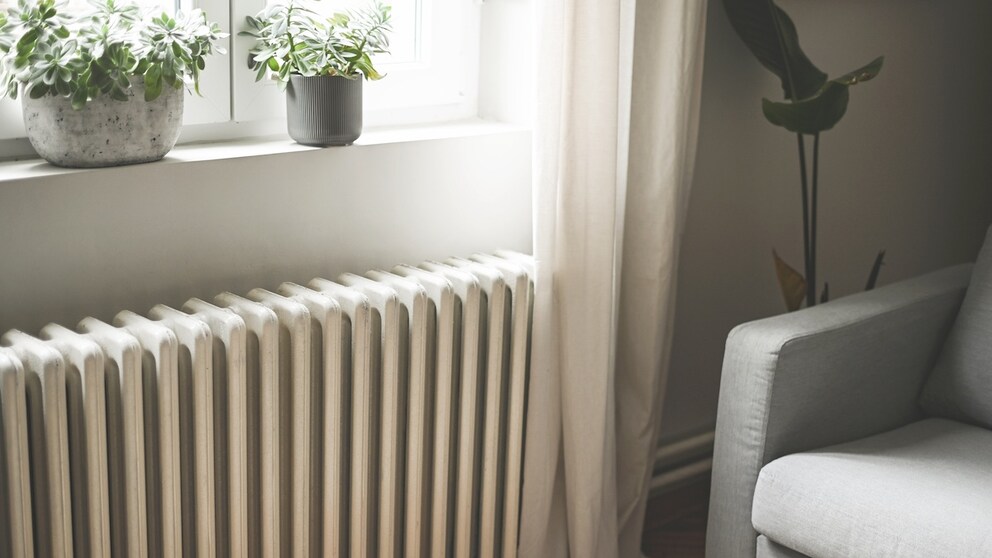
In apartments, radiators are almost always located directly under the window. But why is that? myHOMEBOOK investigated.
When you look around an apartment, you’ll notice that radiators are almost always mounted directly under the window. At first glance, this location might seem unfavorable, especially to laypeople. If you hold your hand to the window, you’ll often notice it’s cooler or even drafty there. So why are radiators primarily located under a window? An expert has the answer.
Overview

Why radiators are usually located under the window
Most heat is lost through windows and the walls adjacent to them, especially if they are outdated and poorly insulated. That’s why it’s usually cooler by the window—some even refer to these as thermal bridges. This is precisely why radiators are installed under windows.
“For reasons of thermal comfort, most radiators are located under the window. The convection of warm air from the radiator intercepts the cold air generated at the window before it can spread into the room,” explains Ralf Kiryk from the Federal Association of the German Heating Industry (BDH) upon inquiry by myHOMEBOOK.
This means the radiator’s location is primarily about living quality. Window panes radiate cold air from outside into the room, and the warm air from the radiator counteracts this directly. According to Kiryk, energy loss due to the location is minimal.
Also interesting: How to prepare your house for winter

The Pros and Cons of Radiant Floor Heating

7 Practical Tips to Heat a Room Faster
The major advantage of placing the radiator under the window
The radiator is not only installed under the window for comfort reasons. It also has another, much more important advantage: The location ensures that the heating air is evenly distributed throughout the room. Since warm air rises, if the radiator is placed elsewhere, it can lead to uneven temperature distribution, writes the portal heizung.de. The air intake at the window causes the air to rotate, preventing heat from accumulating only at the top, reducing the workload on the heating system. This also promotes heating efficiency. The advantages of a radiator under the window at a glance:
- more comfort and living quality
- rotation of heating air, leading to more heating efficiency
- space-saving
- furniture rarely blocks windows, so the radiator is not obstructed
Also interesting: Expert warns against “winter mode” trick for windows that claims to save heating costs
When radiators can be placed elsewhere
Many new buildings and structures today are much better insulated, and the windows are less air-permeable. In such cases, the radiator can be placed elsewhere in the room. Sometimes, due to aesthetics or floor-to-ceiling windows, traditional radiators are omitted entirely—in these cases, underfloor heating is often installed. However, if the room has very high ceilings, underfloor heating alone may not suffice—in such cases, a vertical radiator should be used to take advantage of the room’s height.
“The better the entire building is insulated, the more flexible the radiator’s position can be. However, since the window front usually has the poorest insulation value, the position under the window is still recommended,” explains Kiryk from the BDH.