


July 12, 2022, 12:54 pm | Read time: 6 minutes
In recent years, sustainable alternatives have gained increasing importance. Environmentally friendly products are particularly in demand for the home and garden. If you maintain a garden, you naturally need to water it. A pump system with renewable energy? That’s available too. Below, we introduce solar irrigation and compare three pump systems.
If you have a garden at home, you need to maintain it regularly. Watering is the key word here. However, high electricity consumption can quickly show up on your next bill. A natural alternative is solar irrigation. This is also a practical option during vacation time. You will learn about the advantages and disadvantages of such a system below.
Overview
How Does Solar Irrigation Work?
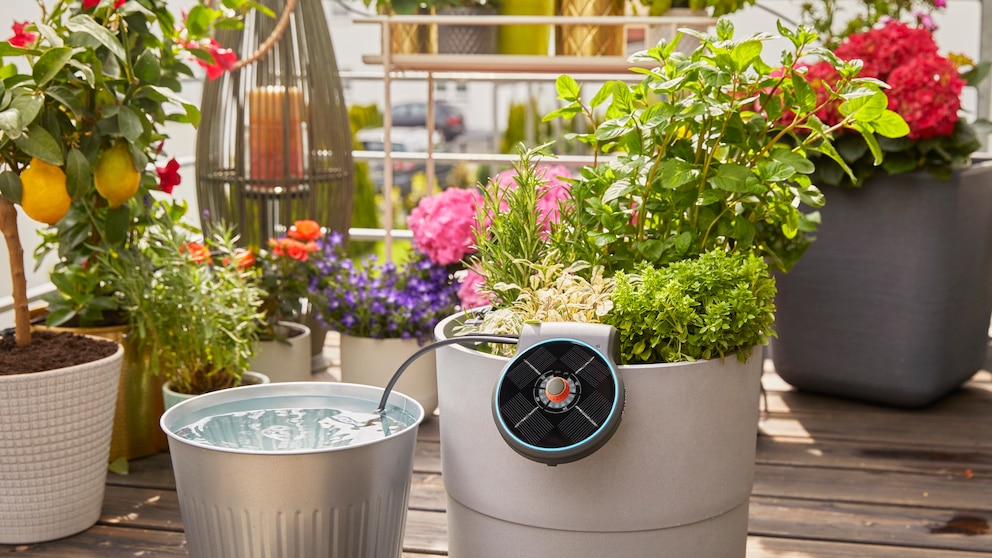
Solar irrigation is essentially easy to explain. It is a pump system that operates in an environmentally friendly and sustainable manner. Especially on hot days, the garden needs to be watered more often. The electricity consumption of a pressure or well pump, in particular, can lead to high costs. In contrast, solar irrigation operates independently, or more precisely, with solar energy.
This is especially practical if you want to save costs or simply don’t have a power connection in the garden. The required electricity is generated by natural sunlight. For this, you need to set up solar modules or small panels. Water is then pumped from a well or any water container, and the garden is automatically watered.
What to Consider When Buying
The size of the garden and the number of plants to be watered are crucial. If a larger area with many plants needs to be watered, it is important that the pump is powerful and several modules are placed to prevent any failure.
Note: Continuous use can only be guaranteed if enough solar energy is available, as electricity, as mentioned, does not simply come from the socket.
Related: Plan and Install Automatic Irrigation in the Garden

“The Traditional Lawn Sprinker Is a Thing of the Past!”—Expert
Is a Solar Heater Worth It for Your Pool?
3 Systems Compared
Below, we present three solar irrigation systems suitable for gardens and balconies. myHOMEBOOK has oriented itself on the most popular systems on the comparison platform Idealo.
1. Gardena Aquabloom Set 13300-20
https://oembed/myhomebook/affiliate/6375b3a9ba4ff8e0bd9535caae6edcd4fd2bec7083fb3d80aa6ffb16183d5bce/8e6e2b30-0677-421d-83d2-e1e4481878f8/embed
This solar irrigation set requires neither a power nor a water connection. A water reservoir is sufficient. Essentially, it consists of three components: a pump, a control unit, and a solar panel. According to the manufacturer, this set can water 20 plants simultaneously and offers the option to choose from 14 preset irrigation programs for optimal watering. Additionally, it can water up to 300 to 500 milliliters.
The package also includes three batteries, 15 hose holders, eight T-pieces, eight sealing plugs, a filter, and a 20-meter distribution pipe. You can water plants up to a height of four meters. This is practical if you have a plant by the window or hanging plant pots.
This set is suitable, among other things, if you have planted some vegetables and need several sprinklers. It can also be used if you have a raised bed. Prices vary depending on the provider. This Gardena solar irrigation set costs between 90 and a maximum of 125.
Also interesting: 3 Practical Tricks to Water Balcony Plants
2. Esotec Water Drops 101100
https://oembed/myhomebook/affiliate/40dfbc6fd6e9897820fdd8787b9fd2c00f1890f415adf7f331a5b7e2e6b91477/8e6e2b30-0677-421d-83d2-e1e4481878f8/embed
The Esotec model is also well-rated. It features a small control box with a solar module. Watering occurs twice daily with 15 water droppers each time. No power supply is needed for this either, and the irrigation system independently draws water from a container. The watering time can be individually set between 30 seconds and twelve minutes in six stages.
The control box includes a battery, control, DC diaphragm pump, rotary control, and a control LED. The solar module can be placed anywhere in the garden with a ground spike. The set also includes a two-meter intake hose, a five-meter irrigation hose, 15 hose holders, T-pieces, drip outlets, and a water level sensor.
You can water plants up to a height of two meters, making this set suitable for raised beds. The Esotec model can transport twelve liters of water within 24 hours. If the water level is low, the pump automatically shuts off. Cost: between 68 and 80 euros, depending on the provider.
Also interesting: When to Water Plants in Heat–and When Not To
3. Irrigatia SOL-C24
https://oembed/myhomebook/affiliate/cb6e369b278cf2b265365621c9da6bf2f62608bf8d9d9b42aab4d5affdda83f5/8e6e2b30-0677-421d-83d2-e1e4481878f8/embed
Also among the best solar irrigation systems is the Irrigatia model. This is a 2-in-1 device, meaning the control box and solar module are a single unit. No power or water connection is needed here either; the energy is generated using the panel, and the water can come from a bucket, for example.
In addition to the control-solar module device, a pump, an inlet filter, an anti-siphon, a water level sensor with a five-meter cable, a 15-meter hose, 12 droppers, stakes, T-pieces, and three rechargeable AA batteries are included.
According to the manufacturer, a 200-liter water barrel is usually sufficient for seven to ten days. Additionally, the plants are watered every three hours. The solar irrigation system can keep around 24 20-liter plant pots moist simultaneously. The set costs approximately 95 euros. The price can vary depending on the provider.
Conclusion
Choosing solar irrigation not only saves electricity but also allows you to set up an environmentally friendly irrigation system in the garden, on the balcony, or on the terrace with little effort. The advantages are clear: such sets cost no more than 120 euros and can water around 20 plants simultaneously. Additionally, you won’t have any issues with watering while on vacation, as these sets operate automatically. It’s only important to ensure the water container is always filled and the solar modules receive enough sunlight for the pump system to function.
However, there are also disadvantages. Due to a low water level in the container, the device can shut off automatically. This is especially problematic if you’re on vacation and the plants need watering. With a fixed water supply (water connection or well), this is always guaranteed. Additionally, solar irrigation sets are not suitable if you need to water a large lawn area, as the sprinklers or droppers are limited and generally designed for smaller plants (pots), raised beds, or gardens.
In conclusion, the sets hardly differ from each other. All include enough droppers, long hoses, and practical control boxes. They are also similar in price. Essentially, all the above models are suitable for watering around 20 plants and can reach certain heights for raised beds and window plants.