

October 7, 2026, 3:16 pm | Read time: 2 minutes
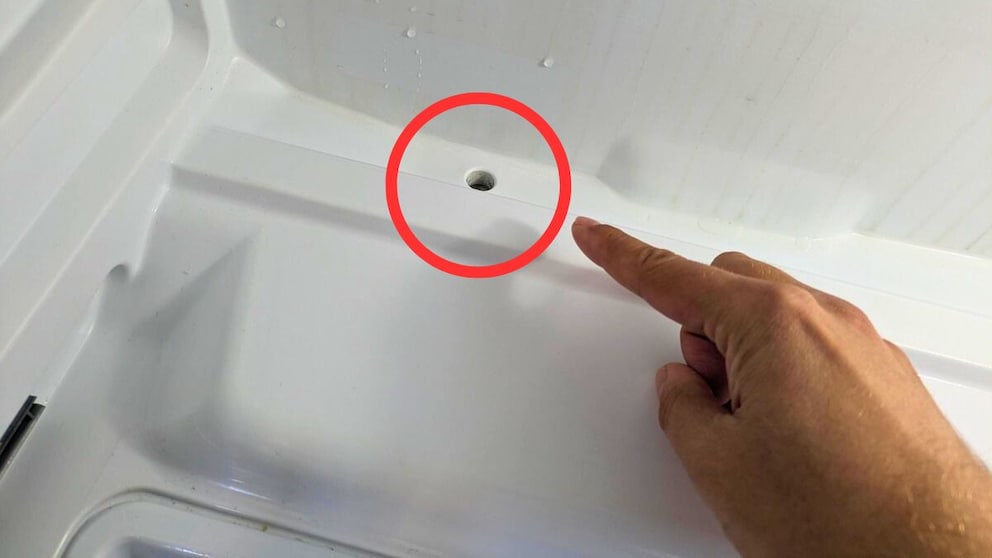
When you look in the fridge, you might not notice it: There’s a small opening at the back wall whose purpose many people don’t know. It often becomes visible only during a thorough cleaning, especially if dirt or mold has already accumulated there. This hole serves an important function for the refrigerator.
The Purpose of the Hole in the Refrigerator
The hole in the refrigerator is a drain meant for condensation that forms in every unit. The water flows through the drain into a collection container at the back of the fridge, where the compressor is located. The compressor provides cooling, generating heat that causes the condensation in the container to evaporate.
Also interesting: Refrigerators in Test – Are Cheaper Models Worth It?

5 Common Mistakes When Cleaning the Refrigerator

5 Signs It’s Time to Clean Your Drain
What to Do if There’s Too Much Condensation in the Refrigerator?
If too much condensation occurs, it can either flow back into the fridge or overflow from the container. This happens, among other reasons, when the hole in the fridge, or the drain, is clogged.
Afterward, you should keep an eye on the condensation development in the fridge. If an excessive amount of water still forms a few days later, it’s clear that not only a dirty or clogged drain is the cause. Possible reasons could also be old or defective refrigerator seals, which can be easily replaced. Leaving the fridge open too long sometimes leads to more condensation, as does frequently cooling food that’s still too warm.
Properly Cleaning the Refrigerator Drain
Therefore, it’s important to clean the drain regularly. It’s best to use cotton swabs, a straw, or a small bottle brush—avoid sharp tools like knives or similar items, as they could cause damage. You can carefully insert these tools into the hole in the fridge to clean it. Finally, a bit of vinegar on a cotton swab helps with disinfection.
Related: What to Consider When Cleaning the Refrigerator
Stubborn dirt can also be carefully scraped out with a toothpick. If mold is present in the drain, cleaning alone is not enough. The refrigerator should then be defrosted and thoroughly cleaned afterward.