


August 22, 2025, 9:20 am | Read time: 4 minutes
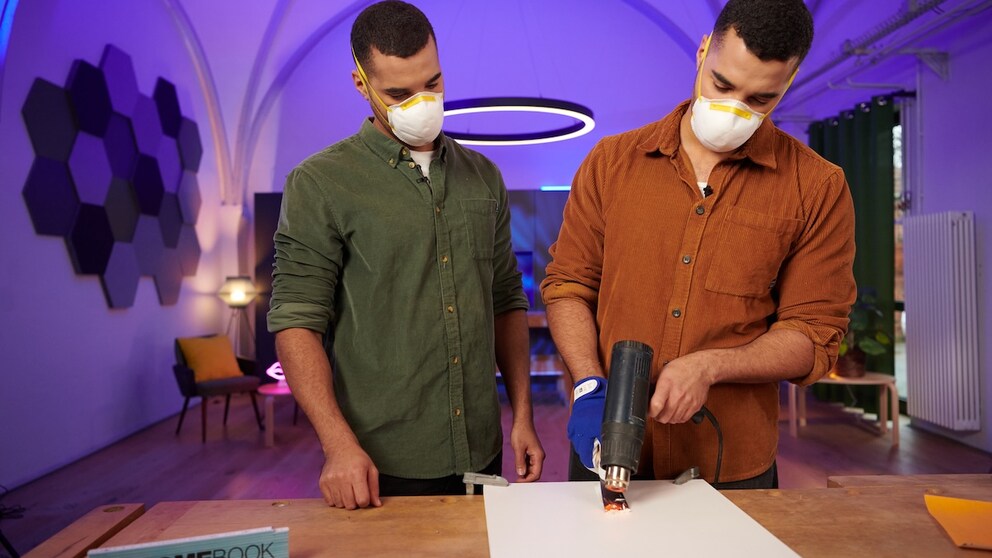
A heat gun looks like a hair dryer—but it operates at temperatures over 400 degrees. The device also has surprisingly many uses. DIY twins Julian and Marian explain what you can use the heat gun for and what to watch out for on “Easy Tools.”
A heat gun is a practical tool that can be used to remove paint, work with plastics, or even thaw frozen locks. Proper handling—and the right accessories—are important.
How the Device Works
A heat gun—also called a hot air gun or blower—resembles a regular hair dryer, but the technical differences are significant. The air emitted reaches temperatures over 400 degrees Celsius and can be precisely adjusted in high-quality models. This makes the device particularly suitable for demanding tasks such as shaping or welding plastics or removing old paint layers.
A major advantage: Since the heat gun does not produce a flame, there is no risk of fire or explosion. The targeted heating of materials affects their physical properties and accelerates chemical processes. Applying heat with such a device is much easier than with a Bunsen burner or a blowtorch.
Also interesting: How to Properly Use a Router
What to Consider When Buying
When purchasing a heat gun, pay attention to a wide temperature control range. This is important for working with more sensitive materials at reduced power. A stand function on the back of the device is also practical, allowing it to be placed upright while keeping both hands free for the workpiece. Those who only occasionally perform simple tasks can opt for cheaper models without temperature control.
Accessories: The Right Nozzles for the Heat Gun
For targeted work with hot air, the appropriate accessories are essential. Nozzle attachments direct the airflow either broadly or precisely, depending on the requirement. A wide slot nozzle is needed to heat large areas or shape plastics. Reduction nozzles focus the air stream on small spots, which is helpful for soldering. The reflector nozzle is particularly suitable for soldering pipes or shrinking tubes.
Additionally, spatulas and scrapers are important, especially when removing paint. Otherwise, you risk burning yourself on heated surfaces.

Patch Holes in the Wall in 6 Steps
Removing Glue Residue from Wood Without Causing Damage
Environmentally Friendly Removal of Paint and Adhesive
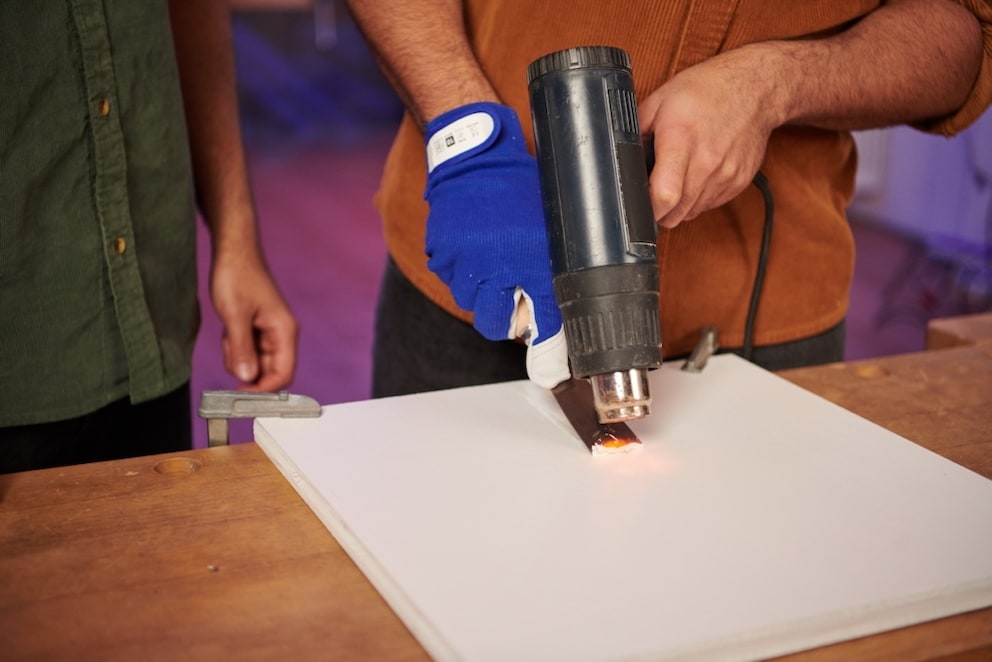
A heat gun can loosen old paint layers and varnishes—without chemicals or soaking time. The solvents contained are released by the heat, so always work outdoors or in well-ventilated areas.

Removing Old Paint with Hot Air
“Be careful not to overheat the surface of the workpiece—wood could darken or even char with too much heat. It’s best to use a wide spray nozzle and heat small areas of the paint just enough to loosen it, then remove it with a spatula. Start the work at an inconspicuous spot.”
Old stickers that have become brittle can also be removed well with heat—often without leaving residue. The same applies to all adhesive bonds made with hot glue.
Typical Areas of Application at a Glance
A heat gun can be effectively used in many craft areas:
- Removing paint layers: Varnishes and paints from furniture or wood surfaces can be efficiently stripped. Spatulas and scrapers are essential.
- Applying shrink tubes: Shrink tubes provide reliable protection for cables and connectors. They can be perfectly adjusted with hot air.
- Working with plastics: Welding or shaping plastic parts is easy with the right temperature and nozzles.
- Soft soldering: Thin copper pipes can be safely soldered with a reflector nozzle and tin.
- Removing adhesive: Old adhesive residues can be quickly eliminated at temperatures between 200 and 300 degrees.
- Drying building materials: Moist materials like plaster or cement can be dried effectively with hot air.
- Thawing frozen locks: The warm air stream is often enough to make frozen locks functional again within seconds.
- Removing weeds: Hot air is also helpful in the garden. It can be used as an alternative to chemicals, especially between paving stones. Strong heating is enough for the plants to die within a few days.
- Loosening stuck screws: Thermal expansion from hot air can help loosen stuck screws more easily.