


January 13, 2026, 3:54 pm | Read time: 2 minutes
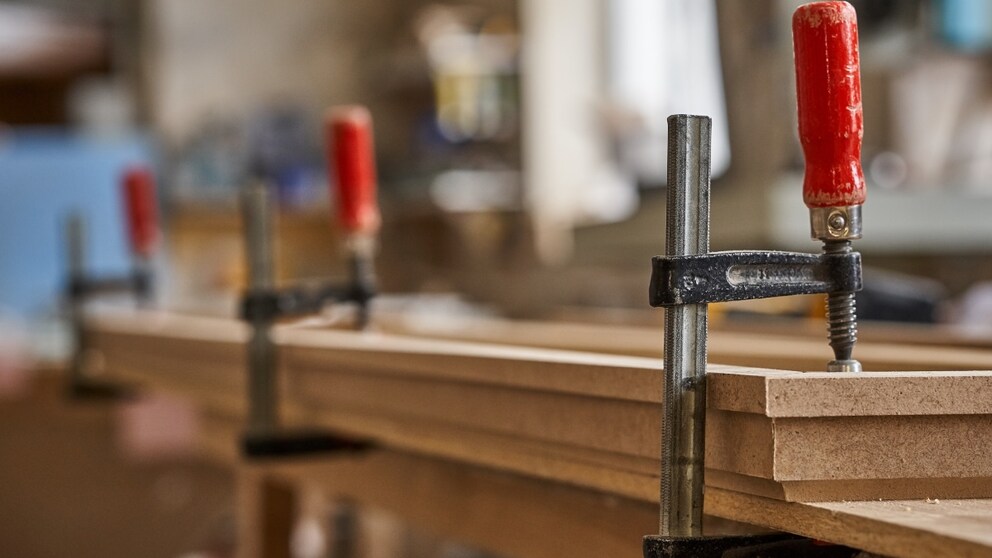
Clamps are essential in any well-equipped workshop. With a bit of creativity, these sturdy tools can be transformed into versatile household and DIY aids. myHOMEBOOK editorial director Felix Mildner shares some tricks for using clamps in unexpected ways.
Originally intended for securing and gluing, many clamps lead a quiet existence in the toolbox–unjustly so. Those who think clamps are only useful for woodworking miss out on a whole range of ingenious applications.
1. Improvised Handles
Whether it’s heavy wooden boards, unwieldy panels, or rolled-up carpets—two clamps can quickly create a sturdy handle. Simply attach one or more clamps to the item, and they provide a much more comfortable way to carry it.
2. When the Wrench Is Missing
The screw is tight, but there’s no wrench at hand? No problem. A clamp can be repurposed: Simply tighten the clamp around the screw or nut and slowly turn. For better grip and to protect delicate surfaces, it’s recommended to place a piece of fabric between the screw and the clamp.
3. Cable Management with a Twist
Tangled cables on the workbench or desk can be quickly sorted out—using clamps. These can be attached to the edge of the table to keep cables or extension cords in place. Important: The cables should not be pinched—otherwise, there’s a risk of cable breakage!
5 Simple DIY Tricks You Should Know
What the Hole at the End of a Tape Measure Is Really For
4. Bookends with Industrial Charm
Clamps can also make a good impression on the bookshelf. Attach them to the outside of the shelf and clamp them inward to keep books or files securely in place. For fans of industrial or rustic decor, this can even become a permanent design solution.
5. Flexible Anchor Points with Clamps
Whether it’s a makeshift clothesline, securing a tablecloth in the garden, or hanging tools, clamps are ideal wherever temporary anchor points are needed. Two clamps and a piece of string are enough to quickly set up a line. Hooks or carabiners can also be easily attached to a clamped clamp.

Clamps as Hammer Substitutes?
“Sometimes there’s simply not enough room to swing a hammer—or you want to avoid unnecessary noise. However, if you try to drive a nail into wood with a clamp, you’ll likely be disappointed. A clamp applies slow, constant pressure, while driving a nail requires quick, striking force to penetrate the wood fibers. You can certainly give it a try, though.”