


December 29, 2025, 3:27 pm | Read time: 3 minutes
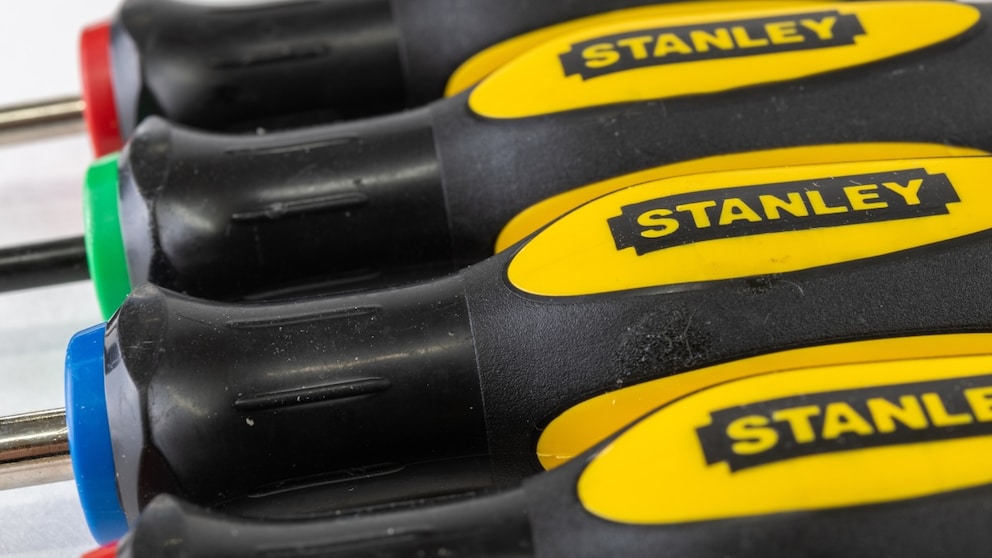
The yellow-black logo adorns toolboxes, tape measures, and utility knives in workshops worldwide. Stanley is among the most well-known tool brands globally. And as is often the case, the story begins with a family.
From Forge to Global Corporation
Stanley’s roots date back to 1843. Frederick T. Stanley founded a small workshop in Connecticut, USA. His trade was the production of simple iron goods such as bolts, hinges, and door fittings. As the industrialization of the U.S. progressed, so did his business.
Twelve years later, his cousin Henry Stanley went into business himself with his own company, “Stanley Rule & Level Company.” Both companies merged in 1920 to form “Stanley Works,” which developed products that are still part of the range today, including tape measures, screwdrivers, planes, and saws.
Milestones in Tool Innovation
The company introduced the first steel tape measure, establishing a new tool category that remains practical today. In 1936, a knife with a replaceable blade was launched. The innovation and popularity of the product were so significant that the product name became synonymous with the entire tool category. In English-speaking regions, such knives are still simply called “Stanley knives.” The tape measures also contributed to worldwide fame, setting new standards in precision and durability.
Stanley Is Now Part of a Global Tool Giant
Stanley no longer exists as an independent company. In 2010, “Stanley Works” merged with “Black & Decker.” This merger created the “Stanley Black & Decker Corporation,” which employs around 50,000 people worldwide. In addition to Stanley and Black & Decker, the corporation includes many other well-known brands, such as DeWalt, Facom, and Craftsman.
Production Around the Globe
The tools are produced at over 100 locations worldwide. A large portion of the tools is manufactured in China, Mexico, and Taiwan. The geographical distribution of production allows the corporation to shorten transport routes and optimize costs.


Who Is Behind the Rowenta Brand
Fein and the “Multimaster”–How a Plaster Saw Became a Global Success
Tools for Professionals and DIY Enthusiasts
Stanley offers a diverse product range divided into several categories. In the hand tools sector, there are classic tools such as hammers, saws, pliers, screwdrivers, and knives. Additionally, Stanley offers measuring tools that laid the foundation for the company’s success, including tape measures, levels, and line lasers.
As a full-range supplier, power tools are also a must. Many of these appear in the “FatMax” series. The 20-V battery system now includes over 100 products, also covering the outdoor sector. The company offers leaf blowers, lawnmowers, hedge trimmers, and electric saws with its logo.
The range also includes specialty products for drywall or plumbing, primarily targeting the professional sector. Noteworthy are the storage solutions that help maintain order in the workshop.
Focus on Own Brands
“Stanley Black & Decker” focuses on its brands and sells products with the logos of Stanley, DeWalt, Black & Decker, and Facom through specialty retailers, hardware stores, and online shops.
Unlike some competitors, the corporation is not known for selling its products through discount stores or producing for private labels. Instead, the brands strategically target their respective audiences. Stanley caters to a broad audience, from DIY enthusiasts to professionals, while DeWalt is more for the construction industry and professional craftsmen, and Black & Decker is a partner for all DIY enthusiasts.