



May 21, 2025, 10:05 am | Read time: 5 minutes
Water is a precious resource that hobby gardeners should use wisely. However, especially during the hot summer months and prolonged droughts, garden plants need to be watered extensively. With a few tricks, water consumption–and thus the cost–can be kept in check.
Garden plants are often watered with tap water. Over time, this can become expensive–and the high lime content is not ideal for some plants. Here are twelve alternatives and ways to save water in the garden.
1. Tip: Collect and Store Rainwater
It’s always a good idea to collect rainwater for dry periods. Rainwater not only conserves natural water resources but is also particularly suitable for plants because it is lime-free, according to the Garden Industry Association (IVG). Additionally, when stored outside, it has a plant-friendly temperature.
The size of the required storage depends on the size of the garden and the water needs of the plants. As an average guideline, the IVG suggests a water requirement of 150 to 200 liters per square meter of garden. According to the IVG, not only rainwater but also parts of wastewater, such as shower or dishwater, can be used for garden irrigation.
Note: The Federal Environment Agency warns against using rainwater from certain roofs for irrigation. Specifically, this concerns roofs made of copper, zinc, or roofing felt, as they may contain pollutants.
2. Tip: Reduce Watering Amount and Save Water in the Garden
The strong stream from the hose or watering can is wasteful in the summer months because dry soil cannot absorb the water, causing it to run off unused. To ensure plants benefit from the life-saving moisture, it’s important to water regularly with a sparing dosage. The IVG recommends drip irrigation, as it provides the soil with water evenly and reduces the risk of drying out completely on the surface.
3. Tip: Choose Heat-Tolerant Plants
Plants placed in full sun should be able to withstand heat and drought. Plants with hairy leaves and those with silvery foliage are often well-suited for these locations. A deep root system and small leaves are further indicators of heat-tolerant plants.
The Nature Conservation Association of Germany (NABU) recommends using native plants because they are better adapted to the existing climate conditions and dry periods. Examples include field maple, viper’s bugloss, oregano, and meadow sage.
Related: 5 Heat-Tolerant Perennials
4. Tip: Wait for the Right Time to Plant
Shrubs and perennials should be planted in the spring with the general sprouting, so new plants should be set in the fall or spring. This way, the natural root system reaches deeper layers and can better sustain itself in the summer.
5. Tip: Properly Work the Soil
Hoe all beds superficially after watering. According to NABU, this interrupts the capillaries in the soil. Background: Small pores conduct water from deeper soil layers upward, where it evaporates. By interrupting this mechanism, water is retained in the soil, as recommended by NABU.
6. Tip: Mulch Open Soil Areas
NABU also advises covering the open soil between vegetable plants with dry grass clippings, leaves, vegetable scraps, or sheep’s wool–also known as “mulching.” This keeps the soil nicely moist, stimulates soil life, and supplies the plants with nutrients.
7. Tip: Promote the Microclimate
The microclimate in the garden also determines water consumption. Shading plants reduce water evaporation and lower the temperature near the ground. Otherwise, wind is a factor that leads to drying out. NABU therefore recommends planting a hedge of native shrubs to block the wind and provide shade.
8. Tip: Promote Humus in the Soil
An important component in the soil is the dead plant matter. The so-called humus comes from composting, green manure plants, and autumn leaves. Humus acts like a sponge and stores a lot of water, which is then slowly released to the plants.
9. Tip: Don’t Forget the Animals
Healthy gardens need animal inhabitants–especially insects. To maintain the biological balance, NABU advises not only to provide plants with water during extreme heat and drought but also to set up bird and insect baths with exit aids for small animals in the garden and regularly refill them with fresh water.
10. Tip: Let the Lawn Grow Longer in Summer
One of the biggest water consumers in many gardens is the lawn. But especially in summer, it needs to be watered regularly if you want to avoid burnt and bare spots. This is mainly because grass has a shallow root depth. However, hobby gardeners can support the thirsty lawn with a trick: Simply let it grow a bit longer, making it more resistant to drought and able to store more water. In summer, the blades can be about five centimeters long.
Extra Tip: Many lawnmowers have a mulching function that can indirectly save water in the garden. When mulching, the grass clippings are shredded and left on the ground. This layer prevents water from evaporating too quickly and keeps the moisture in the soil longer.

Efficient Watering in the Garden–Why Less Is More

Plants Get Just the Right Amount of Water With These Tips
11. Tip: Regularly Hoe the Vegetable Bed
Even though some garden experts advise against digging altogether, hoeing the bed can save water in the garden. Surface treatment with a cultivator is sufficient. Background: The soil does not dry out as quickly because the tools break the water channels in the upper soil layer, preventing water from seeping away too quickly. It’s best to work the vegetable bed after a rain shower when the soil is saturated with water.
12. Tip: Avoid Sprinklers as Much as Possible
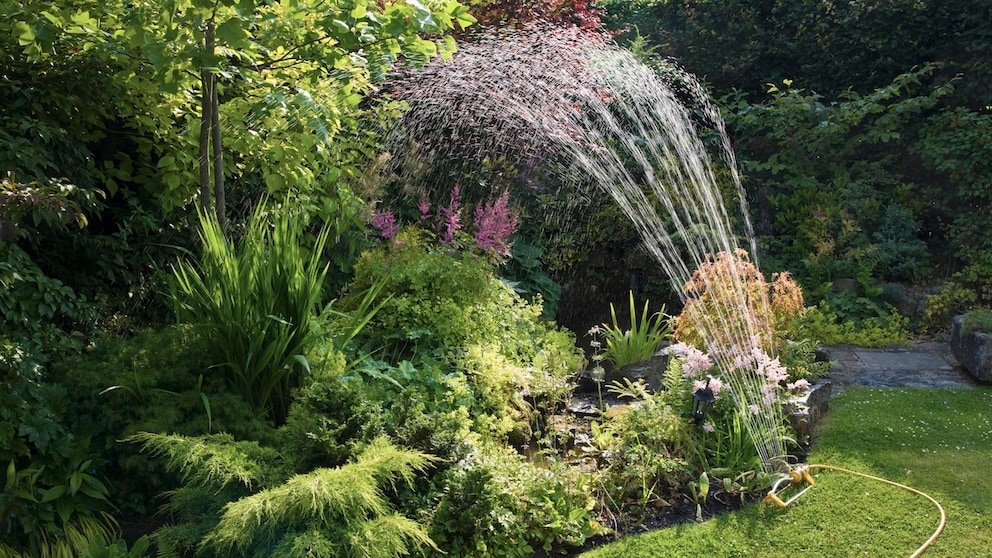
Even though the sprinkler is a convenient way to water the garden, it doesn’t help save water. Quite the opposite. According to BUND, you should completely avoid this method of irrigation because too much water evaporates. Instead, it’s better to water the garden specifically in the morning or evening hours.
With material from dpa