


September 30, 2026, 1:04 pm | Read time: 2 minutes
In the fall, many herbs end their growing season. But before mint, oregano, and others go into winter dormancy, a targeted pruning can be worthwhile. It removes old or dead shoots, keeps the plants healthy, and ensures they sprout vigorously again next spring. myHOMEBOOK gardening expert Franka Kruse-Gering names four herbs that should be pruned in the fall.
Follow myHOMEBOOK on WhatsApp now
Oregano stays compact with a fall pruning
Oregano is one of the herbs that often becomes misshapen after blooming. The shoots grow long, and the lower areas can become bare. Pruning the plant in the fall encourages denser growth and prevents it from falling apart next year.
Not only should faded flower stems be removed, but older and weaker shoots can also be trimmed. This allows the plant to focus its energy on healthy shoots and start the new season strong in the spring.
Mint no longer needs the old shoots
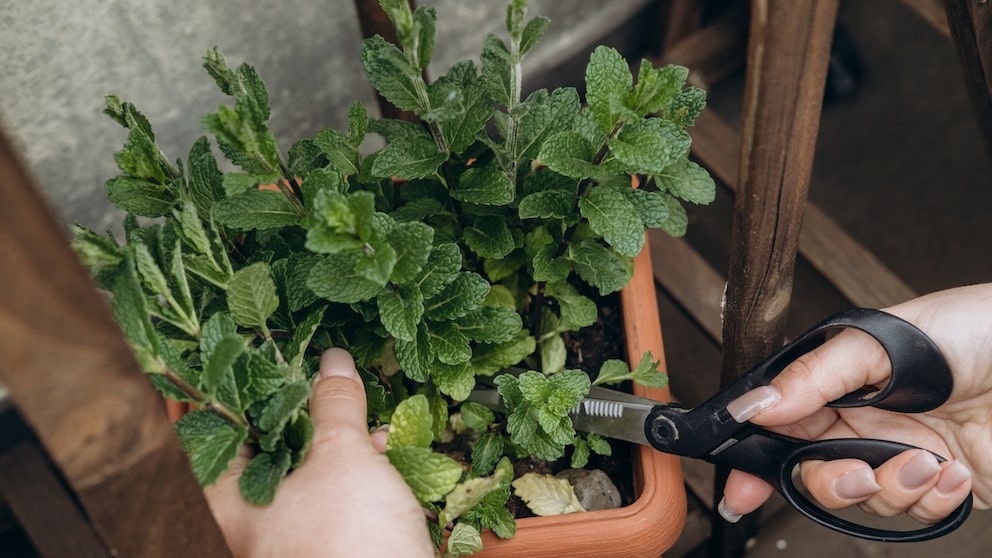
Mint is one of the herbs that completely retreats into the ground over the winter. The above-ground shoots usually die after the first cold nights and no longer serve any purpose.
Therefore, the stems can be cut back close to the ground in the fall. This tidies up the bed and removes dead plant material. In the spring, mint will sprout fresh from its rootstock.
Also interesting: These shrubs need a fall pruning

Planting and Caring for Mint in the Garden or on the Balcony

How to Properly Care for and Overwinter Chives in Winter
Lemon balm will sprout anew next year
By the end of summer, lemon balm often shows significant signs of wear. Many shoots bend over, the leaves lose their aroma or change color. A pruning not only tidies up the bed but also removes plant parts that would soon die anyway.
Since the plant overwinters as a perennial and sprouts anew in the spring, a strong pruning does no harm. On the contrary, lemon balm can fully concentrate on new growth in the coming year.
Tarragon starts stronger after winter
Tarragon is often harvested into the fall. Once the last shoots are harvested, the plant can be pruned. This mainly involves removing older, weak, or already dead shoots.
Since tarragon retreats into the ground as a perennial over the winter, the above-ground plant parts are no longer needed. A pruning keeps the bed tidy and removes plant remnants that would otherwise remain unnecessarily during the cold season. In the spring, tarragon will sprout fresh from its rootstock.