


November 4, 2026, 5:28 am | Read time: 7 minutes
When temperatures drop and the first frosty nights are on the horizon, many herbs face the question: Can rosemary, chives, sage, and others stay outside, or do they need to be moved to winter quarters? The answer depends not only on the type of herb but also on whether they are growing in the ground or in a pot. myHOMEBOOK reveals how eight popular herbs can make it through the winter.
Follow myHOMEBOOK on WhatsApp now
1. Overwintering Chives
Chives are among the easier candidates. If they grow in the ground, they can usually stay there through the winter. The fact that the stalks wilt and eventually disappear as the cold increases is no cause for concern. The plant retreats to its underground parts and can sprout again in the coming spring.
Dried stalks can be removed. A layer of leaves or twigs over the root area provides additional protection against winter weather.
For chives in a pot, you should pay closer attention. Unlike in the garden bed, the root ball is more exposed to the cold here. If the chives overwinter in a sheltered spot, they need only a little water. The soil should not dry out completely, but it should not remain constantly wet either.
If you want to harvest fresh chives in winter, you can dig up part of the plant and put it in a pot. This pot stays outside initially so that the root ball gets enough cold, as the plant needs a cold stimulus to sprout again. Then place the chives on a bright windowsill and water them lightly. The warmth will cause them to start sprouting again.
2. How Rosemary Survives Winter
Rosemary originates from warmer regions and is somewhat more demanding when it comes to overwintering. Additionally, not every variety tolerates cold equally well. Some robust varieties can stay outside with appropriate protection, while more sensitive ones are better off in winter quarters.
If rosemary remains in a pot outside, the root ball should be especially protected. The container can be insulated and placed in a sheltered location. A winter cover around the plant can also be useful in severe frost.
If the plant is to overwinter indoors, a bright and cool place is better than a warm living room. During the cold months, the plant grows much slower and requires correspondingly less water. However, the root ball should not dry out.
Rosemary should not be heavily pruned in the fall. Larger pruning measures are better postponed until spring, as freshly cut shoots can be more sensitive to frost. Dead or damaged plant parts can, however, be removed.
Also interesting: 7 colorful and hardy plants for garden and balcony
3. What Sage Needs in Winter
With sage, it’s also worth looking at the specific type. The common sage, often grown as a culinary herb, generally copes well with winter temperatures. In case of severe or prolonged frost, the root area can be additionally covered with leaves or twigs. The above-ground shoots can be protected with garden fleece or burlap if necessary.
If the plant is cultivated in a pot, it can also stay outside in winter. However, the container should be protected from severe frost, for example, by wrapping it with fleece or burlap and placing it in a sheltered spot. It’s also important to avoid waterlogging. In particularly harsh areas, a frost-free, bright, and cool winter quarters might be the safer option.
Be cautious with a strong pruning in the fall. The existing shoots provide the plant with some protection during the winter. Therefore, a more substantial pruning is better left for spring.
4. How Thyme Overwinters
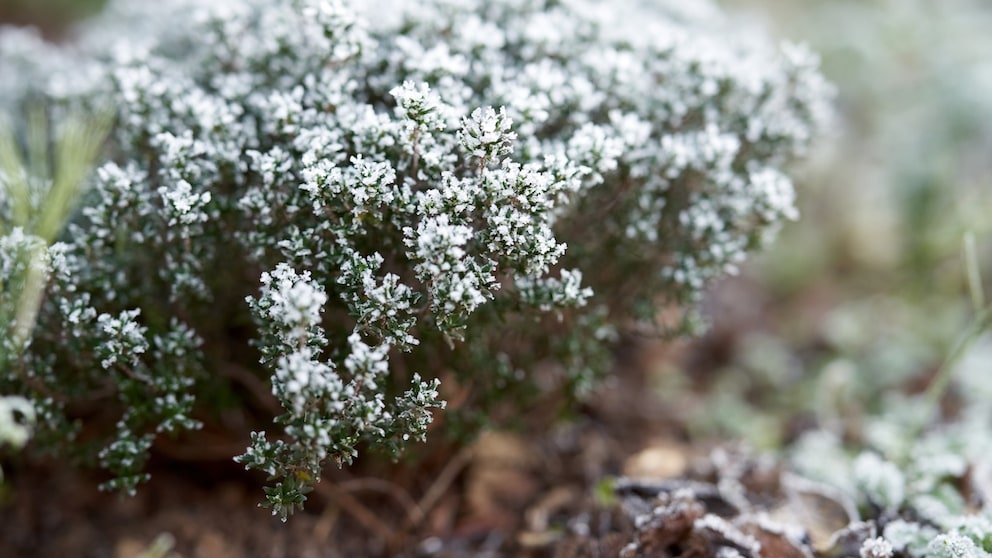
Thyme can generally spend the winter outside. How well it tolerates frost, however, depends on the type and variety. The classic common thyme is among the more robust representatives.
In severe frost, the plant in the bed can be protected with some twigs or a breathable fleece. If thyme grows in a pot, the container should be additionally insulated and placed in a sheltered location. Good drainage is also important, as the herb does not tolerate waterlogging well, especially in winter.
When it comes to pruning, restraint is advised in the fall. Instead of cutting the thyme back vigorously before winter, it’s better to wait until spring. Only dead or dried plant parts should be removed beforehand.
Related: 8 practical tips for overwintering plants
5. What’s Important for Mint in Winter
The winter appearance of mint can be deceiving: Even if there’s hardly anything left of the shoots, the perennial plant remains. In the next spring, it grows back from its underground runners.
Under the ground, the plant survives the cold months and can sprout again in spring. In the bed, an elaborate winter quarters is usually not necessary. Before winter, any remaining healthy leaves can be harvested and, for example, dried.
Mint in a pot can also overwinter outside. However, its root area is less protected from frost than in the bed, as the soil in the container freezes faster. Therefore, the pot should be placed in a sheltered spot and additionally protected during severe frosts, for example, with burlap or fleece. An insulating base also protects against cold from below. Dead shoots can be pruned back in late fall.
6. Lemon Balm is Easy to Care for in Winter
Lemon balm is similarly uncomplicated. It is perennial and can usually overwinter outdoors. The fact that the above-ground plant parts turn brown and die in the fall is part of its natural annual cycle. In spring, it sprouts again from the root area.
The plant can also stay outside in a pot over the winter. Since the root ball in the container is more exposed to the cold than in the bed, the pot should be protected during prolonged frost. For this, it can be wrapped with burlap or fleece and placed in a sheltered spot. An insulating base also protects against cold from below.
During winter, lemon balm needs only a little water. However, the soil in the pot should not dry out completely. At the same time, waterlogging should be avoided.

What’s Important for Overwintering Balcony Plants

How to Properly Care for and Overwinter Chives in Winter
7. What to Watch for with Oregano in Winter
As temperatures drop, oregano increasingly loses its above-ground shoots. However, the perennial plant survives the winter in the soil and sprouts again in spring.
Once the above-ground shoots have dried and died, they can be pruned back. A strong pruning of the still green plant is not necessary before winter.
Oregano in a pot can also overwinter outside. Since the root ball in the pot is more exposed to the cold than in the garden soil, the container should be protected during severe frosts. For this, place it as close as possible to a sheltered house wall and on an insulating base made of wood or Styrofoam. Additionally, the pot can be wrapped with burlap or fleece.
During the winter months, oregano needs only a little water. For plants in pots, however, the soil should not dry out completely. At the same time, it’s important to ensure that excess water can drain well, as waterlogging is particularly problematic in winter.
8. How Basil Overwinters
With basil, the situation is completely different. The heat-loving herb is sensitive to low temperatures and is not suitable for simply overwintering in the bed or unprotected on the balcony.
Moreover, many typical basil plants are cultivated as annuals in this country. However, there are also perennial basil species and varieties. If these are to grow for several years, they must be brought to a suitable place before the cold sets in.
Perennial basil varieties should be brought indoors in time. A bright location where the plant is protected from cold and drafts is suitable for overwintering. A cool winter quarters, such as those suitable for some Mediterranean potted plants, is not suitable for the heat-loving basil.