


August 20, 2023, 12:07 pm | Read time: 5 minutes
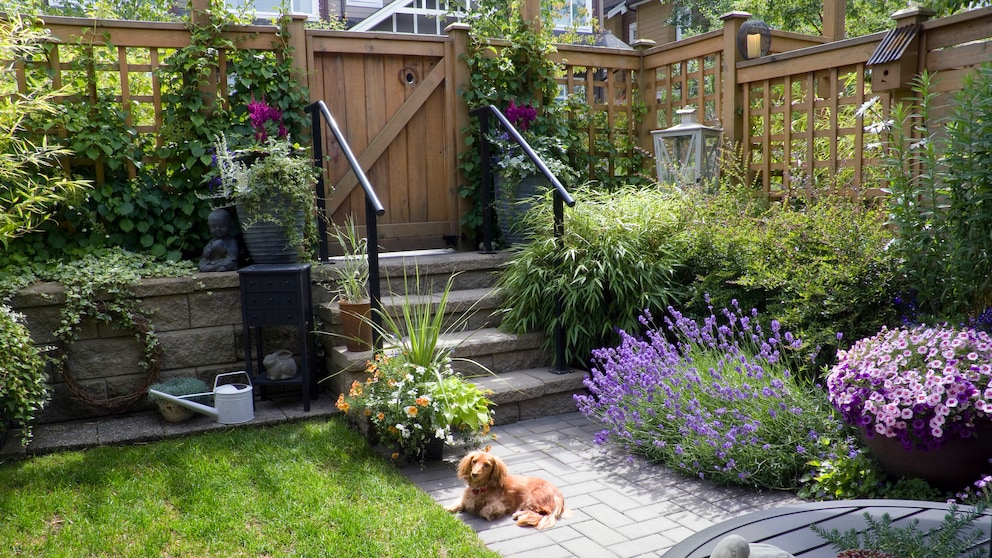
If you not only have a dog but also a garden, you can rejoice. And your dog will be happy about the safe freedom to roam. The key word here is safety. myHOMEBOOK reveals how to design your garden so that your four-legged friends feel comfortable and safe.
Not all dogs are the same: Depending on age, breed, and temperament, some enjoy long walks more than others. However, all dogs love to lie in the sun and explore nature without a leash and collar. This works perfectly in the garden. To allow owners to let their dogs roam freely on their property, it’s important to make the garden dog-friendly.
1. Safety first! Adjust fence height to the dog
It seems obvious that a garden with a dog rarely works without a fence. A fence not only prevents your dog from running away but also protects your dog from unwanted visitors. This could be a male dog that has picked up the scent of your female dog in heat.
It’s important that the garden fence is seamless, tall, and stable. Sharp and pointed edges should also be avoided. But how high should a fence be? There is no rule of thumb for this. The height of the garden fence should be adjusted not only to the size of the dog but also to the animal’s jumping ability and enthusiasm. A Bernese Mountain Dog, for example, is a large dog but is less inclined to jump high. Border Collies are smaller but active, agile, and can easily jump over high hurdles.
It’s not just the height that matters. Dog owners should think in all directions and not forget the ground. The garden fence should meet the ground so that smaller dogs can’t fit through. If your dog likes to dig, you can install an underground net. Alternatively, you can place large paving stones in front of the garden fence.
Also interesting: Tips for making your home dog-safe
2. Protect flower beds and set boundaries
The dog should feel comfortable in the garden, no question. Yet there are different areas that might be off-limits for the four-legged friend. These can include vegetable beds. Dogs also like to nibble on tomatoes, cucumbers, and the like. This not only reduces the harvest but can also include vegetables that are harmful to dogs, such as (raw) potatoes.
Flower beds with particularly valuable plants or the pool can also be zones where you don’t want to see your dog unsupervised. That’s why it’s worth fencing off such areas. A fence or hedge is suitable for this. Nets over the beds can also prevent the dog from reducing the harvest.
More on this (via PETBOOK): These dangers lurk for dogs in the garden now
3. The right planting: robust and non-toxic
No garden is complete without perennials, shrubs, and trees. To make the garden’s planting dog-friendly, you should pay attention to two things. Most importantly, the plants should not be toxic to the dog. For example, the following plants are toxic to dogs:
- Yew
- Foxglove
- Laburnum
- Oleander
- Geranium
- Rhododendron
- Chrysanthemum
Non-toxic and therefore a better choice for a dog-friendly garden would be:
- Sunflowers
- Lavender
- Hydrangea
- Lilac
- Marigolds
- Sage
Whether the plants are toxic to a dog should be a top priority. Additionally, it’s worth choosing robust shrubs. These are plants that can withstand wild play sessions in the garden or survive if the bark is nibbled.
Note: When caring for plants, hobby gardeners should avoid chemical fertilizers and pesticides for the sake of their pets.

Which Early Bloomers Are Toxic to Pets
5 Tips to Make Your Garden Cat-Proof
4. Plan for a large lawn area
A lawn is simply part of a garden for most people. For dog owners, this aspect of design is particularly important. Here, dogs can run, romp, and, of course, relieve themselves. Speaking of relieving: Yellow urine spots on the lawn are hard to avoid. However, the following can help: After the dog has relieved itself, you can dilute the urine with water. It’s best to use a watering can for this.
5. Plan for shade and cooling in the summer
The garden serves not only for dogs to romp and sniff around but also to relax. In summer, a shady spot is best for this. Under a large tree, for example, dogs enjoy warm summer days more than in the blazing sun.
For additional cooling, you can also provide some water. Many dogs are real water lovers. They like to play and lie in the cool water. Even a simple, old paddling pool is enough. Important to consider: The animals’ claws quickly create holes in plastic. Alternatively, a sprinkler system can provide cooling. Besides external cooling, you should also provide a drinking option for the animal.
Also interesting: DIY tug toys for dogs from fabric scraps
Note: All the tips mentioned apply to both homeowners and renters whose apartments have a garden. Renters should, however, consult with their landlord before making major changes to the rented garden.